
TL;DR:
- Natural healing activates the body's self-repair abilities through lifestyle changes and natural therapies. It treats root causes instead of just symptoms and works best when combined with conventional medicine. Evidence supports practices like mindfulness and nutrition, but access is often limited by lack of insurance coverage.
Natural healing is defined as a healthcare system that activates the body's innate ability to repair and restore itself by addressing root causes through lifestyle changes, natural therapies, and behavioral interventions. The National Center for Complementary and Integrative Health classifies this approach under naturopathic medicine, which treats the whole person: body, mind, and spirit. Unlike conventional care, which targets symptoms directly, natural healing works by removing obstacles to the body's self-repair processes. Integrative healthcare models now combine both approaches, and research published in JAMA Internal Medicine confirms measurable benefits for conditions ranging from anxiety to chronic pain.
What are the core principles behind natural healing?
Natural healing rests on a philosophy that health is not simply the absence of disease. The Merck Manual defines health in this model as a dynamic balance among physical, emotional, and spiritual systems. When that balance breaks down, illness follows. Conventional medicine tends to view illness as a mechanical failure in a specific organ or system. Natural healing views it as disharmony across interconnected systems.
Several core principles guide this approach:
- Treat the root cause. Natural healing practitioners identify and remove the underlying cause of illness rather than suppressing symptoms with medication.
- Do no harm. Practitioners prioritize non-invasive, low-risk methods before escalating to more aggressive interventions.
- Treat the whole person. Physical symptoms are assessed alongside emotional stress, sleep quality, diet, and social environment.
- Educate and empower. Practitioners teach people to understand their own health and make informed decisions.
- Prevention first. Building resilience through lifestyle habits reduces the likelihood of chronic disease developing.
These principles align closely with what is holistic health: a model that sees each person as an integrated system rather than a collection of separate parts. Naturopathic medicine formalizes these ideas into a clinical framework, with licensed naturopathic doctors completing four-year graduate programs that include training in conventional diagnostics alongside natural therapies.
Pro Tip: When evaluating any natural healing practitioner, check whether they hold a degree from an accredited naturopathic medical college. Credentials vary widely by state, and the quality of training directly affects the quality of care.
What scientific evidence supports natural healing?
The evidence base for natural healing methods has grown considerably. Small clinical studies on arthritis pain show that naturopathic approaches perform comparably to conventional treatment and may reduce overall medical costs. That finding matters because chronic conditions like arthritis are among the most expensive to manage long-term.
Mindfulness meditation stands out as one of the most rigorously studied natural healing techniques. Research cited in JAMA Internal Medicine shows that mindfulness significantly reduces anxiety and depression symptoms. This is not a minor effect. For people who cannot tolerate antidepressants or prefer non-pharmaceutical options, mindfulness represents a clinically meaningful alternative.
"Patients using integrative natural healing report higher satisfaction due to shared decision-making, empowerment, and respect by providers. This shift in the patient-provider relationship is itself a therapeutic factor, not just a side effect of better care."
Integrative natural healing approaches also reduce polypharmacy, meaning fewer medications taken simultaneously. Polypharmacy is a serious risk for older adults, where drug interactions cause significant harm. Reducing it through lifestyle and behavioral interventions is a concrete, measurable benefit.
| Natural healing method | Evidence strength | Primary benefit |
|---|---|---|
| Mindfulness meditation | Strong (JAMA Internal Medicine) | Reduced anxiety and depression |
| Nutrition and diet therapy | Strong | Chronic disease risk reduction |
| Acupuncture | Moderate | Pain management |
| Herbal supplementation | Variable | Depends on specific herb and condition |
| IV vitamin C therapy | Weak | Lacks high-quality trial data |
The table above reflects the current state of research. Strong evidence supports lifestyle-based interventions. Specific therapies like IV vitamin C are generally considered safe under proper administration, but more rigorous trials are needed before broad clinical recommendations can be made.
What are common natural healing techniques and methods?
Natural healing methods span a wide range of practices, from daily lifestyle habits to specialized clinical therapies. The most effective approaches share one trait: they support the body's own repair mechanisms rather than bypassing them.
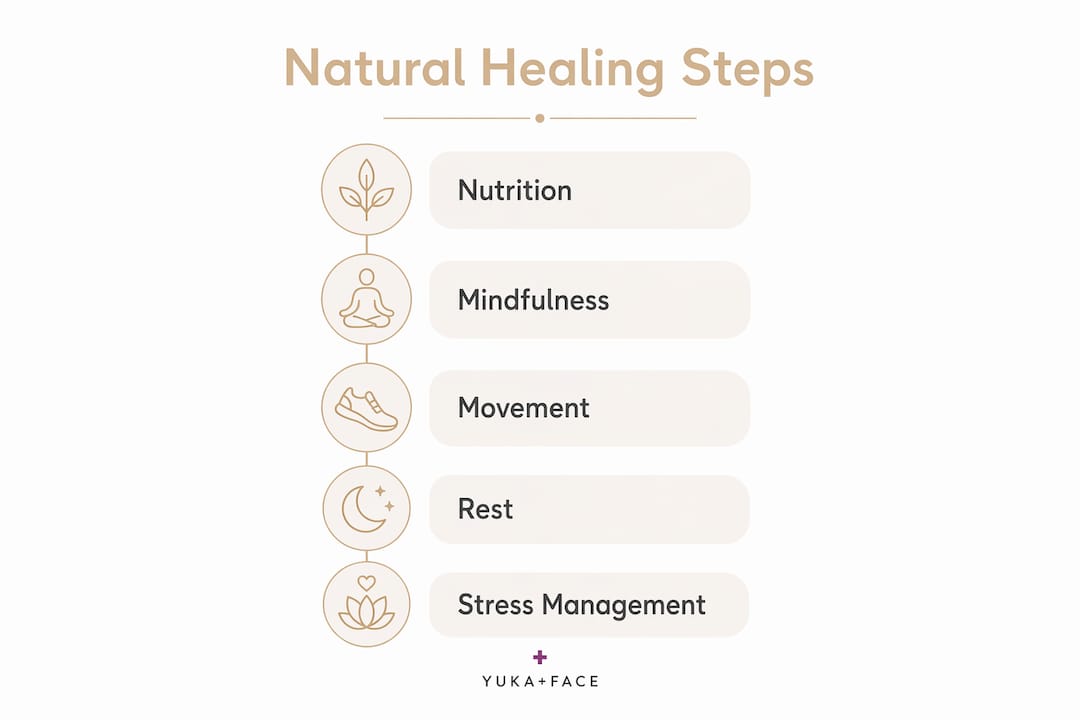
- Nutrition therapy. Whole-food diets rich in antioxidants, vitamins, and minerals reduce inflammation and support immune function. The benefits of holistic medicine include measurable reductions in chronic disease risk when nutrition is addressed systematically.
- Movement and exercise. Regular physical activity improves circulation, reduces cortisol, and supports cardiovascular and metabolic health. Even moderate daily walking produces clinically significant results.
- Sleep hygiene. Sleep activates the glymphatic system, which clears metabolic waste from the brain. Poor sleep is directly linked to neurological decline, immune suppression, and mood disorders.
- Stress management. Chronic stress elevates cortisol and suppresses immune function. Techniques like breathwork, progressive muscle relaxation, and mindfulness meditation directly counter this physiological response.
- Herbal remedies. Plants like ashwagandha, turmeric, and echinacea have documented pharmacological effects. Efficacy and safety vary by herb, dose, and individual health status.
- Acupuncture. Stimulating specific points on the body modulates pain signals and supports nervous system regulation. Evidence for pain management is moderate and growing.
- Massage therapy. Manual manipulation of soft tissue reduces muscle tension, improves lymphatic drainage, and lowers stress hormones.
- Mindfulness meditation. A daily practice of 10–20 minutes produces measurable changes in brain structure and stress response over weeks to months.
Skin health connects directly to many of these practices. Nutrition, sleep, and stress management all affect skin barrier function, collagen production, and inflammation. Readers interested in applying these principles to their skin can find practical guidance on skin nourishment strategies that align with natural healing values.
Pro Tip: Before adding any herbal supplement to your routine, check for interactions with existing medications using a resource like the Natural Medicines Database. "Natural" does not automatically mean safe for every person in every context.

How does natural healing compare to conventional medicine?
Natural healing and conventional medicine define health differently. That difference shapes everything else. Conventional medicine identifies illness as a mechanical failure in a specific system and targets it with drugs or surgery. Natural healing sees illness as a signal that the whole person is out of balance, and responds by restoring that balance through lifestyle and behavioral change.
These two models are not opposites. The Cleveland Clinic confirms that naturopathic doctors actively collaborate with conventional medical professionals to build unified care plans, particularly for chronic illness. This integrative model is where the strongest outcomes appear. A person managing type 2 diabetes, for example, benefits from both metformin and a structured nutrition and exercise plan. Neither approach alone is as effective as both together.
Key differences and points of overlap:
- Natural healing emphasizes prevention; conventional medicine excels at acute crisis management.
- Conventional medicine has robust emergency infrastructure; natural healing lacks tools for trauma, infection, or surgical needs.
- Both fields now recognize the role of stress, sleep, and nutrition in disease progression.
- Integrative care models, supported by F1000Research, show improved outcomes for non-communicable diseases when both approaches are combined.
One practical barrier is cost. Natural healing modalities are often not covered by conventional health insurance. People pay out of pocket for naturopathic consultations, acupuncture, and specialized supplements. This limits access and places the burden of navigation on the individual.
Consumers also face a cognitive trap known as the naturalness bias. Assuming "natural" means safer is a documented reasoning error. Arsenic is natural. So is hemlock. The label "natural" carries no regulatory guarantee of safety or efficacy. Critical evaluation of evidence is the only reliable guide, regardless of whether a treatment is conventional or natural.
How can you apply natural healing methods in daily life?
Starting with natural healing does not require a complete lifestyle overhaul. Small, consistent changes in foundational habits produce the most durable results.
- Adjust your diet first. Reduce ultra-processed foods and increase vegetables, legumes, and whole grains. This single change affects inflammation, gut health, and energy levels simultaneously.
- Prioritize sleep. Aim for 7–9 hours of consistent sleep. Set a fixed wake time and protect the hour before bed from screens and stimulants.
- Move daily. Thirty minutes of moderate activity most days meets the threshold for measurable health benefit. Walking, swimming, and cycling all qualify.
- Manage stress actively. Passive stress reduction does not work. Schedule a specific daily practice: meditation, breathwork, journaling, or time in nature.
- Work with a qualified practitioner. Self-directed natural healing has limits. A licensed naturopathic doctor can identify deficiencies, order labs, and build a plan tailored to your health history.
- Evaluate supplements critically. Research the specific compound, not just the category. Look for third-party testing and consult a practitioner before adding anything new.
For people interested in applying these principles to skin health specifically, a natural skincare routine built on clean, evidence-informed ingredients is a practical starting point. Skin is the body's largest organ and responds directly to the same inputs that drive internal health: nutrition, hydration, sleep, and stress management.
A chemical-free moisturizing routine is one concrete way to extend natural healing principles into daily skincare practice, reducing exposure to synthetic compounds while supporting the skin barrier.
Key Takeaways
Natural healing is most effective when lifestyle interventions, qualified practitioners, and conventional medical care work together rather than in opposition.
| Point | Details |
|---|---|
| Core definition | Natural healing activates the body's self-repair capacity by treating root causes, not symptoms. |
| Strongest evidence | Mindfulness meditation, nutrition therapy, and sleep hygiene have the most consistent research support. |
| Complement, not replace | Natural healing works best alongside conventional medicine, especially for chronic conditions. |
| Watch for naturalness bias | "Natural" does not guarantee safety; evaluate every treatment on its evidence, not its label. |
| Access barriers exist | Most natural healing modalities are not covered by insurance, requiring out-of-pocket investment. |
What I've learned after years of watching natural healing evolve
The conversation around natural healing has shifted. Ten years ago, the mainstream medical community largely dismissed naturopathic approaches. Now, integrative care departments exist inside major hospital systems. That shift is real, and it reflects genuine evidence accumulating in peer-reviewed literature.
What concerns me is the other side of that growth: the explosion of products, practitioners, and programs that use "natural" as a marketing claim rather than a clinical standard. The naturalness bias is powerful. People want to believe that what comes from the earth is inherently good for them. That instinct is understandable, but it is not always accurate.
The practitioners I respect most are the ones who hold both things at once. They believe in the body's capacity to heal. They also demand evidence. They collaborate with physicians instead of competing with them. They tell people when a symptom needs a scan, not a supplement.
My honest view: natural healing is not a fringe philosophy. It is a legitimate, evidence-informed approach to health that fills real gaps in conventional care. But it requires the same critical thinking you would apply to any medical decision. Ask for credentials. Ask for evidence. Ask what the risks are. The best natural healing practitioners welcome those questions.
— Kelly
Natural healing principles, applied to your skin with Yuka+Face
The same principles that drive natural healing, whole-person care, clean ingredients, and respect for the body's own processes, apply directly to skincare.

Yuka+Face builds every product around vegan, botanically sourced ingredients that work with the skin's natural biology rather than against it. The vegan skincare guide covers how plant-based formulations align with natural healing values, from antioxidant protection to barrier support. For readers who want to bring mindfulness into their skincare practice, the mindfulness skincare routine connects daily ritual with the stress-reduction principles that natural healing prioritizes. Clean formulations. Clear purpose. No compromise on what goes on your skin.
FAQ
What is natural healing in simple terms?
Natural healing is a healthcare approach that supports the body's own ability to repair itself through lifestyle changes, natural therapies, and treatment of root causes rather than symptoms.
Is natural healing scientifically proven?
Some natural healing methods have strong evidence, including mindfulness meditation for anxiety and nutrition therapy for chronic disease risk. Others, like IV vitamin C, have limited trial data and require more research before firm conclusions can be drawn.
Can natural healing replace conventional medicine?
Natural healing is designed to complement conventional medicine, not replace it. The Cleveland Clinic confirms that naturopathic doctors work alongside conventional providers, particularly for managing chronic conditions.
What are the most effective natural healing techniques?
Nutrition therapy, mindfulness meditation, sleep hygiene, regular movement, and stress management have the strongest and most consistent research support among natural healing methods.
Why is natural healing not always covered by insurance?
Most natural healing modalities fall outside standard insurance coverage because they are classified as complementary or alternative medicine. Patients typically pay out of pocket, which limits access for many people.