
TL;DR:
- Luminous skin reflects light evenly due to a healthy barrier, smooth texture, and balanced hydration. It is a scientific sign of skin health, not merely a cosmetic effect, requiring consistent care and lifestyle habits. Long-term radiance depends on barrier support, proper exfoliation, sun protection, and overall cellular health.
Luminous skin is defined as healthy skin that reflects light evenly, producing a soft, natural glow caused by a well-functioning skin barrier, balanced hydration, and steady cell turnover. In dermatology, this quality is not a cosmetic effect. It is a measurable sign of skin health, quantified scientifically using the L* value in the Lab* color space, which specifically measures lightness and skin radiance. Understanding what is luminous skin means understanding what healthy skin actually looks and behaves like. The glow you see is biology at work, not just a product result. A consistent routine built on sunscreen, gentle exfoliation, and barrier support is the foundation.
What is luminous skin, and what causes it?
Luminous skin is a clinical sign of health with a well-functioning barrier, steady cell turnover, and balanced hydration that allows light to reflect evenly across the skin's surface. Dermatologists use this as a benchmark, not a beauty trend. The luminous skin meaning goes deeper than appearance. It signals that your skin is doing its job correctly.

The skin barrier and light reflection
The skin barrier is the outermost layer of the epidermis. When it is intact and well-hydrated, its surface is smooth and uniform. Smooth surfaces reflect light in a consistent direction, which creates that soft, even glow. When the barrier is compromised, the surface becomes uneven, and light scatters in multiple directions. The result is dull, flat skin regardless of what products you apply on top.
Cell turnover and texture
Steady cell turnover removes dead skin cells from the surface at a regular pace. When that process slows, dead cells accumulate and create a rough, uneven texture. Texture plays a larger role in light reflection than skin tone. A smooth surface reflects light better and creates natural luminosity, which is why exfoliation is a core part of any glow-focused routine.
The cellular science behind the glow
Here is something most skincare articles skip entirely. Mitochondria within skin cells emit autofluorescence, contributing to the natural light emitted by healthy skin at a cellular level. Dr. Molly Maloof has explained that luminous skin is less about cosmetics and more a sign of cellular and barrier health that reflects light naturally. This means true radiance is built from the inside out, not layered on top.
The signs of healthy skin that produce luminosity include:
- An intact, hydrated skin barrier with no visible flaking or tightness
- Even skin tone without patches of redness or hyperpigmentation
- Smooth texture with no rough or bumpy buildup
- Balanced oil production, neither excessively dry nor greasy
- Consistent color and clarity across the face
Pro Tip: If your skin looks dull even after applying brightening products, the issue is likely texture or barrier damage, not a lack of the right serum.
How to get luminous skin: a practical routine
The most effective luminous skin routine is simple, consistent, and barrier-focused. Over-irritation from over-cleansing or over-exfoliation is the fastest way to lose your natural glow. A four-step daily routine of cleanser, serum, moisturizer, and SPF is the framework dermatologists and estheticians return to repeatedly.
Follow these steps to build a routine that supports lasting radiance:
- Cleanse gently. Use a mild, non-stripping cleanser morning and night. Harsh cleansers disrupt the skin barrier and trigger excess oil production, both of which work against luminosity.
- Apply a targeted serum. Vitamin C serums address uneven tone and protect against oxidative stress. Hyaluronic acid serums pull moisture into the skin and support barrier hydration. A hydrating facial serum used consistently builds the moisture foundation that makes glow possible.
- Moisturize to seal the barrier. Choose a moisturizer with barrier-supporting ingredients like ceramides, niacinamide, or squalane. These ingredients repair and maintain the skin barrier so it can reflect light evenly.
- Apply broad-spectrum SPF daily. Daily broad-spectrum SPF is the single most agreed-upon step among dermatologists for preventing UV-induced dullness and pigment irregularities. UV damage is the leading cause of uneven tone and premature aging, both of which destroy luminosity. Sunscreens with added brighteners like Melasyl and vitamin C can also help reduce existing discoloration.
- Exfoliate once per week. Experts recommend gentle exfoliation with PHA or lactic acid once weekly to remove dead skin cells without irritating the barrier. Excessive exfoliation causes inflammation that disrupts moisture retention and reduces the skin's ability to reflect light. Natural exfoliants, including fruit-derived acids, offer a gentler path to the same result.
Pro Tip: Instant glow comes from topical radiance-boosting serums, but long-term brightness develops from even tone and texture improvement. Build the foundation first, then layer in the boosters.
Luminous skin vs. oily or shiny skin: what is the difference?
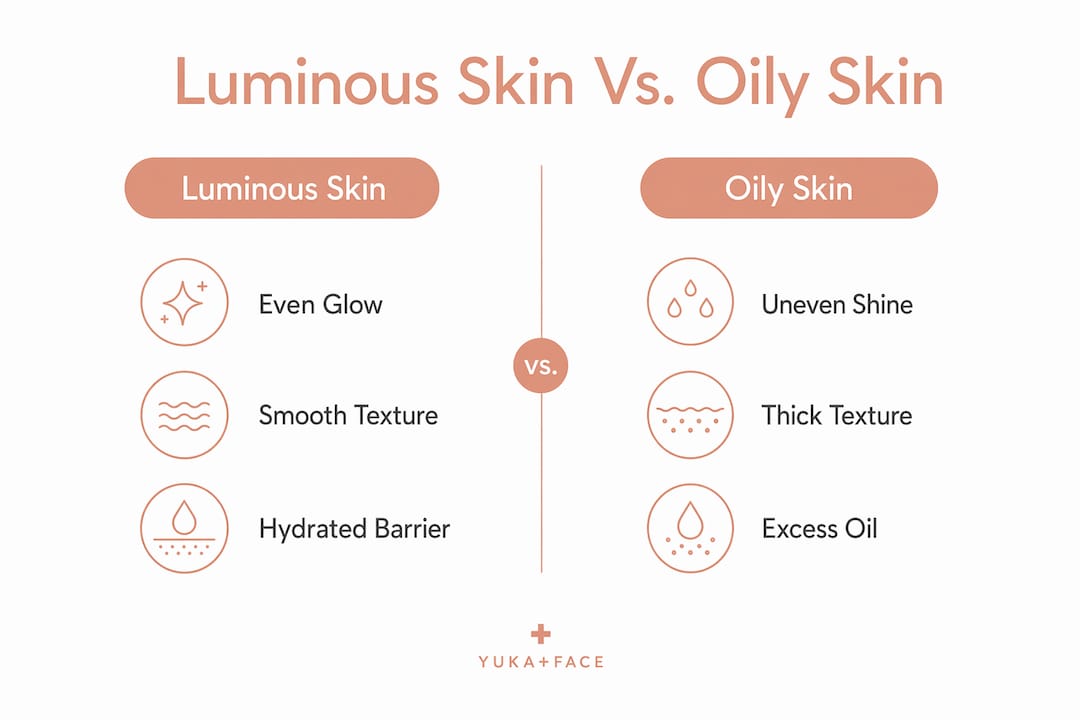
Luminous skin and oily skin look different because they are physically different at the surface level. Oily skin causes chaotic light reflection unlike the soft, even glow of true luminosity. Excess sebum creates an uneven, greasy film that bounces light in unpredictable directions. The result is a harsh, flat shine rather than a soft radiance.
| Feature | Luminous skin | Oily or shiny skin |
|---|---|---|
| Light reflection | Even, uniform, soft | Uneven, harsh, flat |
| Cause | Hydrated barrier, smooth texture | Excess sebum production |
| Texture | Smooth, refined | Often enlarged pores, uneven |
| Feel | Comfortable, balanced | Greasy, heavy |
| Product response | Absorbs well, stays balanced | Products slide off or pill |
Heavy oils and thick occlusive products can create the appearance of shine without improving the underlying barrier. They sit on top of the skin and reflect light in the same chaotic way that excess sebum does. True luminosity requires texture improvement and hydration, not just surface coating.
Dermatologists describe the ideal as a "lit from within" look. That phrase refers to light reflecting evenly from a smooth, hydrated surface rather than bouncing off a greasy film. The difference is visible and tactile. Luminous skin feels comfortable and balanced. Oily shine feels heavy and often leads to clogged pores.
Lifestyle habits that support long-term luminosity
Topical products address the surface. Lifestyle habits address the biology underneath. Both are required for sustained luminosity.
- Diet. Foods rich in carotenoids, omega-3 fatty acids, vitamins A and C, zinc, and protein support skin structure, repair, and natural radiance over time. Higher fruit and vegetable intake associates with a more radiant complexion through subtle tone improvements. Carotenoids in particular deposit in the skin and contribute a warm, healthy color that reads as luminous.
- Sleep. Skin repair peaks during deep sleep. Chronic sleep deprivation elevates cortisol, which breaks down collagen and disrupts barrier function. Both effects reduce luminosity directly.
- Stress management. Elevated stress hormones trigger inflammation and increase sebum production. Both outcomes work against the even, calm surface that luminous skin requires. Practices like consistent sleep schedules, exercise, and mindfulness all support lower baseline cortisol.
- Sun and pollution protection. UV exposure is the primary driver of pigment irregularities and barrier damage. Pollution generates free radicals that degrade collagen and dull the skin's surface. Daily SPF and antioxidant serums address both threats.
- Patience and consistency. Skin cell turnover takes roughly 28 days in younger adults and slows with age. Visible improvements in tone and texture require at least one full cycle, often two or three. Consistency over weeks produces results that no single product can deliver overnight.
Professional treatments like chemical peels, microdermabrasion, and laser resurfacing can accelerate texture improvement when home routines plateau. These are tools to consider after a solid baseline routine is in place, not shortcuts to skip the basics.
Key takeaways
Luminous skin is a biological outcome of a healthy, hydrated skin barrier and smooth texture, not a product you apply.
| Point | Details |
|---|---|
| Luminous skin meaning | Skin that reflects light evenly due to a healthy barrier, balanced hydration, and steady cell turnover. |
| SPF is non-negotiable | Daily broad-spectrum sunscreen prevents UV-induced dullness and pigment irregularities that destroy luminosity. |
| Texture matters most | Smooth skin surface reflects light better than any brightening product applied over rough texture. |
| Glow vs. shine | Luminosity is even, soft light reflection. Oily shine is chaotic reflection caused by excess sebum. |
| Lifestyle drives results | Diet, sleep, and stress management support the cellular health that makes topical routines more effective. |
What I have learned about chasing the glow
I have spent years watching people invest in expensive brightening serums while skipping sunscreen and sleeping five hours a night. The results are predictable. The serum does nothing meaningful because the biology underneath is working against it.
The most common frustration I hear is that a routine "stopped working." What actually happened is that the skin adapted to a product while the lifestyle factors that drive real luminosity stayed the same. Dull skin is almost always a barrier or texture problem, not a missing ingredient problem.
What I find most people miss is the hydration piece. Not moisturizer applied on top, but actual water content within the skin cells. A personalized skincare routine that accounts for your skin type and environment will always outperform a generic one, because hydration needs vary significantly by climate, age, and skin type.
My practical advice: lock in the four-step daily routine for 90 days before adding anything else. SPF every morning without exception. A gentle exfoliant once a week. A barrier-supportive moisturizer. That framework, done consistently, produces more visible luminosity than any glow serum used inconsistently on top of a compromised barrier.
Realistic expectations matter too. Gradual improvement over 8–12 weeks is the normal timeline. Skin that has been dull for years does not transform in two weeks. The biology takes time, and that is not a flaw in the process.
— Kelly
Build your luminous skin routine with Yukaface
Yukaface offers a morning skincare routine built around the exact principles that support luminous skin: barrier protection, gentle hydration, and clean, vegan-friendly formulas. Every product in the Yukaface range is 100% natural, cruelty-free, and created for all skin types.

For those exploring plant-based options, the vegan skincare guide covers how botanical ingredients support skin health without synthetic additives. Yukaface uses botanical research and expert formulation to support your skin's natural radiance. Clean ingredients. Transparent sourcing. Results built on science.
FAQ
What is the luminous skin meaning in dermatology?
Luminous skin refers to skin that reflects light uniformly, measured scientifically via the L* axis in the Lab* color space. It indicates a healthy, hydrated skin barrier and smooth surface texture.
How long does it take to get luminous skin?
Visible improvements in tone and texture typically require 8–12 weeks of consistent routine use. Skin cell turnover takes roughly 28 days, so results build over multiple cycles.
Is luminous skin the same as oily skin?
No. Luminous skin reflects light evenly from a smooth, hydrated surface. Oily skin causes chaotic, uneven light reflection due to excess sebum, which creates shine rather than glow.
What products help achieve a natural glow?
A vitamin C serum, a hydrating moisturizer with ceramides, a gentle PHA or lactic acid exfoliant used weekly, and a daily broad-spectrum SPF form the core product set for luminous skin.
Can diet affect skin luminosity?
Yes. Foods rich in carotenoids, omega-3 fatty acids, vitamins A and C, and zinc support skin structure and repair. Higher fruit and vegetable intake associates with a more radiant complexion over time.