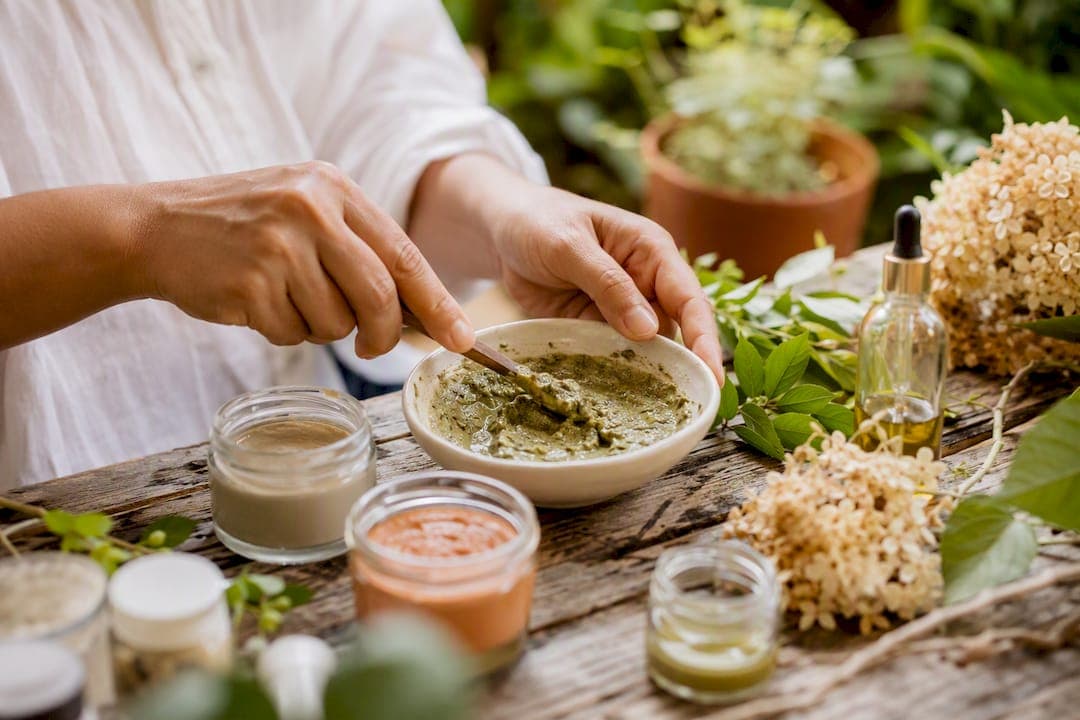
Sustainable spa treatments are professional skincare services built around responsibly sourced ingredients, low-waste packaging or refill systems, and operations that cut water and energy use. Look for certified organic products, refillable dispensers, and third-party eco certifications when booking. The details matter more than the label, and the sections below break down exactly what to check before you book, what to expect during treatment, and how to keep results going at home.
TL;DR:
- Most sustainable spa treatments rely on traceable, certified organic ingredients, waterless concentrates, and refillable or reusable packaging to minimize environmental impact.
- Certifications like ECOCERT, USDA Organic, and Leaping Bunny ensure genuine sustainability practices rather than vague marketing claims, making verification easier.
- Refillable dispensers, glass containers, and take-back programs are key indicators of a spa's commitment to waste reduction beyond just using organic products.
- Water and energy conservation, local sourcing, and proper sanitation protocols with reusable tools reinforce a spa's overall eco-conscious approach.
- Consumers should ask about third-party certifications, refill policies, and sustainable sourcing before booking to confidently choose genuinely eco-friendly treatments.
Table of Contents
- What Makes a Spa Treatment Sustainable?
- What Sustainable Spa Treatments Look Like in Practice
- What to Look for on the Ingredient List (and What to Avoid)
- How to Book a Sustainable Spa Treatment With Confidence
- Which Certifications Actually Mean Something?
- Product-Aligned Approaches for Sustainable Spa Skincare
- Where Sustainable Spa Choices Actually Pay Off
- A Simpler Way to Keep Sustainable Skincare Going at Home
- Sources
- FAQ
What Makes a Spa Treatment Sustainable?
A facial or body treatment earns the "sustainable" label through a combination of choices, not one single ingredient swap. Four dimensions decide whether a spa's eco claims hold up under a real look.
Ingredient sourcing and traceability comes first. Certified organic botanicals, algae harvested without stripping wild beds, and plant oils with a documented supply chain all signal a spa that has actually vetted its vendors, rather than one that just prints "natural" on a menu card.

Formulation choices matter just as much. Waterless concentrates, low-toxicity actives, and cruelty-free testing protocols reduce both environmental load and skin irritation risk, which is exactly why sensitive-skin clients tend to do better on these treatments.
Packaging and waste practices separate marketing from operations. Refillable bottles, compostable single-use items, and manufacturer take-back programs are concrete signs a brand has thought past the treatment room. Refillable and take-back packaging models are one of the more effective ways brands and spas reduce their packaging footprint, and spas that stock refill stations for their retail lines usually apply the same low-waste thinking to what they use on clients.
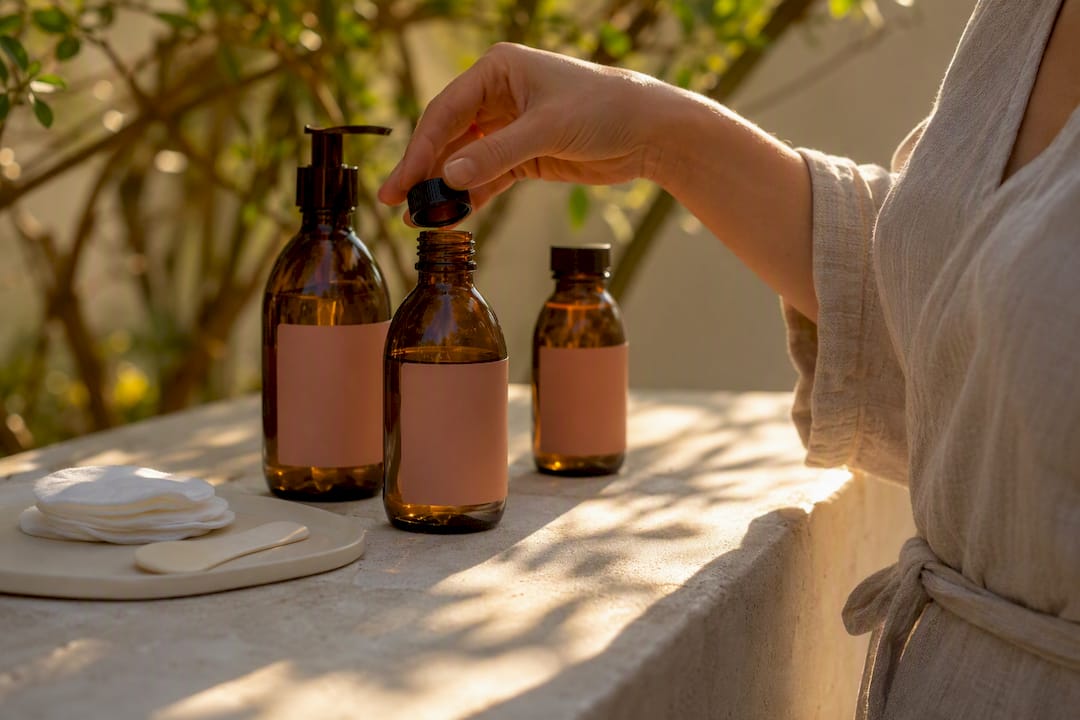
Operational habits round it out: water and energy conservation, local sourcing where possible, and genuine reduction of disposable towels, applicators, and gloves.
Here's why each of these matters beyond optics:
- Traceable sourcing usually means fewer questionable synthetic fillers, which lowers reaction risk for reactive or compromised skin.
- Waterless and low-toxicity formulas concentrate active ingredients instead of diluting them, often making them gentler and more potent at once.
- Refill and take-back systems cut the plastic load that ends up as landfill waste after a single treatment.
- Water and energy conservation at the facility level reflects a spa's values beyond what's on the treatment menu.
What Sustainable Spa Treatments Look Like in Practice
Sustainable spas run mostly the same menu as conventional ones. The difference sits in the sourcing, the format, and what happens to the packaging afterward.
-
Organic facials. These lean on certified organic serums and masks with a short, recognizable ingredient list rather than a long roster of synthetic actives. Look for estheticians who dispense product from refillable pump bottles instead of individually wrapped sachets for every step.
-
Herbal and clay body wraps. Sustainably harvested seaweed, or a land-based herb blend when seaweed stocks are under pressure, gets mixed fresh and applied by hand. Low-waste application means cloth wraps that get laundered and reused, not disposable plastic sheeting.
-
Bamboo and hemp fiber massages. Massage tools and linens made from fast-growing bamboo or hemp reduce the resource load compared to conventional cotton, and the oils used alongside them typically come from refillable bulk containers rather than single-use bottles per session.
-
Salt and sugar scrubs. Responsibly sourced exfoliants, meaning salt from managed sources and sugar without questionable supply chains, replace the microplastic beads still found in some conventional scrubs. Packaging tends toward glass jars or bulk dispensing rather than individual plastic tubs.
-
Waterless rituals. Some spas now offer treatments built around waterless concentrates activated with minimal water, or facial oils used as the entire base rather than a rinse-heavy multi-step process. These use less water at the sink and less packaging per treatment, since a concentrated formula covers more sessions than a diluted one.
The common thread across all five: less packaging per treatment, ingredients you can actually trace, and materials chosen for reuse rather than disposal. A wrap treatment using washable cloth instead of disposable sheeting cuts more real waste over a year than most people assume, simply because that one swap repeats dozens of times per spa, per week.
What to Look for on the Ingredient List (and What to Avoid)
Reading a spa's product list doesn't require a chemistry background. A few specific things separate genuinely sustainable formulas from ones riding on vague language.
Prefer these:
- Certified organic botanicals with a named certifying body, not just the word "organic" on its own
- Plant oils (jojoba, marula, rosehip) used as the primary base rather than diluted into a long ingredient list
- Humectants like glycerin from traceable plant sources
- Waterless concentrates, which pack more active ingredient per gram and generate less packaging over time
Red flags to watch for:
- "Natural" with no certification, no percentage, and no ingredient specificity behind it
- Palm oil with no sustainability certification attached, given its documented deforestation footprint
- Microplastic exfoliating beads, still legal in some scrub formulas despite years of environmental scrutiny
- Heavy synthetic fragrance loads, a common trigger for sensitive and reactive skin regardless of how "natural" the rest of the formula claims to be
Packaging tells its own story. Refillable dispensers, glass or aluminum containers, and a stated take-back or recycling program are the clearest signals a spa or brand has built sustainability into its supply chain rather than bolted it on for marketing. Packaging remains one of the largest sources of beauty waste industry-wide, which is exactly why refill infrastructure carries more weight than an organic claim on its own.
Pro Tip: You don't need to know the chemistry. Just ask, "Where does this ingredient come from, and what happens to the bottle when it's empty?" A spa with real sustainability practices will have a specific answer, not a shrug.
How to Book a Sustainable Spa Treatment With Confidence
Booking well comes down to asking the right questions before you commit, not researching every ingredient yourself. Use this priority order when you call or check in.
-
Ask about certifications first. A spa carrying ECOCERT's Sustainable Wellbeing Center status or similar third-party verification has already been evaluated on product sourcing, staff conditions, and environmental practices, saving you the guesswork.
-
Ask where products are sourced. "Which brands do you use, and are they cruelty-free or certified organic?" is a fair, specific question any well-trained receptionist should answer without hesitation.
-
Ask about refill and reuse policies. Does the spa use bulk refillable dispensers for treatment products, or does every client get a fresh single-use packet regardless of need?
-
Ask how single-use materials are handled. Disposable gloves and applicators are sometimes unavoidable for sanitation, but towels, wraps, and robes should be laundered reusables, not disposable.
-
Confirm sanitation practices align with sustainability. Reusable tools cleaned between clients with proper sanitation protocols achieve the same hygiene standard as disposables, without the waste.
On cost: sustainable treatments run close to conventional pricing at most spas, sometimes slightly higher when certified organic ingredients cost more to source. A typical organic facial runs about an hour to an hour and a half, similar in length to a standard facial, and body wraps generally last between three-quarters of an hour to just over an hour. The sustainability features rarely change the timeline, only the sourcing behind what's used.
If you have sensitive skin, reactive conditions, or a diagnosed dermatological issue, sustainability should never override medical guidance. Ask specifically about fragrance load and known allergens before assuming "natural" means "safe for your skin."
Which Certifications Actually Mean Something?
Certifications exist to remove the guesswork from a spa's claims, but not all labels carry equal weight. A few are worth learning to recognize on sight.
- ECOCERT Sustainable Wellbeing Center evaluates spas directly, covering certified organic or natural product use, staff well-being criteria, and active reduction of environmental impact. It's one of the few certifications built specifically for spa operations rather than product manufacturing alone.
- USDA Organic and COSMOS confirm a product's ingredient composition meets defined organic thresholds, verified by an outside body rather than self-reported.
- Leaping Bunny confirms no animal testing occurred anywhere in the supply chain, a stricter standard than a brand's own "cruelty-free" claim.
- B Corp certifies a company's overall social and environmental performance, not just one product line, which makes it a useful signal at the brand level.
Third-party certifications and transparent sourcing remain the most reliable way to separate real sustainability from marketing. When a spa has no certifications at all, that's not automatically disqualifying, but it does shift the burden onto you to ask direct questions about sourcing and waste. Watch for greenwashing signs: packaging that contradicts stated values (heavy plastic despite "eco" branding), vague claims with no specifics behind them, or badges you can't verify through an actual certifying body's website.
Product-Aligned Approaches for Sustainable Spa Skincare
Yuka+Face builds its range around the same criteria this guide walks through. That alignment matters for spa professionals stocking treatment rooms and for consumers extending results at home.
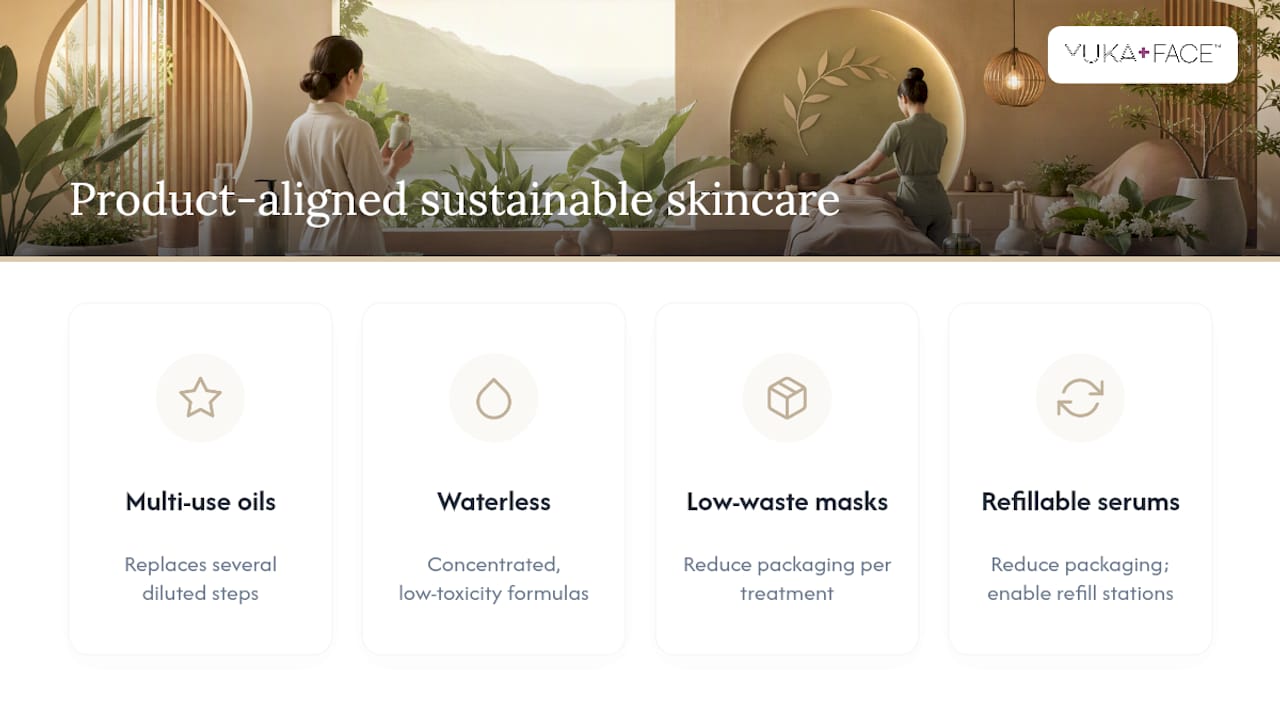
Multi-use facial oils fit the waterless, concentrated-formula approach that spas increasingly favor, since a single oil can replace several diluted steps. Low-waste masks and refillable serum formats reduce the packaging load per treatment, the same principle driving refill stations at sustainability-focused spas. Natural facial oils in particular support the waterless, low-toxicity direction that eco-conscious formulation has been moving toward.
Post-treatment, the biggest lever for consumers is consistency. A spa visit resets the skin; what happens in the weeks after determines whether that reset holds. Readers looking to build a genuinely sustainable routine at home can extend the same low-waste, ingredient-conscious logic well past the treatment room.
Where Sustainable Spa Choices Actually Pay Off
Sustainable spa treatments aren't a compromise between "good for the planet" and "good for your skin." The two goals overlap more than most people expect, because concentrated, traceable ingredients tend to be gentler ingredients. My honest read: the ECOCERT-style certifications and refill infrastructure matter more than any single "organic" sticker, because they verify practices across an entire operation rather than one product claim.
Three things to do right now: ask about certifications before booking, request the refill or reuse policy directly, and use up what you already own at home before buying anything new.
— Kelly
A Simpler Way to Keep Sustainable Skincare Going at Home
Yuka+Face gives you a way to extend spa-grade, low-waste skincare without hunting down refill stations or parsing vague "natural" labels yourself.
If a recent facial left your skin glowing and you want that to last, the Nighttime Ageless Peptide Serum picks up where a spa treatment leaves off, without a shopping list of synthetic actives to decode. For a full picture of the philosophy behind the formulations, the guide to vegan skincare breaks down exactly what "vegan and cruelty-free" means at the ingredient level. Start with one product, build a routine around it, and check the Yuka+Face journal for the next step in your aftercare plan.
Sources
- Planet Positive Beauty: A Beauty Lover’s Guide to Sustainable Choices - British Beauty Council
- What Is Sustainable Beauty? Core Components + Examples (2026) - Shopify
- How to Make Your Beauty Routine More Eco-Friendly | Vogue
FAQ
What is the most sustainable skincare brand?
No single brand holds that title universally, but certifications like B Corp, Leaping Bunny, and COSMOS help identify credible options.
What products are used in holistic spa treatments?
Holistic spa treatments typically use certified organic botanicals, plant oils, herbal or clay blends, and waterless concentrates chosen for both skin benefit and minimal environmental impact. The format matters as much as the ingredient: refillable dispensers and reusable application tools are common in holistic-focused spas.
What is a holistic spa treatment?
A holistic spa treatment addresses skin health alongside broader well-being, often combining natural ingredients with practices like mindful touch, aromatherapy, or breathing techniques rather than isolating one skin concern. Sustainability frequently overlaps with this approach, since gentler, traceable ingredients tend to serve both goals.
What is the most beneficial spa treatment?
The most beneficial treatment depends on skin type and concern, but organic facials using certified, low-toxicity actives tend to deliver strong results with lower irritation risk, especially for sensitive skin. Waterless rituals offer a similar benefit for anyone prone to reactivity from diluted or fragranced formulas.