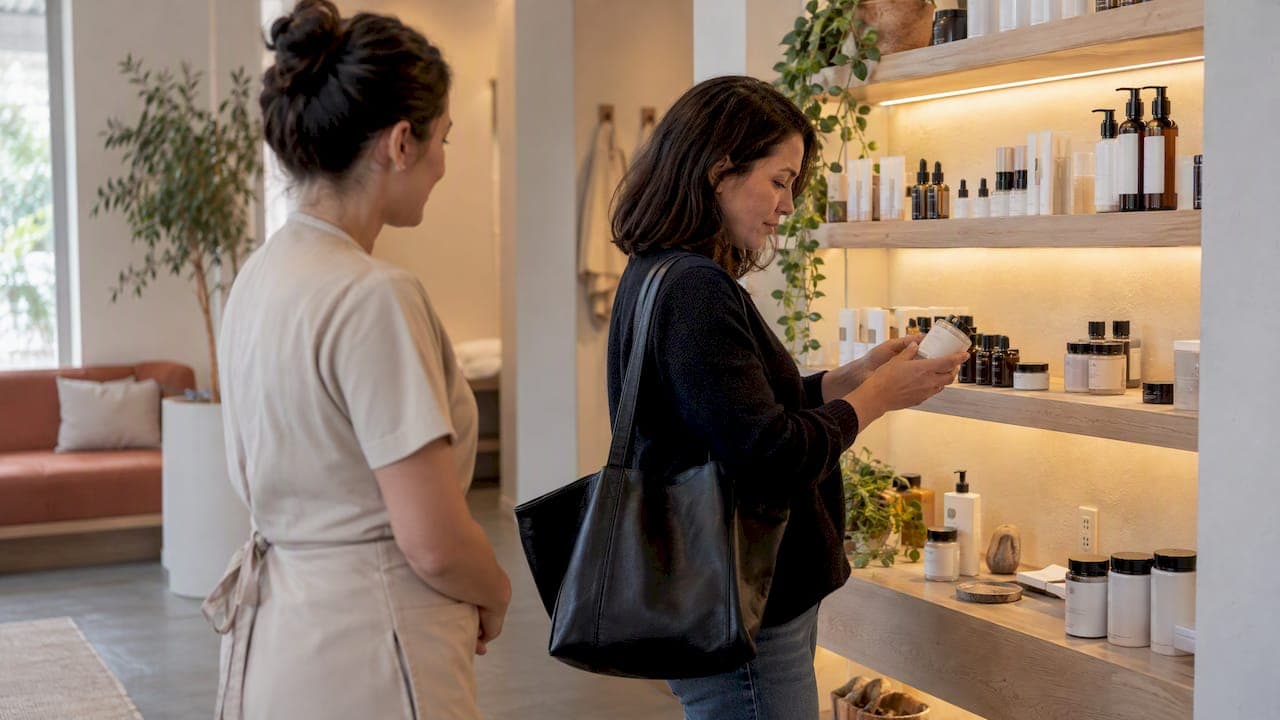
The fastest way to lift spa retail is to merchandise 3 to 5 curated, treatment-linked hero products at eye level, use them during service, and make checkout effortless. Active merchandising can add roughly $25 to $40 in retail per client visit, which adds up fast across a full client book. This guide covers eight practical, low-cost ideas plus a 30 to 90 day checklist to put them into action.
TL;DR:
- Placing three to five top-selling products at eye level significantly increases impulse purchases during spa visits.
- Using small, curated product sets and retail theater vignettes makes retail displays more appealing and less cluttered.
- Linking products to treatments and mentioning them mid-service boosts sales more effectively than traditional pitches.
- Maintaining a consistent retail refresh every month encourages familiarity and keeps the display engaging for repeat clients.
- Offering low-cost samples, travel sizes, and clear benefit-focused signage builds client trust and increases the likelihood of future purchases.
- ✓100% natural products
- ✓Cruelty-free skincare
- ✓Vegan formulations
- ✓Products for all skin types and ages
Table of Contents
- 1. Eight spa retail ideas worth testing this month
- 2. A 30-60-90 day rollout you can measure
- 3. Merchandising vegan and cruelty-free products for trust
- 4. Customer experience enhancement strategies in retail areas
- 5. Incorporating digital and online retail integration
- 6. Inventory management best practices beyond simple measurement
- 7. Retail as an extension of client care
- 8. A simple way to stock vegan skincare that matches these rules
- FAQ
- Sources
1. Eight spa retail ideas worth testing this month
Spa retail does not need a remodel. It needs a short list of fixes that match how clients actually shop in a relaxed, low-attention state. Here are eight, ranked by effort versus payoff.
- Eye-level placement at "buy level." Products placed at a customer's natural line of sight perform far better than anything shelved above or below it, according to Pure Spa Direct's merchandising guidance. A guest in "float mode" after a facial will not hunt for a product on a top shelf. Move your three best sellers into that band and watch impulse pickups rise.
- Curate 3 to 5 products per routine, not twenty. Pick one daily essential, one treatment booster, and one seasonal highlight per category. A packed wall reads as clutter; a short, confident lineup reads as expertise.
- Build small "retail theater" vignettes. Group three items on a riser with one prop and a lot of white space around them. Every visible object should be sellable: "Retail Theater" means skipping decor that does not drive revenue.
- Offer hygienic testers and travel sizes. A client who can smell, touch, or sample a texture buys with far less hesitation than one guessing from a label. Decants and 2 to 10ml sample sizes work the same way in fragrance retail, where sampling before a full-size purchase is standard practice, as outlined by ThePerfumeSampler's guide to decants.
- Create a "product of the month" bundle. Pair a hero serum with a mini cleanser at a slight discount for 30 days only. Limited availability nudges hesitant buyers off the fence.
- Tie retail to the service itself. The strongest sales line is not a pitch, it is a sentence spoken mid-treatment: "This is the toner I'm using on you right now." Referencing a product during service and again at checkout is widely considered the most effective spa sales technique.
- Optimize the checkout counter. Keep it low, keep it priced, and keep it stocked with small-ticket add-ons like lip balms or hand creams.
- Train staff with a short script and a monthly refresh. Give estheticians three lines they can say without sounding like a pitch, and rotate the display every four weeks so regulars see something new.
- Supplies for a basic refresh: two acrylic risers, one LED puck light, printed shelf-cards, and sample jars.
- Supplies for testers: pump-top sample bottles, cotton swabs, and a small tray to keep the counter tidy.
Pro Tip: Pick two ideas from this list to start, not all eight. A half-finished eight-point overhaul sells less than two ideas done well.
2. A 30-60-90 day rollout you can measure
Turning ideas into habits takes a simple timeline, not a project plan.
- Days 1 to 30: Refresh the display with risers and lighting, hold a 15-minute staff huddle on the post-treatment bridge script, set out testers, and add price cards to every shelf item.
- Days 31 to 60: Run an A/B test on your top hero product by moving it between two display spots, track sales-per-visit weekly, and set a reorder rule of 3 to 5 units per SKU until a product proves itself.
- Days 61 to 90: Introduce a limited bundle, shift placements based on what actually converted, and lock in a monthly cadence for swapping displays going forward.
Active merchandising on a consistent basis can add roughly $25 to $40 in retail per visit, which at even 20 clients a week translates into real weekly upside, according to SpaSphere's retail displays guide. Track three numbers only: retail dollars per visit, units sold per SKU, and the share of checkouts that include a retail item. A simple spreadsheet updated weekly is enough to prove what is working before you invest further.
3. Merchandising vegan and cruelty-free products for trust
U.S. prestige beauty retail grew 4% to $36 billion in 2025, with mass retail up 5% to $72.7 billion, and skincare was a standout category within that growth, according to Circana's 2025 report. Shoppers are already primed to spend on skincare, which means sustainability claims need to earn shelf space rather than just decorate it.
- Write shelf-talkers benefit-first: "Vegan, barrier-repair serum, used in our signature facial" tells a client what it does before what it is made of.
- Display travel sizes next to full sizes with both prices visible, so the sample-to-full upgrade is an easy next step, not a second decision. Our own packaging philosophy leans on this kind of clear, minimal shelf communication.
- Point curious clients to plain-language resources, like this explainer on sustainable spa treatment claims, instead of overloading the shelf-card with certifications.
Pro Tip: Lead with the skin benefit, follow with the ethics. "Hydrates dry skin" sells faster than "ethically sourced" on its own.
4. Customer experience enhancement strategies in retail areas
A retail wall works harder when the space around it feels calm rather than transactional. Keep walkways clear so clients browsing after a treatment are not dodging a cart or a laundry bin. Soft, warm lighting over the display (not overhead fluorescents) keeps the same relaxed mood as the treatment room, which matters because a client in "float mode" shops slower and notices less. Label shelves in plain language, skin concern first, product second: "For dry skin: Hydrating Power Moisturizer" reads faster than a product name alone. Keep a seating or waiting area near, but not on top of, the retail wall, so browsing never feels rushed by a line forming behind someone. Scent matters too: a retail area that smells like the treatment room reinforces the connection between what a client just felt and what they can take home.
5. Incorporating digital and online retail integration
A spa's retail wall and online shop should tell the same story, not compete for the same sale. Printed shelf-cards with a QR code linking to a product's full ingredient list or routine page let a hesitant shopper research without pulling out a phone to search blindly. Replenishment is the easiest digital win: a client who buys a cleanser in-spa should be able to reorder it online in two clicks once it runs low, rather than waiting for their next appointment. Some spas use branded booking and membership platforms, like Exclusively's software for beauty professionals, to combine appointment booking with retail reorder reminders inside one app. Posting a short video of a product being used mid-treatment, even a 15-second clip, gives online followers the same "product-in-service" trust signal that works so well on the retail floor.

6. Inventory management best practices beyond simple measurement
Tracking units per SKU tells you what sold, not why it sold or when to reorder. Set minimum and maximum stock levels per product so a hero item never sits empty for two weeks waiting on a reorder. Rotate stock front-to-back the way grocery stores do, so older inventory sells before it expires, which matters more for natural formulas with shorter shelf lives. Separate "testing" stock from sellable stock in your count, since a tester that gets used up during services should not be reconciled against retail sales numbers. Review slow movers every 60 days and either reposition them, bundle them, or discontinue them rather than letting dead stock take up prime shelf space that a hero product could use instead.

7. Retail as an extension of client care
Retail at its best is not a pitch, it is a continuation of the care a client just received. A toner recommended because it was used minutes earlier on someone's skin is advice, not a sale. Small wins show this clearly: one regular client switching to a daily cleanser after a single mention mid-facial often reorders it for years.
— Kelly
8. A simple way to stock vegan skincare that matches these rules
Everything above points to the same idea: fewer, better products, used during service, priced clearly. Our vegan, cruelty-free lines are built around that same short-list philosophy, so a spa does not need twenty SKUs to look curated.
- Start with a travel-size cleanser, a hero serum, and a printed shelf-card as a low-commitment trial set.
- Browse full-size and starter options on our shop page.
- Set up spa stocking through our wholesale hub.
For a spa testing new retail without a big upfront order, that starter approach keeps risk low while giving staff something concrete to use during service and recommend at checkout. Our gift card, from $50, also works well as a checkout add-on for clients not ready to commit to a full routine yet.
FAQ
What are the latest spa retail trends?
Skincare and prestige beauty categories grew through 2025, with prestige retail up 4% and mass retail up 5%, showing steady consumer appetite for skincare purchases. Spas are responding with tighter, more curated retail walls, testers at every station, and shelf language that leads with skin benefits rather than ingredient lists.
Is running spa retail actually profitable?
Retail margins in spas commonly run around 40 to 50%, and even modest active merchandising can add $25 to $40 per client visit without new foot traffic. The upside comes from better placement and service tie-ins, not from carrying more inventory.
What marketing ideas work well for a spa?
Limited-time bundles, a rotating "product of the month," and referencing products by name during treatment all perform better than general promotions. Post-treatment product mentions work especially well because the client has just felt the result firsthand.
How do I attract more customers to a spa or salon?
Word of mouth and repeat visits respond strongly to a retail experience that feels like genuine advice rather than a sales pitch, since clients who buy and like a product tend to rebook sooner. Clear, benefit-first signage and a calm, uncluttered retail area also make a first-time visitor more comfortable browsing before they leave.
How often should I refresh my spa's retail display?
A monthly cadence works well for most spas: swap featured products, rotate seasonal highlights, and refresh shelf-cards so regular clients notice something new. This also gives staff a natural reason to mention a "new arrival" during service.
Sources
- US prestige & mass beauty retail deliver a positive performance in 2025 | Circana
- Spa retail displays guide | SpaSphere
- Why your 'retail wall' should be at eye level (Pure Spa Direct)