
TL;DR:
- Choosing the right skin care course depends on whether you seek personal use, licensure, advanced clinical skills, or product formulation.
- Verify accreditation, practical hours, instructor credentials, and vegan curriculum focus before enrolling for trustworthy preparation.
Choose a consumer short course for personal or retail use, an esthetician licensure program for client-facing work, an advanced clinical module for medical spa placement, or a formulation diploma to develop and sell original products.
Before enrolling, verify:
- Accreditation or state licensing eligibility via NACCAS or your state cosmetology/esthetician licensing board
- Practical hours listed in the syllabus (many states require around 600 hours for licensure)
- Instructor credentials and externship availability
- Explicit vegan/natural ingredient curriculum if that is your focus
Associated Skin Care Professionals (ASCP) and similar associations publish standards that help verify provider quality.
Table of Contents
- What types of skin care courses are available?
- How do course formats and practical hours differ?
- What does a solid curriculum cover?
- How long do courses take, and what do they cost?
- What are the prerequisites and certification outcomes?
- How do you choose the right course?
- Special considerations for vegan and cruelty-free focus
- Where do you verify provider credibility?
- What job placement and networking support should you expect?
- Yuka+Face resources for vegan skincare learners
- FAQ
- Key Takeaways
What types of skin care courses are available?
Consumer short courses (60–80 hours) cover facial techniques, skin analysis, and home-care basics. Short courses suit retail staff and personal learners.
Esthetician licensure programs meet state board requirements. Most states set the bar at around 600 supervised hours, including client practice and state board prep.
Advanced clinical programs add extra hours and device training. Bellus Academy's Esthetics 103, for example, is a 900-hour program with 300 additional hours covering LED therapy, microcurrent, and hydrodermabrasion — decisive for medical spa placement.
Formulation diplomas teach ingredient sourcing, pH control, preservation, and regulatory compliance. Formula Botanica's Diploma is the path for indie product founders, not client treatment.
Business/retail modules teach product sales, client retention, and retail merchandising. Estheticians who complete these alongside skin science report higher profitability and better client retention.
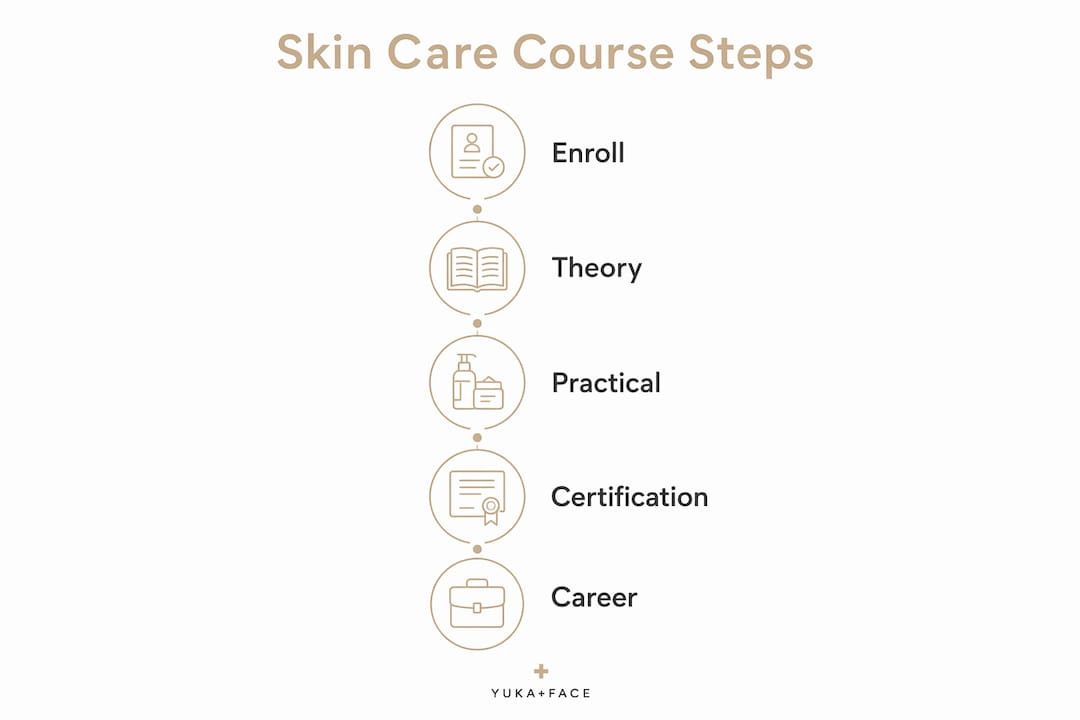
How do course formats and practical hours differ?
In-person programs provide supervised client hours on clinic floors. Required for licensure in every U.S. state.
Online formats work for theory, ingredient science, and business modules. Platforms like Coursera offer cosmetic science foundations covering skin biology, formulation basics, and ethics.
Hybrid programs split theory online and hands-on hours in person. Practical hours cannot be completed remotely for state licensure purposes.
What does a solid curriculum cover?
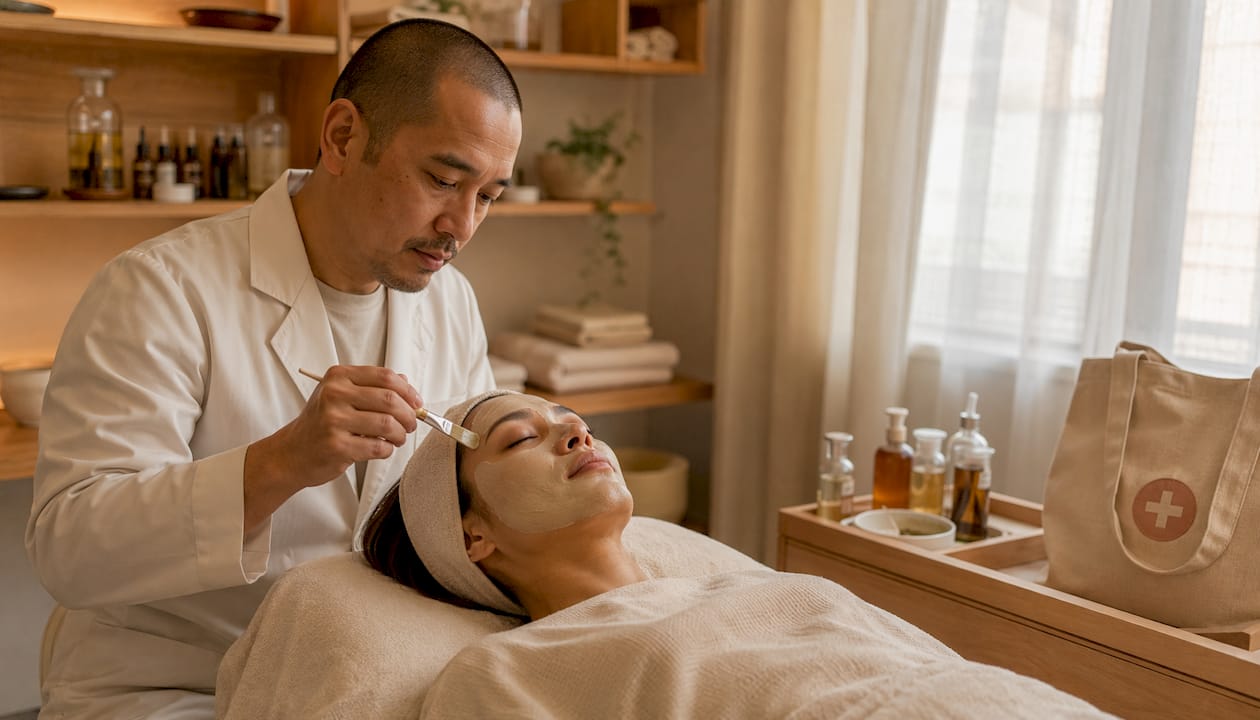
Core topics: skin anatomy, barrier function, skin chemistry, facial techniques, safety and sanitation, client consultation, and retail/business skills. Programs that blend holistic and clinical techniques prepare graduates for both naturopathic and medical spa settings. Advanced syllabi separate intermediate from advanced facial protocols so practitioners can match treatments to skin type.
How long do courses take, and what do they cost?
| Path | Duration | Typical Cost |
|---|---|---|
| Consumer short course | 60–80 hours | — |
| Esthetician licensure | ~600 hours | — |
| Advanced esthetics | extended program | — |
| Formulation diploma | Self-paced months | — |
Costs vary by state and school. Financial aid may be available at accredited institutions.
What are the prerequisites and certification outcomes?
Most licensure programs require a high school diploma or GED. Consumer and formulation courses typically have no prerequisites. Outcomes range from a certificate of completion (non-licensed) to a state esthetician license. A formulation diploma does not authorize client treatment — only state-approved esthetics programs do.
How do you choose the right course?
Ask: Is the program NACCAS-accredited or state-board approved? Does the syllabus list practical hours? Are instructor credentials published? Is job placement support included?
Red flags: no listed practical hours, unverifiable accreditation, no syllabus transparency, vague "certification" language with no licensing pathway stated.
Special considerations for vegan and cruelty-free focus
Look for explicit curriculum coverage of botanical actives, ingredient sourcing, cruelty-free certification awareness, and preservative-free formulation. Holistic programs that integrate naturopathic and European techniques align well with natural/vegan values. Pair coursework with natural skincare tips to reinforce botanical ingredient knowledge.
Where do you verify provider credibility?
Check NACCAS for institutional accreditation. Confirm state licensing eligibility with your state cosmetology/esthetician board. Review ASCP membership and continuing education standards. Trust signals: published syllabus with hour counts, named instructors with clinical experience, student outcome data, and externship availability. Brand-gated portals like iS Clinical EDU offer complimentary clinical modules for verified professionals.
What job placement and networking support should you expect?
Accredited schools typically offer job search guidance, interview prep, and state board support. ASCP membership provides networking, liability insurance, and continuing education access. Advanced programs with device training open doors to medical spas and resort spas. Brand partner education portals strengthen retail conversion skills post-graduation.
Yuka+Face resources for vegan skincare learners
Vegan and cruelty-free product knowledge fills a gap most formal courses leave open. Yuka+Face publishes free guides that map directly to course outcomes: the Guide to Vegan Skincare covers ingredient-first vegan product selection, the Morning Skin Care Routine gives retail staff ready-made protocol templates, and the Mindfulness Skincare guide supports holistic curriculum outcomes.
Use these resources before enrolling to assess ingredient alignment, during coursework to build retail talking points, and after completing a program to stock and recommend vegan, cruelty-free products with confidence. Browse the full Yuka+Face journal for ongoing education.
Yuka+Face learning resources: format and outcome overview
Yuka+Face guides are educational product resources, not accredited certification programs. They complement formal training by building vegan product knowledge and retail confidence.
| Resource | Format | Accreditation | Level | Cost | Certification | Retail Training |
|---|---|---|---|---|---|---|
| Guide to Vegan Skincare | Online guide | None | Beginner | Free | None | Yes |
| Morning Skin Care Routine | Online guide | None | Beginner | Free | None | Yes |
| Summer Skincare | Online guide | None | Beginner | Free | None | Yes |
| Mindfulness Skincare | Online guide | None | Beginner/intermediate | Free | None | Partial |
| Hydration & Restoration | Online guide | None | Beginner/intermediate | Free | None | Yes |
| Yuka+Face Blog | Online hub | None | All levels | Free | None | Yes |
FAQ
What is the minimum hours required for esthetician licensure?
Most U.S. states require around 600 supervised hours, though requirements vary by state. Confirm the exact number with your state cosmetology/esthetician licensing board before enrolling.
Do online skin care courses count toward state licensure?
Theory modules can be completed online in hybrid programs, but practical client hours must be completed in person. No U.S. state accepts fully remote hours for esthetician licensure.
What is the difference between a certificate and a license?
A certificate confirms course completion but does not authorize treating clients professionally. A state esthetician license, earned through an accredited program and state board exam, is required for legal client services.
Which course path suits a vegan skincare retailer?
A consumer short course or formulation diploma, paired with Yuka+Face's free vegan skincare guide, covers ingredient knowledge and retail talking points without requiring full licensure.
How do you verify a school's accreditation?
Search the NACCAS directory at naccas.org and cross-check with your state cosmetology/esthetician licensing board to confirm the program qualifies for state board exam eligibility.
Key Takeaways
The right skin care course matches your specific outcome: personal use, retail stocking, licensed practice, or product formulation.
| Point | Details |
|---|---|
| Match course to outcome | Choose consumer, licensure, advanced, or formulation based on your actual goal. |
| Verify hours and accreditation | Most states require ~600 supervised hours; confirm via NACCAS and your state board. |
| Vegan curriculum matters | Look for explicit botanical, ingredient sourcing, and cruelty-free content in the syllabus. |
| Certificates vs. licenses | A certificate does not authorize client treatment; only a state-approved program does. |
| Yuka+Face resources | Free guides on vegan skincare, routines, and barrier repair complement every course path. |