
The safest pregnancy skincare routine is three steps: a gentle cleanser, a fragrance-free moisturizer, and a daily mineral sunscreen with SPF 30 or higher. Stop using topical retinoids and oral isotretinoin immediately if you are pregnant or trying to conceive, and contact your provider before resuming any prescription skin medication.
Key no-nos at a glance:
- Stop now: Topical tretinoin, adapalene, retinol, oral isotretinoin
- Avoid: Hydroquinone, high-strength chemical peels, injectable fillers
- Check labels for: Retinoid synonyms, salicylic acid concentration, fragrance, essential oils
Dermatologist-approved pregnancy skin care from the American Academy of Dermatology confirms this baseline and notes that mineral sunscreens (zinc oxide or titanium dioxide) are preferred because they sit on the skin's surface rather than absorbing into the bloodstream.
Key Takeaways
Pregnancy-safe skincare centers on three verified steps (gentle cleanser, ceramide moisturizer, mineral SPF 30+) and the consistent avoidance of topical retinoids and hydroquinone throughout all trimesters.
| Point | Details |
|---|---|
| Baseline routine | Gentle cleanser, fragrance-free moisturizer, and mineral SPF 30+ cover the essentials safely across all trimesters. |
| Retinoids: stop immediately | All retinoid forms (tretinoin, adapalene, retinol) should be avoided; contact your provider before stopping any prescription version. |
| Safe actives available | Niacinamide, azelaic acid, hyaluronic acid, vitamin C, and low-dose benzoyl peroxide (spot use) are generally accepted options. |
| Breastfeeding precaution | Avoid applying any product to the breast or nipple area; wash hands after applying actives before handling your baby. |
| Yuka+Face fit | Yuka+Face vegan, fragrance-free formulations align with pregnancy-safe criteria; verify each product's full ingredient list with your provider. |
Table of Contents
- How does pregnancy change your skin and why does it matter?
- What does a pregnancy-safe daily skincare routine look like?
- Which skincare ingredients should you avoid during pregnancy?
- What topical ingredients are generally considered safe during pregnancy?
- Which professional treatments should you postpone during pregnancy?
- How do you check if a product is pregnancy-safe?
- Pregnancy-friendly natural options and how Yuka+Face fits
- When should you contact your healthcare provider?
- Skincare and breastfeeding: what to keep in mind
- Common myths about pregnancy-safe skincare
- How hormonal changes specifically influence skincare needs
- Skincare as self-care during pregnancy
- Non-chemical approaches and natural remedies considered safe during pregnancy
- What most pregnancy skincare guides get wrong
- Yuka+Face: clean formulations for pregnancy-focused routines
- Sources
- FAQ
How does pregnancy change your skin and why does it matter?
Pregnancy hormones shift your skin in several directions at once, sometimes within the same trimester.
Common changes include:
- Acne flares: Rising progesterone increases sebum production, clogging pores even in people who never had acne before.
- Melasma: Elevated estrogen and progesterone amplify melanin response to UV, producing the "mask of pregnancy" across the cheeks, forehead, and upper lip.
- Dryness and sensitivity: The skin barrier often becomes more reactive, making previously tolerated products sting or flush.
- Stretch marks: Rapid expansion of the abdomen, breasts, and thighs stresses collagen fibers.
- Pruritus (itch): Hormonal shifts and skin stretching both contribute; persistent or severe itch warrants a provider call.
Each change points to a specific product decision. Melasma means daily mineral SPF is non-negotiable. Acne means you need pregnancy-safe alternatives to retinoids. Dryness means ceramide-based moisturizers move to the front of the routine. Clinical guidance from UVA Health notes that simple, gentle routines focused on hydration and mineral SPF are the most widely recommended response to these hormonal shifts.
The background congenital risk in any pregnancy is generally referred to as low, according to MotherToBaby. Topical absorption is generally low when products are used as directed on intact skin, which is why many over-the-counter actives remain acceptable. The risk rises with broken skin, large application areas, or systemic equivalents of the same ingredient.
What does a pregnancy-safe daily skincare routine look like?
Morning routine
- Gentle cleanser. A sulfate-free, fragrance-free gel or cream cleanser. Cleanse once in the morning; twice daily if skin is oily.
- Antioxidant serum. Vitamin C (L-ascorbic acid at 10–15%) or niacinamide (4–10%). Both are well-tolerated and support an even skin tone without the risks tied to retinoids.
- Barrier moisturizer. Look for ceramides, hyaluronic acid, or glycerin. These ingredients support the skin barrier, which often becomes more reactive during pregnancy.
- Mineral sunscreen SPF 30+. Zinc oxide or titanium dioxide, broad-spectrum. Apply every morning, reapply midday if outdoors. Physical measures (hats, UPF clothing) add meaningful protection against melasma.
Evening routine
- Gentle cleanser. Same product as the morning, or a micellar water if skin is dry.
- Targeted pregnancy-safe active. Choose one: azelaic acid (10–20%) for acne and pigment, niacinamide for oiliness and tone, or hyaluronic acid for hydration. Reduce frequency if sensitivity increases.
- Moisturizer. Ceramide-rich or shea-based formulas work well for the drier skin common in the second and third trimesters.
Trimester adjustments
- First trimester: Skin is often most reactive. Pause all actives you are uncertain about. Introduce only one new product at a time.
- Second trimester: If skin has stabilized, you can reintroduce tolerated actives like low-concentration azelaic acid or niacinamide.
- Third trimester: Prioritize barrier repair and hydration. Reduce active frequency. Focus on SPF and moisturizer.
Pro Tip: Patch-test every new product on your inner forearm for 48 hours before applying it to your face. Pregnancy heightens sensitivity, and a reaction is harder to treat when your options are limited.
For deeper guidance on personalizing a routine to your skin type, trimester-specific adjustments follow the same logic: start simple, add slowly.
Which skincare ingredients should you avoid during pregnancy?
Ingredients to stop using
- Topical retinoids (tretinoin, adapalene, tazarotene, retinol, retinaldehyde): Systemic retinoids are known teratogens. While topical absorption is lower, dermatology and OB-GYN guidance consistently recommends avoiding all retinoid forms during pregnancy out of caution.
- Oral isotretinoin (Accutane): A confirmed teratogen. Requires two forms of contraception under the iPLEDGE program. Stop immediately and contact your prescriber.
- Hydroquinone: Used for pigmentation, but has notably higher systemic absorption than most cosmetic actives. Limited pregnancy-specific safety data makes it one to avoid.
- High-strength salicylic acid peels: Low-concentration, wash-off products are lower-risk, but full-face, high-strength leave-on salicylic acid peels increase systemic absorption and should be avoided.
- Formaldehyde-releasing preservatives: Occupational exposure to formaldehyde is linked to reproductive hazards per CDC/NIOSH data; consumer-level exposure in fragranced products is lower but worth checking on labels.
- Certain essential oils at high concentrations: Rosemary, sage, and clary sage are flagged for potential effects during pregnancy. Fragrance-free formulations are the safer default.
Safer alternatives
- Niacinamide instead of retinoids for texture and pore concerns
- Azelaic acid instead of hydroquinone for pigmentation
- Low-concentration benzoyl peroxide (spot use only) instead of high-strength retinoid acne treatments
- Mandelic acid or low-strength glycolic acid instead of strong chemical exfoliants
- Bakuchiol as a plant-derived alternative for texture; see retinol vs. bakuchiol for a full comparison
If you are currently taking oral isotretinoin or a prescription topical retinoid, do not stop without speaking to your prescriber first. Stopping abruptly may not be the right approach depending on your condition. Call your OB-GYN or dermatologist, explain you are pregnant or planning to conceive, and let them guide the transition. MotherToBaby (1-866-626-6847) can also provide evidence-based counseling specific to your situation.
A clinical dermatology review compiles drug-specific safety tables used by clinicians and confirms that topical retinoids and hydroquinone are among the most consistently flagged ingredients across pregnancy guidance.
What topical ingredients are generally considered safe during pregnancy?
MotherToBaby's review finds that OTC topical acne treatments typically have low systemic absorption when used as directed and are not expected to increase the chance of birth defects. The key qualifier: use them on intact skin, in limited areas, and at label-directed concentrations.
Generally accepted topical ingredients:
- Zinc oxide and titanium dioxide: Mineral sunscreen filters. Preferred over chemical filters during pregnancy because they remain on the skin surface.
- Hyaluronic acid: A humectant that draws water into the skin. No known pregnancy concerns at cosmetic concentrations.
- Niacinamide (vitamin B3): Addresses acne, redness, and uneven tone. Well-tolerated across all trimesters.
- Azelaic acid (10–20%): Effective for both acne and melasma. One of the most useful actives available during pregnancy.
- Benzoyl peroxide (low concentration, spot use): Acceptable for localized acne treatment. Avoid large-area application.
- Glycolic acid at cosmetic concentrations: Low-strength leave-on products and rinse-off cleansers are generally lower-risk. Avoid high-strength peels.
- Topical clindamycin and topical antibiotics: Often prescribed for pregnancy acne; discuss with your provider.
- Ceramides, glycerin, shea butter: Core moisturizing ingredients with no known pregnancy concerns.
- Vitamin C (L-ascorbic acid): Antioxidant support and brightening. Widely used and generally well-tolerated.
On essential oils and botanicals: "Natural" does not mean safe in pregnancy. Some plant extracts are pharmacologically active compounds. Avoid high-dose essential oils, particularly rosemary and sage. Choose fragrance-free or low-fragrance formulations when possible, especially if your skin has become more reactive.
Which professional treatments should you postpone during pregnancy?
Most in-office procedures that involve significant skin disruption, systemic absorption, or vascular effects are best postponed until after delivery and, in some cases, after breastfeeding.
Treatments to avoid or delay:
- High-strength chemical peels (TCA, Jessner's, high-strength salicylic): Increased systemic absorption risk; postpone until postpartum.
- Ablative laser resurfacing: Significant skin disruption; not recommended during pregnancy.
- Radiofrequency and energy-based devices: Limited safety data in pregnancy; defer.
- Botulinum toxin injections: No established safety data in pregnancy; standard guidance is to avoid.
- Injectable dermal fillers: Avoid during pregnancy and typically during breastfeeding; coordinate timing with your injector.
- Oral isotretinoin: A confirmed teratogen; must be stopped before conception.
Lower-risk in-office options that some providers continue with caution include LED photobiomodulation and certain non-ablative treatments, but always confirm with your dermatologist and OB-GYN before proceeding.
Postpartum timing: Many injectables and energy-based treatments can resume after breastfeeding ends, or earlier with provider clearance. Chemical peels and topical retinoids can often resume sooner, typically after delivery if you are not breastfeeding. Your treating clinician will set the timeline based on your specific situation.
How do you check if a product is pregnancy-safe?
Step-by-step label check
- Read the active ingredients panel first. This is where regulated drug ingredients appear (sunscreen actives, acne treatments).
- Scan for retinoid synonyms: retinol, retinyl palmitate, retinaldehyde, tretinoin, adapalene, isotretinoin, retinoic acid. Any of these: set the product aside.
- Check for hydroquinone. It appears by that name in the ingredients list.
- Note salicylic acid concentration. Above 2% in a leave-on product, or in a full-face peel format: avoid. A 0.5–2% wash-off cleanser is lower-risk.
- Look for "mineral sunscreen," "zinc oxide," or "titanium dioxide" on sunscreen labels rather than chemical filters like oxybenzone or avobenzone.
- Check for fragrance and essential oils. "Fragrance" or "parfum" can mask dozens of compounds. Specific essential oils (rosemary, sage) appear by name in the full ingredient list.
- Consult MotherToBaby or your OB-GYN if uncertain. The FDA advises that many cosmetics lack pregnancy-specific safety data; when in doubt, ask your provider.
Quick action reminders
- Bring product label photos to your prenatal appointments.
- Patch-test new products before full application.
- Avoid applying any skincare product to the breast or nipple area while breastfeeding.
- "Natural," "dermatologist tested," and "clean beauty" are marketing terms, not safety certifications.
Pregnancy-friendly natural options and how Yuka+Face fits
Vegan, fragrance-free, and botanically formulated products can align well with pregnancy skincare needs, provided the formulation avoids the flagged ingredient categories above.
Yuka+Face products are vegan, cruelty-free, and built around botanical actives and barrier-supporting ingredients. When evaluating any Yuka+Face formulation for pregnancy use, check for:
- Absence of: prescription retinoids, hydroquinone, high-dose essential oils, synthetic fragrance
- Presence of: ceramides, hyaluronic acid, niacinamide, mineral SPF compatibility, gentle cleansing agents
Read the full ingredient list on each product page rather than relying on category names. Yuka+Face publishes ingredient information on product pages; cross-reference against the checklist above or bring the list to your provider.
Pro Tip: Focus on barrier-first products during pregnancy: a gentle cleanser, a ceramide or hyaluronic acid moisturizer, and a mineral SPF. These three steps cover the most ground with the lowest risk profile. Add actives only after confirming tolerability.
This content is informational and is not a substitute for personalized medical advice from your OB-GYN or dermatologist.
When should you contact your healthcare provider?
Contact your OB-GYN or dermatologist promptly if you notice:
- Severe or infected acne: pain, pus, spreading redness, or fever alongside a skin breakout
- A rapidly spreading rash or hives after using a product
- Signs of a systemic reaction: swelling, difficulty breathing, widespread flushing
- Persistent, severe itching, especially on the palms or soles (this can indicate a liver condition called intrahepatic cholestasis of pregnancy, which requires medical evaluation)
Call your prescriber if you are taking oral isotretinoin, systemic immunomodulators, or systemic antibiotics for a skin condition and you are pregnant or planning to conceive.
Practical steps: Stop the product, photograph the reaction, and contact your provider. For evidence-based counseling on specific ingredients or medications, MotherToBaby (mothertobaby.org) offers free, clinician-reviewed information and a direct helpline.
Skincare and breastfeeding: what to keep in mind
Most of the pregnancy skincare guidance carries into the breastfeeding period, with a few specific additions.
Avoid applying any skincare product directly to the breast or nipple area. This includes moisturizers, serums, and sunscreens. Infants can ingest topically applied products during feeding, and even low-absorption ingredients become a concern at that route of exposure.
Wash your hands after applying any skincare product before handling your baby. This is especially relevant for products containing actives like benzoyl peroxide, azelaic acid, or any medicated formulation.
Topical retinoids remain on the avoid list during breastfeeding. The data on systemic transfer through breast milk is limited, and most dermatologists recommend waiting until after breastfeeding ends before reintroducing them. Hydroquinone is similarly deferred. Mineral sunscreens, hyaluronic acid, ceramides, niacinamide, and vitamin C are generally considered compatible with breastfeeding when applied away from the breast area.
Common myths about pregnancy-safe skincare
Myth: "Natural" means safe during pregnancy. Not accurate. Concentrated essential oils, certain plant extracts, and high-dose botanicals can be pharmacologically active. Rosemary and sage oils are flagged specifically. Always read the full ingredient list.
Myth: Low-dose retinol is fine because it's not prescription strength. Dermatology guidance recommends avoiding all retinoid forms, including over-the-counter retinol and retinaldehyde, during pregnancy. The topical absorption is lower than oral retinoids, but the consistent recommendation is to avoid the entire class.
Myth: Sunscreen chemicals are more dangerous than sun exposure during pregnancy. Mineral sunscreens (zinc oxide, titanium dioxide) are well-supported for pregnancy use. Skipping sunscreen entirely increases melasma risk significantly, and UV damage accumulates. Use mineral SPF daily.
Myth: You have to strip your routine down to nothing. A three-step routine (cleanser, moisturizer, mineral SPF) covers the essentials. Several actives, including niacinamide, azelaic acid, and vitamin C, remain available. The goal is a focused, verified routine, not a bare-minimum one.
How hormonal changes specifically influence skincare needs
Estrogen, progesterone, and human chorionic gonadotropin (hCG) all shift during pregnancy, and each affects the skin differently.
Estrogen generally supports collagen production and skin hydration, which is why some people notice a temporary "glow" in the second trimester. Progesterone drives sebum production, which explains acne flares, particularly in the first trimester when progesterone rises sharply. Both hormones increase melanocyte-stimulating hormone (MSH) activity, which amplifies the skin's response to UV and makes melasma far more likely without daily SPF.
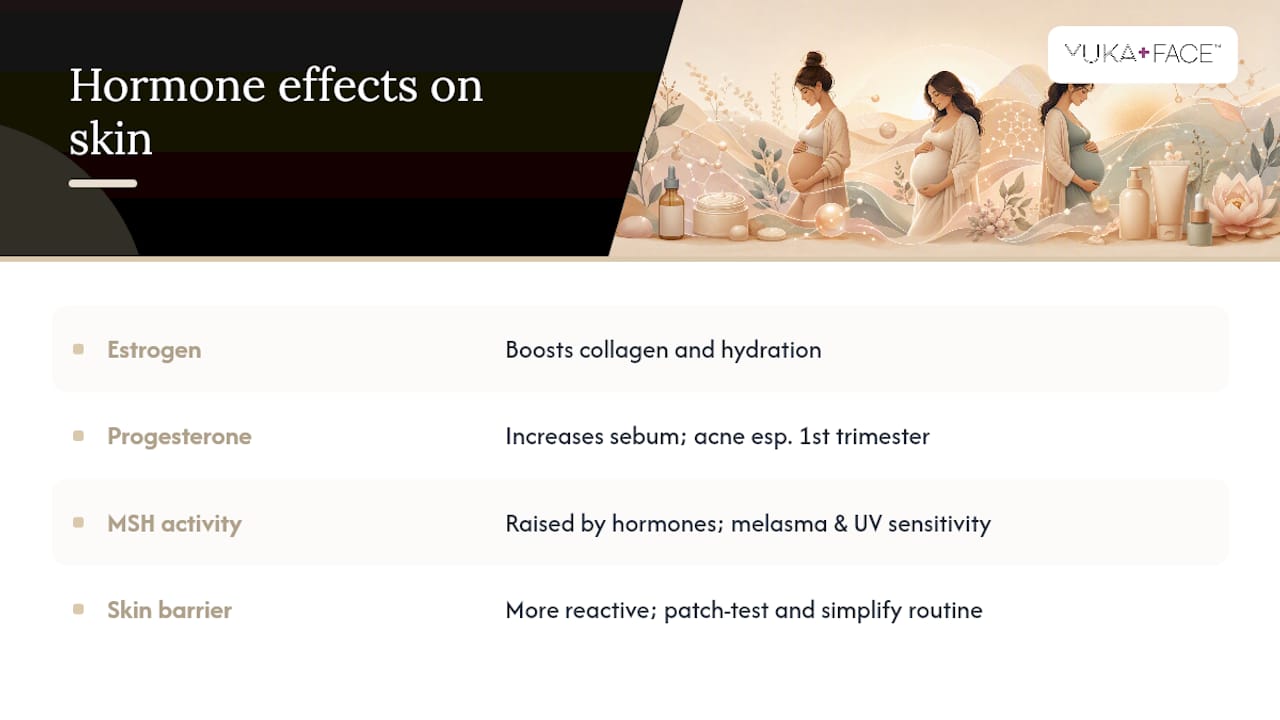
The skin barrier also changes. Increased blood volume and vascular changes can make skin more reactive to products that were previously tolerated. This is why patch-testing matters more during pregnancy than at any other time, and why reducing the number of active ingredients in your routine is a practical, not overly cautious, response.
Skincare as self-care during pregnancy
Pregnancy brings physical and emotional demands that are real and significant. A consistent, simple skincare routine offers something concrete: a daily moment of care that is entirely within your control.
The mindfulness aspect of a skincare routine is well-documented in wellness research. A two-minute morning routine, done consistently, supports both skin health and a sense of daily structure. That matters during a period when so much feels uncertain.
Keeping the routine simple also reduces decision fatigue. Three to five products, all verified as pregnancy-safe, remove the daily anxiety of wondering whether something is harmful. That clarity is its own form of self-care.
Non-chemical approaches and natural remedies considered safe during pregnancy
Several non-chemical strategies support skin health during pregnancy without any ingredient risk.
Physical sun protection is the most effective single measure for melasma prevention. A wide-brim hat, UPF-rated clothing, and seeking shade between 10 AM and 2 PM reduce UV exposure more than any topical product alone.
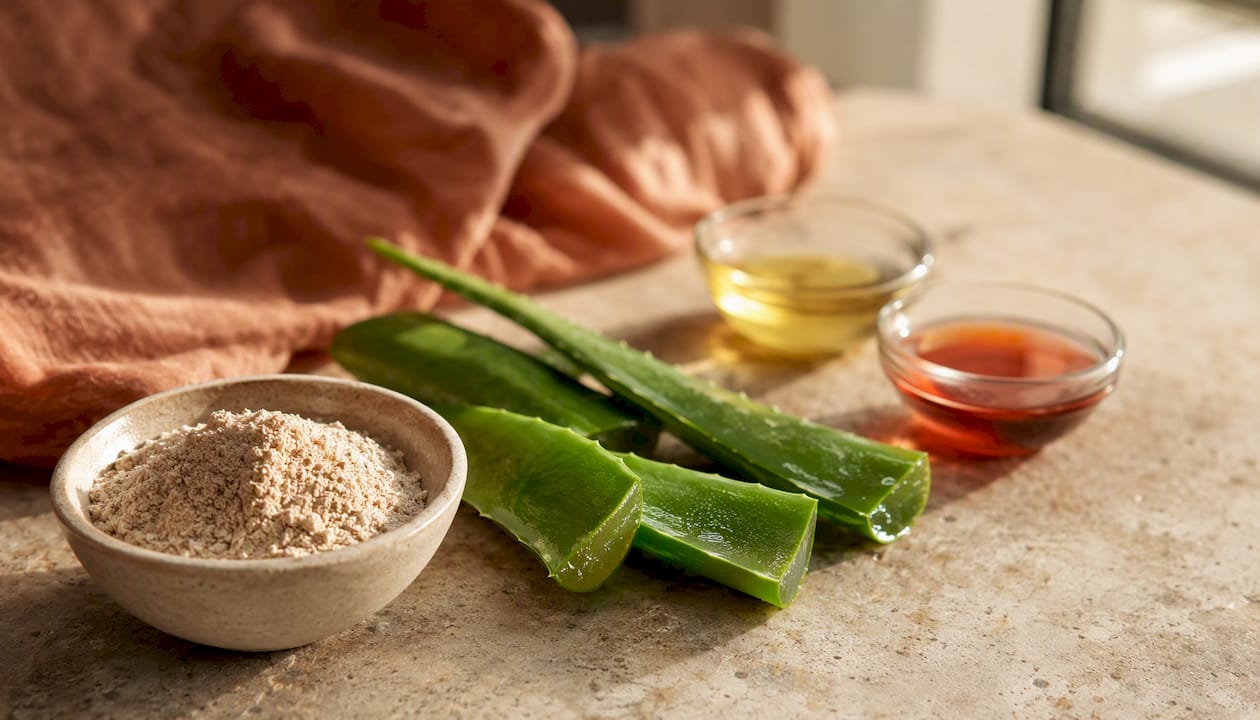
Oatmeal-based products (colloidal oatmeal) are well-supported for itch and sensitivity. The FDA recognizes colloidal oatmeal as a skin protectant. Fragrance-free oatmeal lotions and bath soaks are safe and effective for pregnancy-related pruritus.
Aloe vera gel (pure, fragrance-free) is widely used for soothing irritated or sunburned skin. No known pregnancy concerns at topical cosmetic concentrations.
Shea butter and plant-based oils (jojoba, rosehip in low concentration) are commonly used for stretch mark prevention and general moisturizing. Evidence for stretch mark prevention is limited regardless of the product used, but these ingredients carry a low risk profile.
Hydration from within: Adequate water intake supports skin elasticity and barrier function. Not a substitute for topical moisturizers, but a meaningful complement.
Avoid high-concentration essential oil blends marketed for pregnancy massage or stretch marks. The concentration in these products varies widely, and some contain flagged oils. A plain carrier oil (jojoba, sweet almond) is a safer choice for massage.
What most pregnancy skincare guides get wrong
Most guides focus almost entirely on what to avoid, which is useful but incomplete. The more practical gap is what to do instead, and how to build a routine that actually works for the specific skin changes pregnancy causes.
Melasma is a good example. Stopping retinoids and hydroquinone is the right call. But without a consistent mineral SPF and a pigment-targeting alternative like azelaic acid, the melasma will worsen regardless of what you stopped using. The avoidance list only helps when paired with a replacement strategy.
The same applies to acne. Removing retinoids and high-strength salicylic acid leaves a real gap. Niacinamide, low-concentration benzoyl peroxide for spot use, and azelaic acid fill that gap effectively. Dermatologist and OB-GYN guidance is the right source for individual decisions, particularly when acne is severe or infected.
Barrier care is consistently underemphasized. Ceramide-based moisturizers and gentle cleansers do more for pregnancy skin than most actives, and they carry essentially no risk. Prioritizing hydration and barrier restoration is the highest-return, lowest-risk move in any pregnancy skincare routine.
Yuka+Face: clean formulations for pregnancy-focused routines
Pregnancy is the right time to simplify and verify. Yuka+Face products are vegan, cruelty-free, and formulated without synthetic fragrance, prescription retinoids, or hydroquinone — the three categories most consistently flagged for pregnancy use.
The morning skincare routine guide on the Yuka+Face journal maps directly to the AM steps covered here: gentle cleanser, antioxidant, barrier moisturizer, and mineral SPF. Each product page lists the full ingredient deck so you can cross-reference against your own checklist or share it with your provider.
For a deeper look at the brand's formulation approach, the vegan skincare guide covers ingredient sourcing and what "clean" actually means in a formulation context. Browse the full range at Yukaface and bring your shortlist to your next prenatal appointment for a final provider check.
Sources
- Dermatologist-approved pregnancy skin care
- Over-the-Counter Topical Acne Treatments in Pregnancy and Breastfeeding (MotherToBaby/NCBI)
- Cosmetics and Pregnancy | FDA
- Safety of dermatologic medications in pregnancy and lactation: An update - Part I: Pregnancy
- Healthy Skincare Routines During Pregnancy
For case-specific questions about a product or medication, contact MotherToBaby directly at mothertobaby.org or 1-866-626-6847.
FAQ
What skincare should you avoid during pregnancy?
Avoid topical retinoids (tretinoin, adapalene, retinol), oral isotretinoin, hydroquinone, high-strength chemical peels, and injectable fillers. The AAD and a clinical dermatology review both flag these as the highest-priority categories to avoid.
How do you know if your skincare is safe during pregnancy?
Read the full ingredient list, scan for retinoid synonyms and hydroquinone, check salicylic acid concentration, and confirm sunscreen is mineral-based. The FDA recommends consulting your healthcare provider for products with active drug ingredients, since many cosmetics lack pregnancy-specific safety data.
Is vitamin C serum safe to use during pregnancy?
Yes. Vitamin C (L-ascorbic acid) at cosmetic concentrations is generally well-tolerated during pregnancy and is not flagged by dermatology or OB-GYN guidance. It supports antioxidant protection and even skin tone without the risks associated with retinoids.
Is salicylic acid safe during pregnancy?
Low-concentration (0.5–2%), wash-off or spot-use salicylic acid products are generally considered lower-risk. Full-face, high-strength leave-on salicylic acid peels increase systemic absorption and should be avoided, per AAD guidance.