
TL;DR:
- Natural or mineral sunscreens use zinc oxide and titanium dioxide to physically block UV rays from the skin's surface. They offer immediate protection, reduce inflammation, and have less environmental impact than chemical sunscreens. Effective use requires correct application, reapplication, and checking active ingredients to ensure true mineral content.
Natural sunscreen is defined as a sun protection product that uses mineral active ingredients, specifically zinc oxide and titanium dioxide, to physically block ultraviolet radiation at the skin's surface. The industry term for this category is "mineral sunscreen," and both terms are used interchangeably by dermatologists and formulators. These minerals are recognized by the FDA as safe and effective, making them the only sunscreen actives with that designation. For people with sensitive, reactive, or acne-prone skin, mineral sunscreens offer broad-spectrum protection without the irritation risk that chemical filters can cause.
What is natural sunscreen and how does it work?
Mineral sunscreens protect skin by sitting on the surface and physically reflecting and scattering UV rays. They do not absorb into the bloodstream the way chemical filters do. This surface-barrier mechanism means protection begins immediately after application, with no waiting period required.
Zinc oxide and titanium dioxide: the core actives
Zinc oxide covers both UVA and UVB rays on its own. Titanium dioxide is highly effective against UVB and short-wave UVA. Together, they deliver broad-spectrum coverage that meets the NATRUE standard for full UV protection. Zinc oxide also carries a well-documented anti-inflammatory profile, making it especially useful for skin prone to redness or rosacea.

Particle size matters with zinc oxide. Non-nano zinc oxide, meaning particles larger than 100 nanometers, stays on the skin surface and does not penetrate the skin barrier. This makes it the safest particle size for formulation. Non-nano zinc oxide does require expert blending to avoid clumping and to achieve smooth application.
Supplementary natural ingredients
Many mineral sunscreens include plant-based oils to improve texture and add skin benefits. Common additions include:
- Coconut oil: Moisturizing and rich in fatty acids; improves spreadability
- Raspberry seed oil: Contains flavonoids and carotenoids that absorb some UVA rays
- Tea tree oil: Provides antimicrobial and soothing properties for acne-prone skin
These herbal oils are supplementary, not replacements for zinc oxide or titanium dioxide. They support skin health and formula feel, but they do not provide reliable SPF on their own. You can learn more about how vitamin-rich oils contribute to a natural skincare routine.
Pro Tip: Look for "non-nano zinc oxide" on the ingredient label. It confirms the mineral stays on your skin's surface rather than penetrating deeper layers.
What are the benefits of natural sunscreen?
The benefits of natural sunscreen go beyond basic UV protection. Mineral formulas offer a distinct set of advantages for people who have struggled with chemical sunscreen sensitivity.
- Immediate protection: No activation time needed. Apply and go.
- Anti-inflammatory action: Zinc oxide actively calms redness and irritation, which is especially helpful for rosacea and eczema-prone skin.
- No systemic absorption: Mineral filters stay on the skin surface and do not absorb into skin, reducing concerns about hormonal disruption.
- Lower sensitization risk: Chemical filters can trigger contact dermatitis in reactive skin. Zinc oxide and titanium dioxide rarely cause this response.
- Environmental preference: Mineral filters have less environmental impact compared to chemical sunscreens, which are linked to water pollution and coral reef damage.
"Zinc oxide provides a calming effect helpful for skin prone to redness, unlike chemical sunscreens which can sometimes worsen inflammation. Clinical experts highlight its anti-inflammatory benefits for sensitive skin conditions like rosacea."
One common concern is the white cast that mineral sunscreens can leave. This is real, but manageable. Tinted mineral formulas use iron oxides to neutralize the white residue, making them suitable for a wider range of skin tones. The white cast also signals that enough product has been applied, which is actually a useful indicator for adequate coverage.
People with sensitive or reactive skin often find mineral sunscreens are the only option they can use daily without irritation. That consistency matters more than cosmetic preference.
Common myths about natural sunscreens
Misconceptions about mineral and natural sunscreens are widespread. Knowing the facts helps you make better choices.
-
"Natural" on the label means mineral protection. False. "Natural" is a marketing term with no standardized regulatory definition in the US. A product can be labeled natural and still contain chemical UV filters. Always check the active ingredients list for zinc oxide or titanium dioxide.
-
Natural sunscreens are less effective than chemical ones. False. Zinc oxide combined with titanium dioxide provides broad-spectrum UVA and UVB coverage that meets or exceeds the protection of most chemical formulas when applied correctly.
-
Natural sunscreens are waterproof. False. No sunscreen is fully waterproof. Water-resistant labels indicate the product holds its SPF for either 40 or 80 minutes of water exposure. Reapplication is always required after swimming or heavy sweating.
-
Homemade natural sunscreens work just as well. False. Studies show that homemade formulas without regulated mineral content provide inconsistent SPF protection. Particle size, stability, and even distribution cannot be reliably achieved in a home kitchen. Commercially formulated mineral sunscreens go through standardized testing that DIY products do not.
-
Broad-spectrum claims are all equivalent. Not quite. Broad-spectrum certification requires testing that confirms both UVA and UVB protection. A product with a high SPF number but no broad-spectrum label may still leave skin exposed to UVA rays, which cause deeper skin damage and accelerate aging. Understanding common skin cancer myths helps clarify why broad-spectrum coverage is non-negotiable.
How to choose and use natural sunscreen effectively
Choosing the right mineral sunscreen comes down to a few clear criteria. Cosmetic preference matters, but protection fundamentals come first.
- SPF 30 or higher: SPF 30 blocks approximately 97% of UVB rays. Higher SPF values offer incrementally more protection and are worth choosing for extended outdoor exposure.
- Broad-spectrum label: Confirms both UVA and UVB protection. Non-negotiable.
- Water-resistant rating: Choose 80-minute water resistance for beach, pool, or sport activities.
- Non-nano zinc oxide: Confirms the mineral stays on the skin surface.
- Skin-type fit: Oily skin benefits from lightweight, non-comedogenic formulas. Dry skin benefits from formulas with added humectants or oils.
Pro Tip: Apply mineral sunscreen as the last step in your morning routine, after moisturizer. This keeps the mineral layer intact and prevents it from being diluted by other products.
Application quantity is where most people go wrong. Mineral sunscreen must form a complete barrier to work effectively, and people consistently apply too little. For the face, a nickel-sized amount is the standard recommendation. For the body, the general guideline is one ounce, roughly a shot glass full, for full coverage.
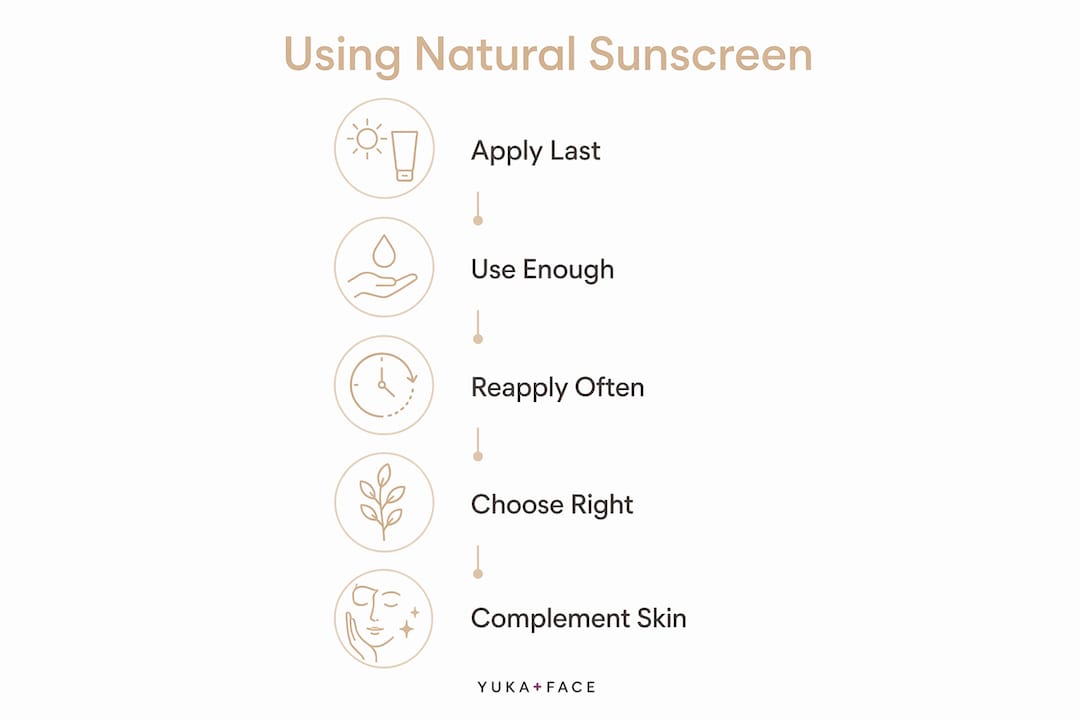
Reapplication is not optional. Mineral sunscreens wear off with sweat, water, and physical contact. Reapply every two hours outdoors, and immediately after toweling off. For beach and outdoor activities, extra UV protection measures beyond sunscreen, such as protective clothing and shade, add meaningful defense.
Choosing by skin type
| Skin Type | Formula to Look For | Key Ingredient Benefit |
|---|---|---|
| Sensitive or reactive | Fragrance-free, zinc oxide only | Anti-inflammatory, low irritation risk |
| Oily or acne-prone | Lightweight, non-comedogenic | Zinc oxide controls sebum and calms breakouts |
| Dry | Cream base with added oils | Hydration alongside UV protection |
| All skin tones | Tinted mineral formula | Iron oxides reduce white cast |
Mineral sunscreen fits naturally into a summer skincare routine as the final protective step before sun exposure. Pairing it with antioxidant serums in the morning adds a second layer of defense against UV-induced free radical damage.
Key Takeaways
Mineral sunscreens, defined by zinc oxide and titanium dioxide as active ingredients, are the only FDA-recognized safe and effective sunscreen actives, making them the most reliable choice for broad-spectrum protection across all skin types.
| Point | Details |
|---|---|
| Mineral actives are the standard | Zinc oxide and titanium dioxide are the only FDA-recognized safe and effective sunscreen actives. |
| Immediate protection | Mineral sunscreens work on contact with no activation wait time required after application. |
| White cast is manageable | Tinted formulas with iron oxides reduce white cast and suit a wider range of skin tones. |
| Application quantity matters | Apply a nickel-sized amount to the face and one ounce to the body for full, effective coverage. |
| Reapply consistently | Reapply every two hours outdoors and immediately after swimming or heavy sweating. |
Why I trust mineral sunscreen over everything else
I spent years cycling through chemical sunscreens before I understood why my skin kept reacting. The burning, the breakouts, the persistent redness. None of it made sense until I looked at the ingredient lists more carefully. Chemical filters like oxybenzone and avobenzone are designed to absorb UV energy, and for reactive skin, that absorption process can trigger real inflammation.
Switching to a non-nano zinc oxide formula changed things quickly. The white cast bothered me at first. I will not pretend it did not. But I noticed within two weeks that the baseline redness on my cheeks had reduced noticeably. Zinc oxide's anti-inflammatory properties are not marketing language. They are clinically documented, and they show up in real use.
The harder lesson was about consistency. The best mineral sunscreen is the one you actually apply every day, even on cloudy days, even indoors near windows. UVA rays penetrate glass. A product that feels slightly thick or leaves a faint white tint is still doing its job. A chemical sunscreen you tolerate perfectly but skip because it stings is not protecting you at all.
Consumer awareness around "natural" labeling has improved, but the gap between marketing and formulation is still wide. Read the active ingredients. Look for zinc oxide or titanium dioxide. Everything else on the label is secondary. That single habit will serve your skin better than any trend.
— Kelly
Yuka+Face and natural sun protection
Yuka+Face builds every product around the same principles that make mineral sunscreens worth choosing: clean ingredients, vegan formulation, and real results for all skin types.

The vegan skincare guide from Yuka+Face covers mineral sunscreen recommendations alongside a full range of gentle, effective options for sensitive skin. For a complete picture of how sun protection fits into daily care, the natural skincare tips resource covers ingredient safety, routine building, and what to look for beyond marketing claims. Yuka+Face products are vegan, cruelty-free, and formulated for every skin type and age.
FAQ
What is the difference between natural and mineral sunscreen?
Natural sunscreen and mineral sunscreen refer to the same category. Both terms describe products that use zinc oxide or titanium dioxide as active ingredients to physically block UV rays.
Is natural sunscreen effective for all skin types?
Yes. Zinc oxide and titanium dioxide provide broad-spectrum protection suitable for sensitive, oily, dry, and acne-prone skin. Tinted formulas work across a wider range of skin tones by reducing the white cast.
Does natural sunscreen need to be reapplied?
Reapplication is required every two hours during outdoor exposure and immediately after swimming or sweating. No mineral sunscreen is waterproof, only water-resistant for 40 or 80 minutes.
Can natural oils replace mineral sunscreen?
No. Oils like raspberry seed and coconut oil contain antioxidants that absorb some UVA rays, but they do not provide reliable or standardized SPF protection. They are supplementary ingredients, not substitutes for zinc oxide or titanium dioxide.
How do I know if a sunscreen is truly natural?
Check the active ingredients list. A genuine mineral sunscreen lists zinc oxide, titanium dioxide, or both as the only active ingredients. "Natural" on the front label alone is a marketing claim with no regulatory backing in the US.