
TL;DR:
- Dry, tight skin results from moisture loss and lipid barrier breakdown caused by environmental and age-related factors. A holistic approach emphasizes regular, barrier-supporting moisturization with vegan, chemical-free products, environmental control, and proper skincare habits. Persistent or severe dryness may require medical consultation to address underlying conditions like eczema or dermatitis.
Dry, tight skin is more than a minor inconvenience. It pulls, flakes, and resists even the most diligent care routines, particularly when you want solutions that are kind to both your skin and the planet. The good news: natural, vegan approaches backed by real evidence can restore comfort and radiance without harsh chemicals or animal-derived ingredients. This guide walks through the science, preparation, and practical steps for managing dry skin holistically, so you can build a routine that works long-term.
Table of Contents
- Understanding dry skin and holistic care
- Preparing for effective soothing: tools, ingredients, and environment
- Step-by-step: how to soothe dry skin naturally
- Addressing stubborn dryness and eczema: when to seek expert help
- Why barrier repair beats trendy skincare for dry skin
- Explore vegan skincare routines to keep your skin radiant
- Frequently asked questions
Key Takeaways
| Point | Details |
|---|---|
| Barrier repair is key | Frequent moisturizing and avoiding irritants are essential for soothing dry skin naturally. |
| Timing matters most | Moisturize right after bathing while skin is damp to maximize hydration benefits. |
| Vegan options work | Eco-friendly, fragrance-free vegan creams and ointments perform as well as traditional moisturizers. |
| Humidity aids relief | Keeping indoor humidity between 30% and 50% reduces dry skin discomfort. |
| Seek expert help if severe | Consult a dermatologist for persistent, painful, or eczema-like dry skin. |
Understanding dry skin and holistic care
Dry skin happens when the outermost layer of skin, called the stratum corneum (the skin's top protective shield), loses moisture faster than it can retain it. This layer is made up of dead skin cells held together by lipids, fats that act like mortar between bricks. When those lipids break down, moisture escapes and irritants get in. That's the core problem.
Common causes of dry skin include:
- Cold, low-humidity weather that pulls moisture from the surface
- Hot showers and harsh soaps that strip natural oils
- Over-cleansing or using alcohol-based toners
- Aging, which naturally reduces oil production
- Certain medications or underlying health conditions
- Synthetic fragrances and dyes in conventional skincare products
Dry skin improves with regular moisturizing that recreates the skin barrier. The main at-home treatment is using moisturizers, whether creams, ointments, lotions, or oils, frequently and consistently. That's the evidence-backed foundation.
It's also worth understanding the difference between general dryness and eczema (also called atopic dermatitis). Eczema involves an immune response that causes persistent inflammation, not just moisture loss. For this condition, barrier-focused moisturizing routines take priority over any kind of harsh cleansing or frequent exfoliation. Knowing which one you're dealing with shapes your entire approach.
A holistic approach to dry skin goes beyond applying a single product. It considers what you eat, how you sleep, your stress levels, your environment, and the full ingredient list of every product you use. Exploring dry skin solutions that work with your whole routine, not just a single bottle, is what separates temporary relief from lasting skin health.
| Skin condition | Key characteristics | Primary care focus |
|---|---|---|
| Dry skin | Tight, flaky, rough texture | Moisturizing and barrier repair |
| Eczema/dermatitis | Red, inflamed, intensely itchy | Barrier care plus medical guidance |
| Dehydrated skin | Dull, sunken appearance | Hydration from both diet and topicals |
| Combination dry | Dry patches with oily zones | Targeted, zone-specific moisturizing |
Now that we've defined the challenge, let's focus on how to lay the right foundation for soothing and protecting your skin.
Preparing for effective soothing: tools, ingredients, and environment
Getting results from any dry skin routine starts with having the right setup. This means choosing the right product types, reading ingredient labels carefully, and adjusting your living environment to support your skin between applications.
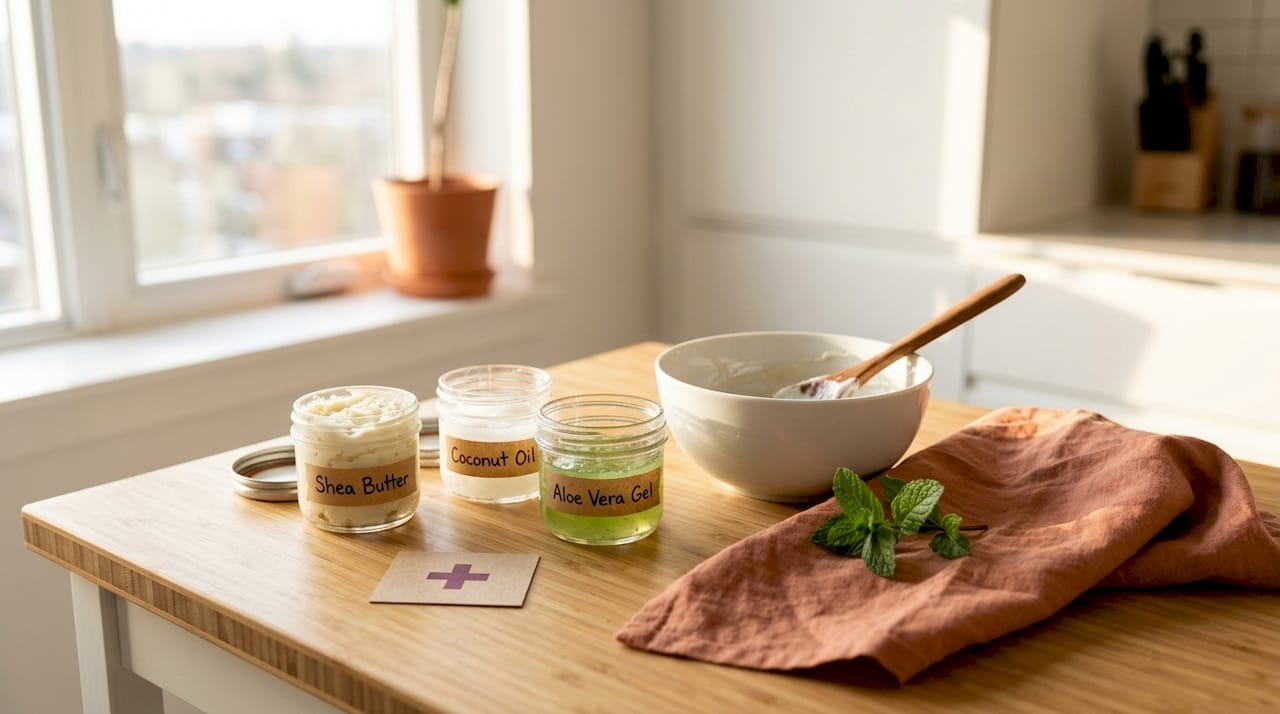
The three ingredient types your moisturizer needs:
- Humectants draw water from the environment or deeper skin layers to the surface. Look for glycerin, hyaluronic acid, or aloe vera.
- Emollients fill in gaps between skin cells to smooth texture. Plant oils such as jojoba, rosehip, and squalane (derived from olives) are vegan-friendly examples.
- Occlusives form a physical seal on the surface to prevent moisture loss. Shea butter, cocoa butter, and plant-based waxes work well here.
A complete moisturizer ideally contains all three. Many lightweight lotions focus only on humectants, which is why they feel refreshing but wear off quickly. For persistently dry skin, a cream or ointment with a strong occlusive base holds moisture more effectively.
Product choice matters just as much as ingredient type. You should choose moisturizers that are fragrance-free and unscented, and avoid alcohol, fragrance, and dyes. For eczema-prone or very dry skin, ointments and creams typically outperform water-heavy lotions. This single guideline eliminates a large portion of conventional products and makes the case for clean, vegan formulations even stronger.
Understanding the difference between moisturizing vs hydrating also helps you select the right products for each step in your routine. Hydrating focuses on pulling water in. Moisturizing focuses on keeping it there.
Environmental controls make a real difference. Running a humidifier and maintaining indoor humidity around 30% to 50% can visibly reduce dry skin symptoms. Central heating and air conditioning both drop humidity significantly, which is why skin tends to feel worse in winter or in climate-controlled offices.
| Product type | Best for | Vegan-friendly options |
|---|---|---|
| Cream | Moderate to severe dryness | Shea butter, plant oil blends |
| Ointment | Severe dryness, eczema patches | Castor oil, plant-based waxes |
| Lotion | Mild dryness, warm climates | Light oils, glycerin-based |
| Facial oil | Targeted barrier support | Rosehip, argan, squalane |
Pro Tip: Keep your moisturizer on your bathroom counter next to your towel as a visual reminder to apply it immediately after washing. Out of sight often means out of routine.
Understanding your skincare routine basics is the best way to make sure each product you're adding actually serves a function in the overall plan.
With the right tools and environment set up, you're ready to take action. Here are the key steps for soothing your dry skin.
Step-by-step: how to soothe dry skin naturally
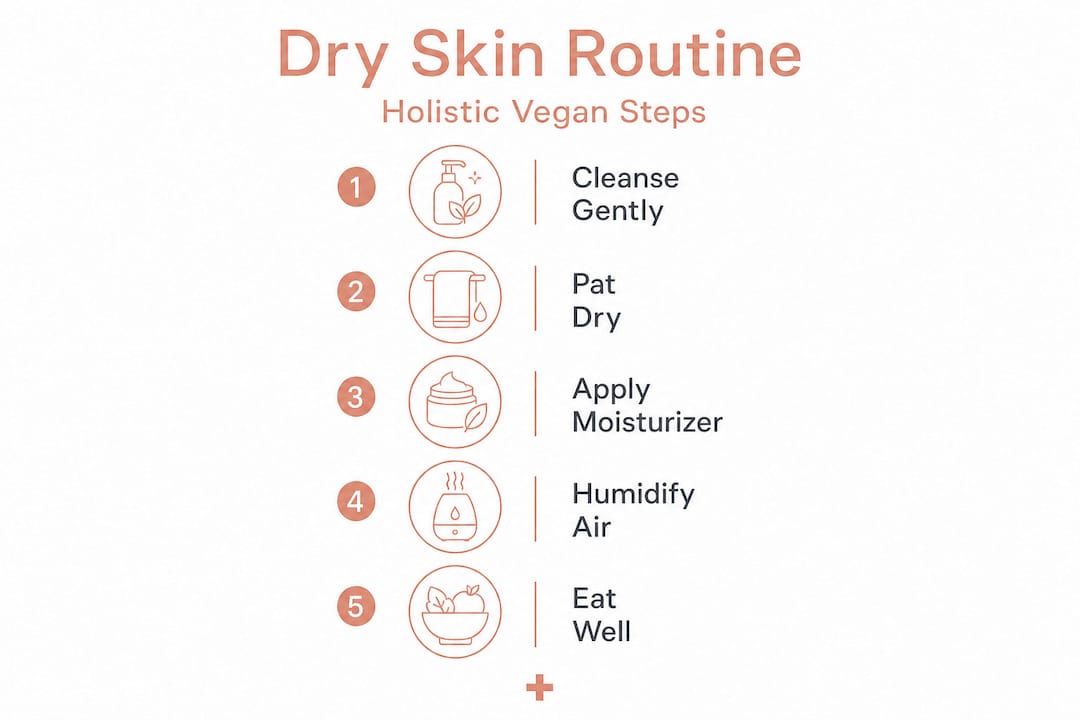
Small habits applied consistently make the biggest difference. The steps below are ordered intentionally because each one builds on the last.
-
Switch to lukewarm water for cleansing. Hot water feels soothing but strips lipids from the skin fast. Use lukewarm water and keep showers to about 5 to 10 minutes to protect the skin barrier. Shorter and cooler is always better for dry skin.
-
Choose a gentle, fragrance-free cleanser. A creamy or oil-based cleanser removes dirt without over-stripping. Avoid foaming formulas with sulfates. If a cleanser leaves skin feeling tight immediately after rinsing, it's removing too much.
-
Pat skin dry, don't rub. Rubbing with a rough towel damages already-compromised skin. Gently pat with a soft towel and leave skin slightly damp. That residual moisture is what you lock in next.
-
Apply moisturizer while skin is still damp. Apply moisturizer soon after showering while skin is damp to help lock in moisture. This is one of the most evidence-backed steps in dry skin care, and it's also one of the most consistently skipped. Damp skin allows moisturizing ingredients to penetrate more effectively.
-
Layer correctly. Apply thinner, water-based products first and thicker creams or oils last. The occlusive layer seals everything beneath it. If you apply a heavy ointment before a serum, the serum can't absorb.
-
Target problem areas with a separate treatment. Heels, knuckles, elbows, and the skin around the nose tend to dry faster. Apply a thicker ointment or plant butter to these areas as a separate step, especially before bed.
-
Repeat at least twice daily. Morning and evening applications are the baseline. If you wash your hands frequently during the day, add a third application after each wash.
Barrier repair is not a one-time fix. Consistent daily moisturizing is what rebuilds and maintains the lipid layer over time. Expect visible improvement within one to two weeks of a consistent routine.
Understanding the difference between skin barrier damage and dehydration helps you troubleshoot when a routine isn't working as expected. Sometimes what looks like dryness is actually barrier breakdown, requiring a different ingredient approach entirely.
Following these steps will help most people see improvement, but some cases need extra care and awareness.
Addressing stubborn dryness and eczema: when to seek expert help
Most dry skin responds well to the steps above. But some cases don't resolve with routine care, and recognizing when to get professional input is important.
Signs your dryness may need medical attention:
- Skin that stays cracked, raw, or bleeding despite consistent moisturizing
- Intense itching that disrupts sleep
- Red, inflamed patches that spread or recur seasonally
- Oozing or crusting in affected areas
- Dryness that appears suddenly without a clear environmental cause
If dryness is persistent, painful, or recurrent, or you develop red itchy areas, a dermatologist should evaluate you for eczema, dermatitis, or other underlying causes. Self-treating eczema like standard dryness often prolongs discomfort and can worsen inflammation.
One condition worth knowing about is dyshidrotic eczema, a type that causes small fluid-filled blisters on the hands and feet. For this condition, fragrance-free creams and ointments are specifically recommended, and lotions are often discouraged because their high water content can worsen symptoms. This is a case where standard dry skin advice can backfire without the right diagnosis.
Vegan and eco-friendly moisturizers can absolutely be part of a medically guided eczema routine. The key is that a dermatologist may prescribe a topical treatment to use first, with natural moisturizers applied over it to seal in that treatment and protect the barrier. Clean formulations with minimal ingredients are often preferred in these cases because they reduce the risk of contact reactions.
| Symptom | Likely cause | Suggested action |
|---|---|---|
| Tight, flaky skin | Standard dryness | Consistent barrier moisturizing |
| Red, inflamed patches | Possible eczema | Consult a dermatologist |
| Itching with blisters | Dyshidrotic eczema | Medical evaluation needed |
| Recurring cracks | Barrier damage | Ointment-based repair plus diet check |
Exploring options like cold plasma skin treatment is one example of how advanced, non-invasive approaches are now available for skin that needs more than topical care. These treatments are typically discussed with a skincare professional.
Now that you're equipped to manage dry skin holistically, let's look at the broader impact and hidden truths behind these approaches.
Why barrier repair beats trendy skincare for dry skin
The skincare market constantly cycles through new trends. Retinol for dry skin. Acid toning. Double cleansing with multiple foaming products. Exfoliation three times a week. Some of these have their place in healthy skin routines. But for dry and compromised skin, prioritizing any of them over basic barrier repair is a mistake that extends your discomfort significantly.
The evidence consistently points to one thing: a healthy lipid barrier is the foundation. Everything else builds on top of it. Exfoliating too frequently removes the very cells and lipids you're trying to rebuild. Trendy ingredients like retinol and high-concentration acids are genuinely useful, but they increase barrier sensitivity and should only be introduced once the foundation is stable.
Natural oils and plant butters have real value. Jojoba closely mimics skin's natural sebum. Rosehip oil contains essential fatty acids that support the lipid matrix. Shea butter provides both emollient and occlusive function. These are not filler ingredients. But the evidence-backed benchmark is still about moisturizer timing and frequency, not ingredient novelty. Applying a basic, clean cream twice daily consistently outperforms an expensive trendy serum used sporadically.
There's a useful parallel with modern ageless beauty: radiant skin at any age comes from consistent, functional care, not from chasing each new product launch. The real revolution in skincare is returning to basics supported by botanical science.
Ingredient-driven product selection is the right approach. Understand what each ingredient does. Know your skin's specific needs. Choose products that serve those needs without unnecessary additives. A good vegan skincare guide helps map the most effective plant-based ingredients to specific skin concerns, making it easier to build a routine with intention rather than guesswork.
Explore vegan skincare routines to keep your skin radiant
Yuka+Face formulates every product with barrier support, botanical efficacy, and clean ingredient standards at the center.

The vegan skincare guide is a strong starting point for anyone building or refining a natural routine. For those specifically managing dryness, the dry skin solutions page offers targeted product recommendations and routine breakdowns. And for a broader look at how holistic skin health evolves with age, modern ageless beauty covers the full picture. Vegan. Natural. Effective.
Frequently asked questions
What moisturizers are best for very dry vegan-sensitive skin?
Fragrance-free creams or ointments with natural oils or butters are best. As guidance confirms, ointments and creams outperform water-heavy lotions for eczema-prone or very dry skin, and products should avoid alcohol, fragrance, and dyes.
Should I moisturize immediately after bathing?
Yes. Apply moisturizer while skin is damp after showering to lock in moisture. This timing makes a measurable difference in how well the product supports barrier repair.
Can vegan or eco-friendly products be as effective as traditional moisturizers?
Yes, provided they support the skin barrier and are free of fragrances and alcohol. The evidence-backed benchmark for dry skin is barrier repair through gentle, fragrance-free moisturizing, which vegan formulations can fully deliver.
What is the ideal room humidity for dry skin?
Maintaining indoor humidity between 30% and 50% is recommended for optimal skin comfort. A basic digital hygrometer can help you monitor and adjust levels throughout the year.
When should I see a dermatologist about dry skin?
See a dermatologist if dryness is persistent, painful, or recurrent, or if you develop red or intensely itchy areas. These symptoms may indicate eczema or dermatitis requiring personalized clinical care.