
TL;DR:
- Protecting skin from pollution involves a daily routine of cleansing, antioxidant application, barrier repair, and SPF to prevent damage and aging. Lifestyle habits like checking air quality, using indoor air purifiers, and maintaining a nutrient-rich diet also reduce exposure. Proper skincare with key ingredients and consistent practices help strengthen the skin’s defenses against environmental pollutants.
Protecting skin from pollution is defined as a daily practice of removing environmental contaminants, neutralizing free radicals, and reinforcing the skin barrier to prevent premature aging and inflammation. Pollutants generate reactive oxygen species that degrade collagen and disrupt the stratum corneum, the outermost protective layer of skin. Dermatological standards recommend a four-step daily protocol combining cleansing, antioxidant serums, barrier-repair moisturizers, and broad-spectrum SPF 30+ sunscreen. This guide covers each step in practical terms, explains which ingredients work and why, and adds lifestyle habits that reduce exposure at the source.
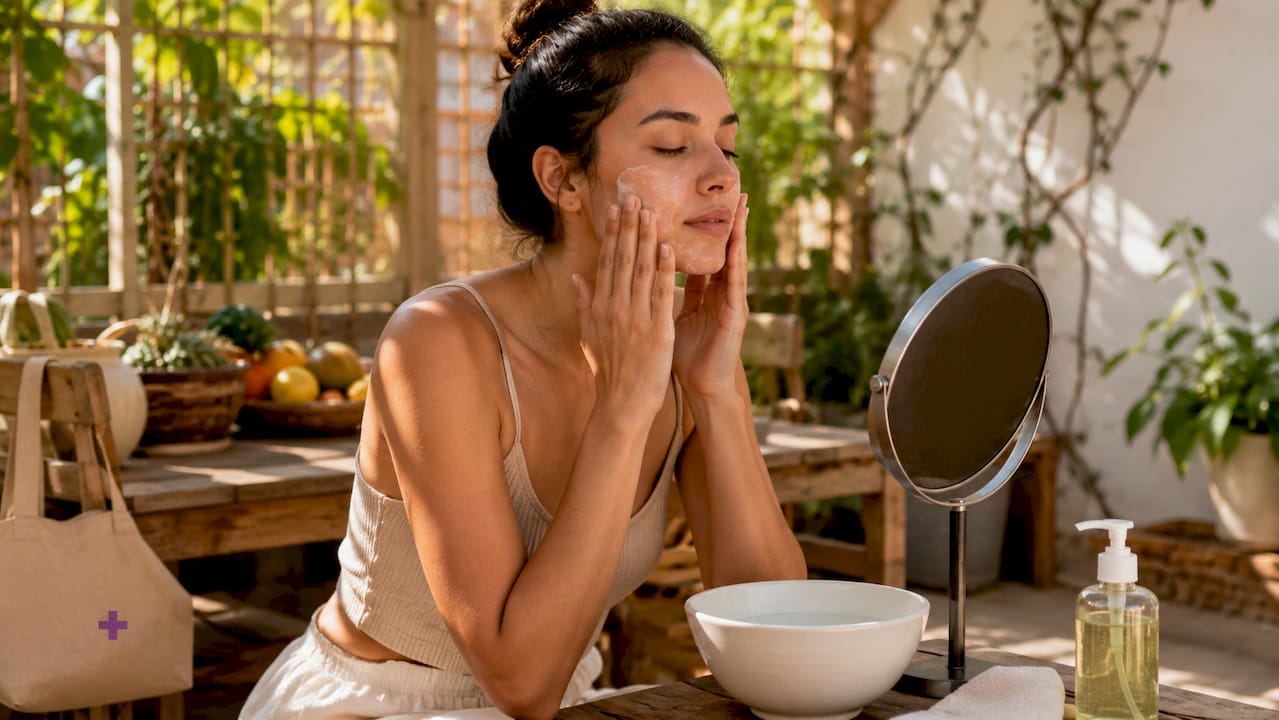
How to protect skin from pollution with a daily routine
A structured daily routine is the most reliable defense against pollution-related skin damage. Anti-pollution skincare aims primarily to prevent free radical-induced inflammation and collagen degradation that accelerates aging. Four steps, performed consistently, cover the full cycle of exposure and repair.
Step 1: Cleanse at night
Nightly cleansing removes particulate matter, heavy metals, and ozone byproducts that accumulate on skin throughout the day. Skipping this step leaves pollutants in contact with skin for hours, deepening oxidative damage while you sleep. Use a gentle, pH-balanced cleanser and spend 30–60 seconds working it across the face. Over-cleansing strips natural oils and weakens the barrier, so twice daily is the maximum for most skin types.
Step 2: Apply an antioxidant serum
Antioxidant serums intercept free radicals before they reach deeper skin layers. Vitamin C, niacinamide, and green tea extract are the most studied options for this purpose. Combining water-soluble and lipid-soluble antioxidants neutralizes a wider range of oxidative species generated by different pollutants. Apply the serum after cleansing, while skin is still slightly damp, to improve absorption.
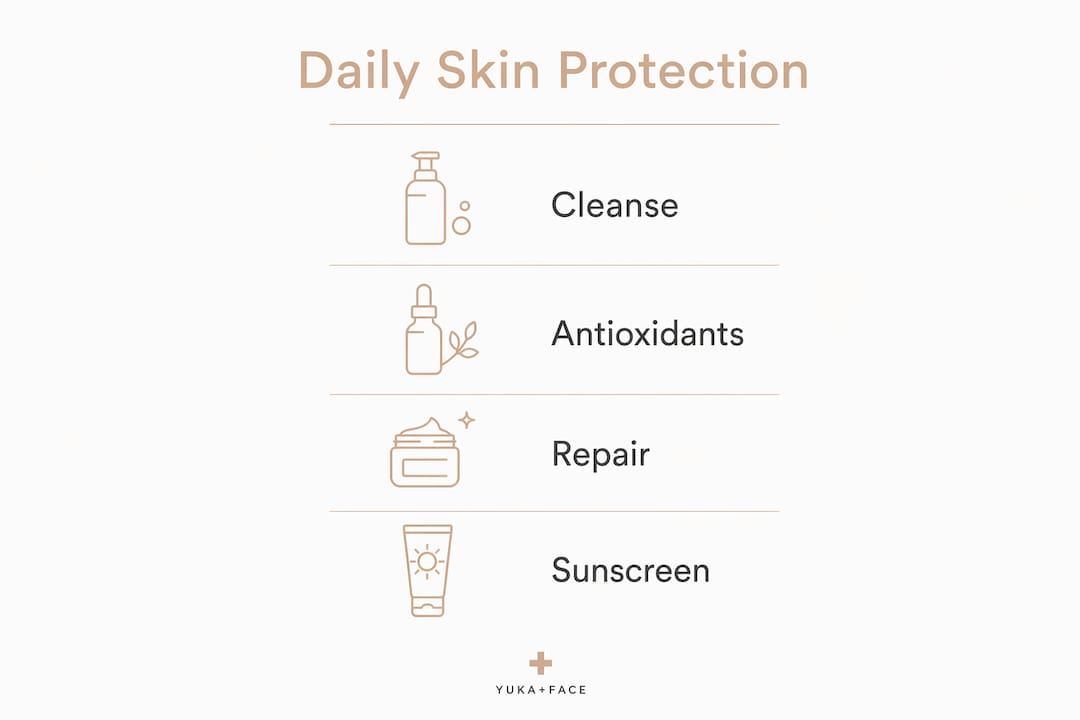
Pro Tip: Layer vitamin C (water-soluble) in the morning and a lipid-soluble antioxidant like resveratrol or a botanical facial oil at night for full-spectrum free radical coverage.
Step 3: Repair and seal the barrier
A barrier-repair moisturizer with ceramides, fatty acids, and hyaluronic acid physically limits how far pollutants can penetrate. A well-maintained skin barrier offers stronger defense than layering multiple serums alone. Ceramides restore the lipid matrix between skin cells, while hyaluronic acid draws moisture in to prevent transepidermal water loss. Apply morning and night after your serum.
Step 4: Wear broad-spectrum SPF 30+ sunscreen
UV radiation magnifies oxidative stress from pollution, making sunscreen a non-negotiable final step each morning. SPF 30+ sunscreen shields against both UV damage and pollutant-related oxidative harm. Mineral formulas with zinc oxide or titanium dioxide also reduce airborne particle adherence to the skin surface. Reapply every two hours when outdoors.
What ingredients actually work against pollution?
The best products for polluted skin share a short list of well-researched ingredients. Vitamin C, niacinamide, and ceramide creams effectively defend against pollution damage without requiring specialized "anti-pollution" product lines. Understanding what each ingredient does helps you build a routine that performs rather than one that just sounds good on a label.
Key ingredients by function:
- Vitamin C (L-ascorbic acid): Neutralizes free radicals, brightens post-pollution pigmentation, and supports collagen synthesis. Most effective at concentrations of 10–20%.
- Niacinamide (vitamin B3): Reduces inflammation, strengthens the skin barrier, and minimizes pore appearance. Works well alongside most other actives.
- Resveratrol: A potent lipid-soluble antioxidant found in grape skin. Pairs with vitamin C to cover a broader oxidative spectrum.
- Green tea extract (EGCG): Reduces UV-induced and pollution-induced inflammation. Suitable for sensitive skin types.
- Ceramides and fatty acids: Restore the lipid matrix of the stratum corneum, physically blocking pollutant entry.
- Zinc oxide and titanium dioxide: Mineral UV filters that sit on the skin surface, deflecting UV rays and reducing particle adhesion.
Pro Tip: Check ingredient lists for ceramide NP, ceramide AP, and ceramide EOP together. Products with all three restore the barrier more completely than those listing only one ceramide type.
Proper cleansing technique matters as much as ingredient selection. Gentle circular motions for 30–60 seconds remove surface pollutants without disrupting the acid mantle. Avoid hot water, which dilates pores and increases pollutant absorption. A body scrub and facial oil set used in the evening routine can also help lift accumulated particulate from skin on the body, where pollution exposure is often overlooked.
Lifestyle habits that reduce pollution exposure for skin
Skincare products address damage after it starts. Behavioral habits reduce how much damage occurs in the first place. These changes require no products and cost nothing.
- Check the Air Quality Index (AQI) daily. Limit outdoor exercise when the AQI exceeds 100. Pollution peaks during morning and evening rush hours in most cities, so scheduling outdoor activities at midday or after rain reduces exposure significantly.
- Use a HEPA air purifier indoors. Indoor air can be more polluted than outdoor air, according to the American Lung Association. A HEPA filter removes fine particulate matter, volatile organic compounds, and allergens that settle on skin during sleep.
- Wear physical barriers outdoors. Wide-brimmed hats and breathable, long-sleeved clothing reduce direct skin contact with airborne particles and UV radiation simultaneously.
- Eat an antioxidant-rich diet. Berries, leafy greens, and omega-3 fats support skin health against pollution-induced oxidative stress from the inside out. Internal antioxidant reserves complement topical application.
- Prioritize quality sleep. Sleep is when skin repairs damaged proteins and clears cellular waste. Internal defenses from nutrition and adequate sleep facilitate the skin's natural detox processes, making topical routines more effective.
Managing dry or compromised skin in harsh environments also supports barrier function year-round. Practical guidance on managing dry, flaky skin applies directly to skin weakened by pollution exposure, since both conditions share the same root cause: a disrupted lipid barrier.
How does pollution actually damage skin?
Pollution damages skin through a chain reaction starting with oxidative stress. Airborne pollutants, including particulate matter (PM2.5), ozone, nitrogen dioxide, and polycyclic aromatic hydrocarbons, generate reactive oxygen species (ROS) on contact with skin. ROS are unstable molecules that steal electrons from healthy skin cells, triggering inflammation and breaking down collagen and elastin.
| Pollutant | Primary skin effect | Result |
|---|---|---|
| PM2.5 (fine particles) | Penetrates pores, triggers inflammation | Acne, dullness, uneven tone |
| Ozone | Depletes vitamin E and C in skin surface | Oxidative stress, barrier damage |
| Nitrogen dioxide | Generates free radicals | Collagen degradation, aging |
| Polycyclic aromatic hydrocarbons | Binds to skin receptors | Hyperpigmentation, sensitivity |
Pollution disrupts the stratum corneum, increasing transepidermal water loss, dryness, redness, and sensitivity. A damaged barrier then allows more pollutants to penetrate, creating a cycle that worsens over time without intervention. UV radiation compounds this by amplifying oxidative stress from pollution, which is why sunscreen and antioxidants work best as a pair rather than separately. Early neutralization of free radicals prevents the downstream inflammation and collagen breakdown that shows up as premature aging.
Key Takeaways
Protecting skin from pollution requires four daily steps: cleansing, antioxidant application, barrier repair, and SPF, supported by lifestyle habits that reduce exposure at the source.
| Point | Details |
|---|---|
| Four-step daily routine | Cleanse, apply antioxidants, repair the barrier, and wear SPF 30+ every day. |
| Barrier repair is the priority | Ceramides and fatty acids physically block pollutant penetration better than serums alone. |
| Antioxidant pairing matters | Combine water-soluble and lipid-soluble antioxidants to neutralize a broader range of free radicals. |
| Lifestyle reduces exposure | Check AQI daily, use a HEPA purifier indoors, and eat antioxidant-rich foods to support skin from within. |
| Sunscreen is non-negotiable | UV radiation amplifies pollution damage; mineral SPF 30+ addresses both threats simultaneously. |
What I've learned after years of watching people chase "anti-pollution" products
The skincare industry loves a trend label. "Anti-pollution" became a marketing category around 2015, and since then, brands have attached it to everything from mists to masks. Most of those products do nothing a standard vitamin C serum and a good ceramide moisturizer wouldn't do better.
The real insight is simpler than any product launch: the most effective anti-pollution defense relies on repairing and maintaining the skin barrier, not buying specialized lines. Skin with an intact barrier is physically harder for pollutants to penetrate. That means ceramides, fatty acids, and consistent hydration matter more than any exotic botanical extract marketed as a pollution shield.
The second thing I've noticed is that people underestimate indoor exposure. Most focus on what happens during their commute, but hours spent in poorly ventilated offices or near gas stoves add up. A HEPA purifier in the bedroom costs less than a month of premium serums and works while you sleep.
Finally, the diet piece gets dismissed as too slow to matter. It isn't. Skin cells turn over roughly every 28 days. Consistent antioxidant nutrition from berries, nuts, and leafy greens shows up in skin quality within a few cycles. Topical routines and internal nutrition are not competing strategies. They reinforce each other. Build the habit gradually, starting with cleansing and SPF, then add the rest over a few weeks. Sustainable routines beat perfect ones you abandon after a month.
— Kelly
Yuka+Face and your pollution-protection routine
Yuka+Face formulates every product around clean, vegan ingredients that align directly with what pollution-defense research recommends: antioxidants, barrier-repair actives, and botanical extracts with no unnecessary fillers.

The morning skin care routine guide on the Yuka+Face journal walks through each step, from antioxidant serum application to mineral SPF layering, using natural formulations suited to all skin types. For those building from scratch, the starter skincare routine covers the core products needed to defend against daily environmental exposure. Yuka+Face products are cruelty-free, vegan, and built for consistent daily use. Clean ingredients. Clear results.
FAQ
What is the most important step to protect skin from pollution?
Barrier repair with ceramide-based moisturizers is the single most important step. A strong skin barrier physically limits pollutant penetration more effectively than any serum alone.
How do I cleanse skin pollution without damaging my barrier?
Use a gentle, pH-balanced cleanser for 30–60 seconds with lukewarm water. Avoid hot water and scrubbing, which strip natural oils and weaken the barrier.
What are the best antioxidants for polluted skin?
Vitamin C, niacinamide, resveratrol, and green tea extract are the most research-backed options. Combining a water-soluble and a lipid-soluble antioxidant covers the widest range of free radical types.
Does sunscreen help protect skin from pollution?
Yes. Broad-spectrum SPF 30+ sunscreen reduces UV-amplified oxidative stress and, in mineral formulas with zinc oxide or titanium dioxide, also reduces airborne particle adhesion to skin.
Can diet help protect skin from environmental toxins?
Consuming berries, leafy greens, and omega-3 fats supports the skin's internal antioxidant reserves, complementing topical routines and helping skin repair pollution-induced damage during sleep.