TL;DR:
- Smooth skin requires internal hydration and a consistent topical routine that protects the skin barrier and exfoliates gently. Using all three ingredient types—humectants, emollients, and occlusives—maximizes hydration and smoothness, while regular, gentle exfoliation improves texture. Maintaining barrier health through daily sun protection, proper product layering, and healthy habits enhances long-term skin softness and resilience.
Smooth skin is defined as skin that is well-hydrated, even in texture, and protected by an intact barrier. Achieving it requires two things working together: internal hydration and a consistent topical routine. Hyaluronic acid binds up to 1,000 times its weight in water, making it one of the most effective humectants in skincare. The skin barrier controls how much moisture stays in and how much irritation gets through. When both hydration and barrier health are addressed, a flawless complexion follows naturally.
What is the difference between skin hydration and moisturization?
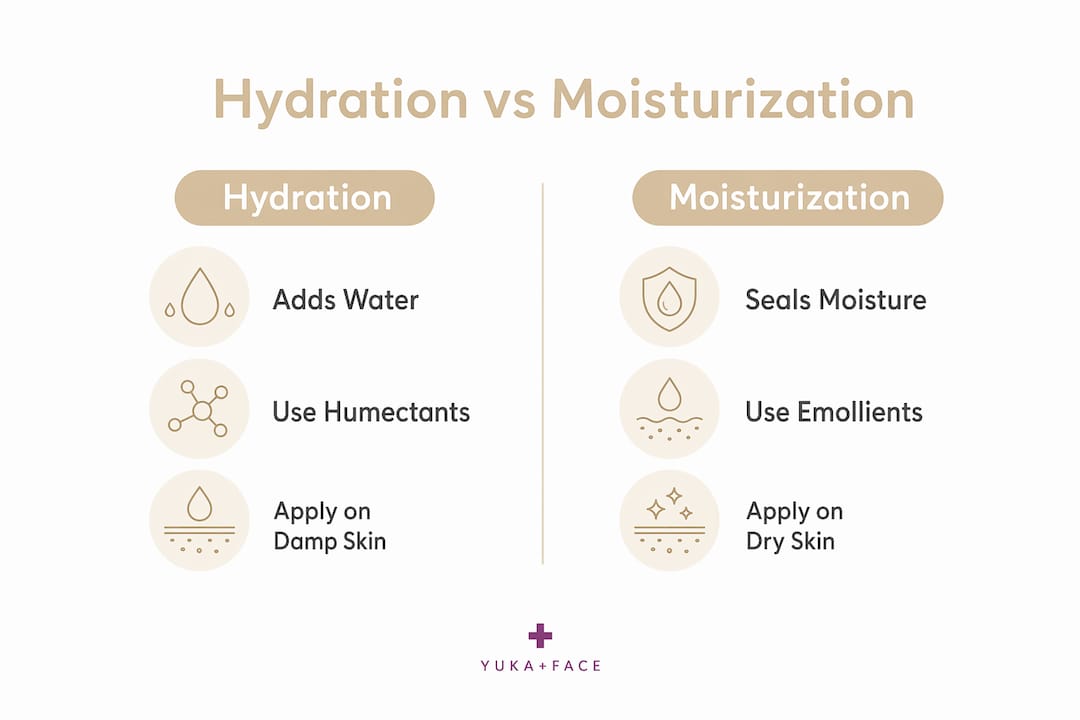
Hydration and moisturization are not the same thing. Hydration adds water to the skin; moisturization prevents that water from escaping. Skipping either step creates a gap in your routine that shows up as dryness, flakiness, or dullness.
Humectants like hyaluronic acid and glycerin pull water into the skin. Emollients like squalane and shea butter soften and fill gaps in the skin surface. Occlusives like petrolatum and plant-based waxes form a physical seal over the top to lock everything in. Each ingredient type plays a different role, and the best results come from using all three in sequence.
Here is what each ingredient category does:
- Humectants (hyaluronic acid, glycerin): draw water into the skin from the environment or deeper layers
- Emollients (squalane, jojoba oil, shea butter): smooth and soften the skin surface by filling in micro-gaps
- Occlusives (beeswax, plant-based waxes, dimethicone): seal the surface to prevent water loss
- Active serums (vitamin C, niacinamide): target specific concerns like uneven tone or texture
Pro Tip: Apply your hydrating serum to slightly damp skin, right after cleansing. Humectants like hyaluronic acid perform better when there is ambient moisture to draw from, rather than pulling water from deeper skin layers.
How does exfoliation contribute to smooth skin?
Exfoliation removes the layer of dead skin cells that accumulates on the surface and causes rough texture. Without it, even the best moisturizer sits on top of dead cells instead of reaching live skin. The result is dullness and uneven texture, regardless of how many products you use.
Chemical exfoliants are more effective and gentler than most physical scrubs. AHAs (alpha-hydroxy acids) like glycolic acid and lactic acid dissolve the bonds between dead cells on the surface. BHAs (beta-hydroxy acids) like salicylic acid penetrate deeper into pores, making them better for oily or acne-prone skin.
The right frequency matters as much as the right product. Dermatologists recommend exfoliating 1–3 times per week to improve texture without damaging the barrier. Daily exfoliation strips the skin faster than it can repair itself.
- Choose your exfoliant type. Use AHAs for dry or dull skin. Use BHAs for oily or congested skin. Use PHAs (polyhydroxy acids) for sensitive skin.
- Start with once per week. Introduce the product slowly and assess how your skin responds before increasing frequency.
- Apply at night. AHAs increase sun sensitivity, so evening use reduces that risk.
- Follow with a barrier-supporting moisturizer. Exfoliation temporarily opens the skin surface, making the next step more effective.
- Stop if you see redness or peeling. These are signs of over-exfoliation, not progress.
Pro Tip: Excessive exfoliation damages the skin barrier, causing dehydration and sensitivity. If your skin feels tight or looks shiny and raw, reduce frequency immediately and focus on barrier repair for at least one week.
What daily skincare routine best supports smooth skin?
Product order determines how well each ingredient performs. Applying products from thinnest to thickest on slightly damp skin gives each layer the best chance to absorb before the next one seals it in. Skipping this sequence reduces the effectiveness of even high-quality products.
Avoid harsh cleansers that strip the skin's natural oils. Hot water does the same damage. Hot showers longer than 10 minutes strip natural oils and leave skin dry and tight. Use lukewarm water and pat your skin dry rather than rubbing, so a thin layer of moisture stays on the surface for your serum to work with.
The table below shows the role of each product type and when to use it:
| Product type | Key ingredients | Role in routine | When to apply |
|---|---|---|---|
| Cleanser | Gentle surfactants, aloe | Remove dirt without stripping oils | Morning and evening |
| Hydrating toner | Glycerin, rose water | Prep skin and add first layer of moisture | After cleansing |
| Serum | Hyaluronic acid, niacinamide | Deliver active ingredients deep into skin | On damp skin, before moisturizer |
| Moisturizer | Shea butter, ceramides | Soften skin and slow water loss | After serum |
| Face oil or occlusive | Squalane, plant waxes | Seal in all previous layers | Last step at night |
| SPF (morning only) | Zinc oxide, mineral filters | Protect barrier from UV damage | Final morning step |
Hydrating serums with hyaluronic acid provide immediate moisture, while formulations with licorice root and ProXylane support longer-term firmness. Choosing a serum with multiple molecular weights of hyaluronic acid addresses both surface and deeper skin hydration at once.
How to protect and maintain the skin barrier to prevent roughness
The skin barrier is the outermost layer of the epidermis. It retains moisture, blocks irritants, and keeps skin looking and feeling smooth. Damage to the skin barrier accelerates water loss and leads directly to rough, dry, reactive skin. Protecting it is more effective than trying to repair it after the fact.
Several common habits damage the barrier without people realizing it. Switching products too frequently, using alcohol-heavy toners, and skipping SPF all contribute to barrier breakdown over time. Understanding skin barrier damage vs dehydration helps you identify which problem you are actually dealing with before choosing a fix.
Habits that protect the skin barrier:
- Use a gentle, pH-balanced cleanser. Alkaline cleansers disrupt the skin's natural acid mantle.
- Keep showers short and lukewarm. Heat strips lipids from the surface layer.
- Apply moisturizer within two minutes of washing. This is the window when skin absorbs product most effectively.
- Use SPF 30 or higher every morning. UV exposure degrades the barrier and accelerates moisture loss.
- Avoid synthetic fragrance in products. Fragrance is one of the most common causes of barrier irritation.
- Choose products with ceramides and fatty acids. These directly replenish the lipids the barrier is made of.
Yuka+Face offers a detailed guide on maintaining a healthy skin barrier that covers ingredient selection and daily habits for long-term barrier health.
What natural remedies and lifestyle habits support smooth skin?
Topical products work best when the body is hydrated from the inside. Women need approximately 92 oz and men approximately 124 oz of water daily to support skin hydration. Water-rich foods like cucumber, watermelon, and leafy greens contribute to that total and also deliver antioxidants that support skin repair.
Body skin ages similarly to facial skin and responds to the same active ingredients and consistent care. Most people focus their routine on the face and neglect the neck, chest, and arms. Applying the same layering approach to body skin produces the same improvements in texture and elasticity.
Lifestyle habits that support a smooth, even complexion:
- Drink water consistently throughout the day. Spacing intake evenly is more effective than drinking large amounts at once.
- Exercise regularly. Increased circulation delivers oxygen and nutrients to skin cells and supports natural regeneration.
- Use gentle massage when applying body lotion. This stimulates lymphatic drainage and improves product absorption.
- Wear natural fabrics like cotton and linen. Synthetic fabrics trap heat and friction against the skin, which can cause irritation over time.
- Apply SPF to exposed body skin, not just the face. Sun damage on the arms, chest, and hands causes the same roughness and loss of elasticity as facial sun damage.
- Get consistent sleep. Skin repairs itself during sleep, and chronic sleep deprivation shows up as dullness and uneven texture.
Men's routines benefit from the same principles. Common grooming mistakes like harsh cleansers and skipping moisturizer after shaving directly damage the barrier and cause roughness.
Key Takeaways
Smooth skin requires both internal hydration and a consistent topical routine that protects the skin barrier, exfoliates gently, and layers products in the correct order.
| Point | Details |
|---|---|
| Hydration and moisturization differ | Hydration adds water; moisturization seals it in. Both steps are required for smooth texture. |
| Exfoliate 1–3 times per week | Chemical exfoliants like AHAs and BHAs improve texture without the barrier damage that daily scrubbing causes. |
| Layer products thin to thick | Apply serums on damp skin before moisturizer to maximize humectant absorption and lock in hydration. |
| Protect the skin barrier daily | Use SPF, gentle cleansers, and ceramide-rich moisturizers to prevent moisture loss and roughness. |
| Lifestyle supports topical results | Daily water intake, sleep, and sun protection on the body amplify what your skincare routine delivers. |
What I have learned from years of watching people get this wrong
Most people treat smooth skin as a product problem. They buy a new serum, use it for two weeks, and move on when results are slow. The real issue is almost always routine consistency and barrier health, not the product itself.
The hydration and moisturization distinction is where most routines break down. People apply a rich cream and assume they are hydrated. They are not. A cream without a humectant serum underneath it is just sealing in dryness. The order and the ingredient pairing matter more than the price of the product.
Over-exfoliation is the second most common mistake I see. People assume more exfoliation means faster results. The opposite is true. Stripping the barrier causes the skin to produce more oil and become more sensitive, which creates the rough, reactive texture they were trying to fix.
Body skin gets ignored almost universally. The neck, chest, and hands show age faster than the face in many cases, yet most routines stop at the jawline. Applying the same serum-and-moisturizer approach to the body takes two extra minutes and makes a visible difference within weeks.
Consistency over time is the only thing that actually works. A simple, well-ordered routine done every day outperforms an elaborate routine done occasionally. Pick a cleanser, a hydrating serum, and a moisturizer with SPF. Do that every morning. Add an exfoliant two nights per week. That is the foundation.
— Kelly
Yuka+Face resources for smooth, healthy skin
Yuka+Face builds every product around barrier health, hydration, and clean ingredients that work for all skin types.

The morning skin care routine guide from Yuka+Face walks through each step in the correct order, with ingredient guidance for every skin type. For those exploring plant-based options, the vegan skincare guide covers how natural formulations support barrier health and smooth texture without synthetic additives. The Yuka+Face hydration and restoration guide goes deeper on the science of keeping skin plump and even-toned through every season. All three are free on the Yuka+Face blog.
FAQ
What causes rough skin texture?
Rough skin texture is caused by a buildup of dead skin cells, a damaged skin barrier, or chronic dehydration. Harsh cleansers, hot showers, and skipping moisturizer all accelerate the problem.
How often should you exfoliate for smooth skin?
Dermatologists recommend exfoliating 1–3 times per week using a gentle chemical exfoliant like an AHA or BHA. Daily exfoliation damages the barrier and increases roughness over time.
Does drinking water improve skin texture?
Yes. Women need approximately 92 oz and men approximately 124 oz of water daily to support skin hydration from within. Water-rich foods like cucumber and watermelon contribute to that total as well.
What is the best order to apply skincare products?
Apply products from thinnest to thickest: cleanser, toner, serum, moisturizer, then SPF in the morning. Applying serum to slightly damp skin improves humectant absorption.
Is hyaluronic acid good for smooth skin?
Hyaluronic acid is one of the most effective humectants available. It binds up to 1,000 times its weight in water, plumping the skin surface and reducing the appearance of fine lines and rough texture.