
Healthy skin has a naturally acidic surface, sitting at a pH around 4.7, which protects the barrier and supports a balanced microbiome. To balance skin pH, use gentle, pH-balanced cleansers, apply a hydrating toner after washing, moisturize with ceramides or glycerin, and protect daily with broad-spectrum sunscreen.
Quick steps to balance skin pH:
- Switch to a gentle, pH-balanced cleanser with a pH suitable for skin health
- Apply a hydrating toner immediately after cleansing to restore acidity
- Moisturize with barrier-supporting ingredients like ceramides and glycerin
- Avoid harsh soaps and alkaline cleansers that strip the acid mantle
- Drink enough water and limit overwashing
- Wear broad-spectrum sunscreen every day
Table of Contents
- Why skin pH matters for your barrier and microbiome
- How to test your skin's pH at home
- Signs your skin pH may be off balance
- Practical steps to restore and maintain balanced skin pH
- Natural and lifestyle approaches to support skin pH
- Expert insight on keeping skin pH stable long term
- Yuka+Face: natural skincare built around your skin's pH
- Key Takeaways
- FAQ
Why skin pH matters for your barrier and microbiome
The pH scale runs from 0 to 14. Neutral is 7.0. Skin sits well below that, in the acidic range, and that acidity is not incidental. It is the foundation of the skin's protective acid mantle, a thin film of sebum, sweat, and amino acids that keeps moisture in and pathogens out.
Research shows that skin with pH below 5.0 scores better on barrier function, hydration, and scaling than skin with pH above 5.0. An acidic environment also keeps resident bacteria attached to the skin surface, while an alkaline pH promotes their dispersal, leaving skin vulnerable to colonization by harmful microbes.
"Skin pH plays a pivotal role in treatment outcomes. Low-pH products should be layered carefully with recovery-focused products to maintain barrier function." — Professional Beauty
pH also governs how well active ingredients work. AHAs and vitamin C require a low pH environment to function at full strength. At higher pH, their free acid forms decrease, and exfoliation or brightening effects weaken. Understanding pH in skincare is the first step toward getting real results from your routine.
How to test your skin's pH at home
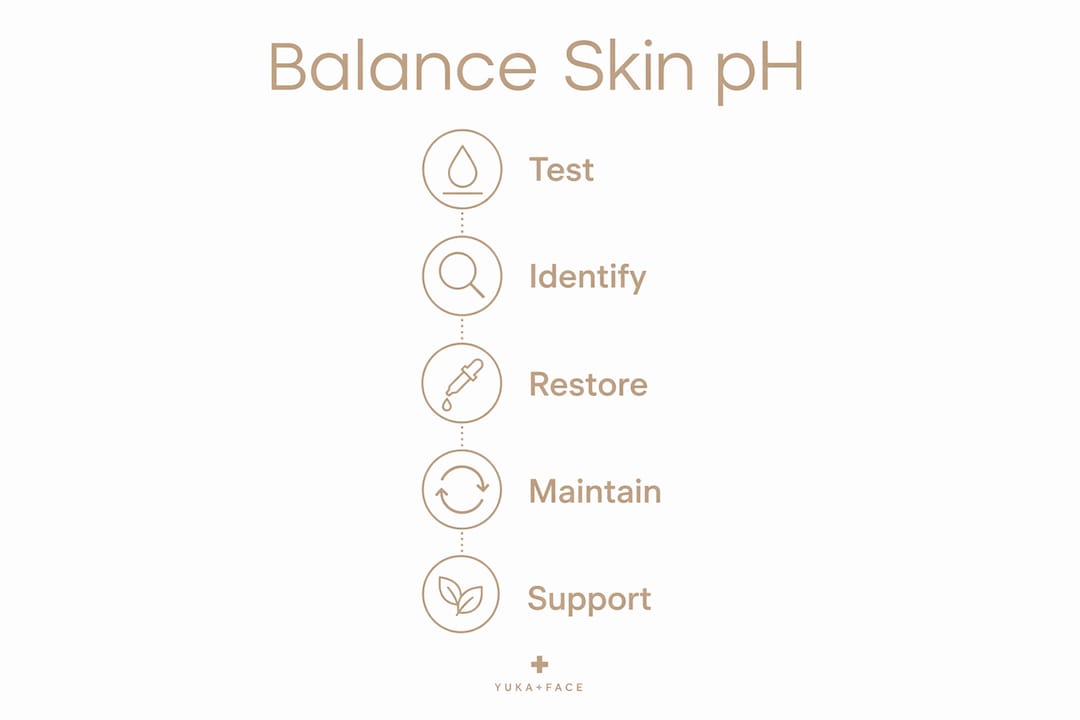
Testing skin pH does not require a lab. Litmus strips designed for skin or general pH testing give a reasonable approximation.
- Wash your face with plain water only. No cleanser, no products. Pat dry and wait 30 minutes.
- Press a pH strip gently against your cheek or forehead. Hold for the time specified on the packaging, usually a few seconds.
- Compare the strip color to the chart. A reading in the acid range is healthy; higher readings suggest the barrier may be compromised.
- Test at the same time of day each session. Morning readings before any product application give the most consistent baseline.
- Note environmental variables. Humidity, sweat, and recent exercise all shift readings temporarily.
At-home pH strips give a useful snapshot, but they are not clinical instruments. For a precise assessment, a dermatologist can measure skin pH with a calibrated probe. If your readings consistently fall outside the 4.5–5.5 range despite routine adjustments, a professional consultation is worth scheduling.
Signs your skin pH may be off balance
Recognizing an imbalance early prevents longer-term barrier damage. Symptoms vary depending on whether skin is running too acidic or too alkaline.
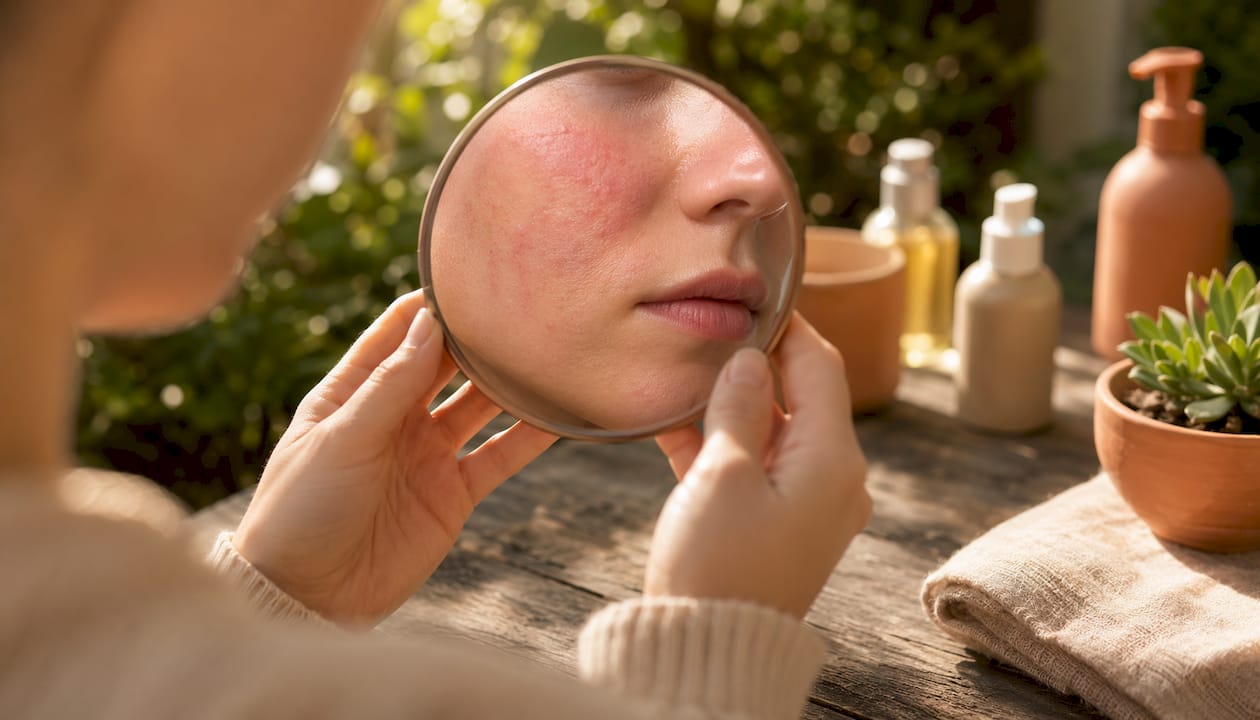
- Redness and irritation often signal overuse of low-pH acids, which can thin the barrier through accelerated corneocyte shedding
- Persistent dryness and flaking suggest the acid mantle has been stripped, typically by alkaline soaps or harsh cleansers
- Frequent breakouts can indicate an alkaline shift that allows acne-causing bacteria to thrive
- Sensitivity to products that previously caused no reaction points to a compromised barrier, often from pH disruption
- Tight, uncomfortable skin after washing is a classic sign that the cleanser used is too alkaline
Visible symptoms arise when the acid mantle is disrupted and barrier function weakens. Tap water alone, which typically has a pH around 8.0, can raise skin pH for several hours after washing. That temporary alkaline window is when skin is most reactive and most in need of a corrective toner or moisturizer.
Practical steps to restore and maintain balanced skin pH
Restoring balance takes consistency, not a single product fix. These steps form a reliable pH balance skincare routine.
- Cleanse with a pH-balanced product. Alkaline cleansers strip natural oils and push pH upward. Choose a gentle cleanser formulated at pH 4.5–5.5.
- Follow immediately with a toner. A hydrating toner neutralizes any residual alkalinity from water and cleanser, bringing skin back toward its natural acidic state. Yuka+Face's Lavender Essence Balancing Toner is formulated to do exactly this.
- Moisturize with ceramides and glycerin. Emollients like ceramides support lipid production and reinforce the barrier between cleansing sessions.
- Apply broad-spectrum sunscreen every morning. UV exposure disrupts skin pH and degrades the acid mantle over time.
- Avoid layering multiple low-pH actives in one session. Overexfoliation accelerates corneocyte shedding and causes barrier thinning, redness, and sensitivity.
Pro Tip: Avoid rapid switching between high-acid treatments and alkaline products. "Yo-yoing" between pH extremes destabilizes the barrier. Build in recovery nights using only a gentle cleanser and a ceramide moisturizer before reintroducing actives.

Natural and lifestyle approaches to support skin pH
Topical products do most of the heavy lifting, but diet, stress, and daily habits all influence how well skin holds its natural pH.
- Eat more plant-based, nutrient-rich foods. Fruits and vegetables supply antioxidants and minerals that support skin cell function and reduce systemic inflammation, which can manifest as pH-disrupting skin stress.
- Manage stress consistently. Elevated cortisol affects sebum production and barrier integrity, both of which influence surface pH over time.
- Do not use baking soda on your skin. Baking soda is highly alkaline and raises skin pH, destabilizing the acid mantle. Despite its popularity in DIY skincare circles, it causes more disruption than it corrects.
- Limit cleansing to twice daily. Overwashing removes sebum and disrupts the acid mantle faster than it can recover. Once in the morning and once at night is sufficient for most skin types.
- Stay consistently hydrated. Water supports cellular turnover and helps maintain the moisture gradient that keeps the barrier intact.
- Reduce exfoliation frequency during barrier recovery. If skin is already reactive or sensitized, pulling back on acids and scrubs for one to two weeks gives the acid mantle time to rebuild.
For more on sustainable skin hydration and its role in barrier health, the Yuka+Face blog covers the topic in depth.
Expert insight on keeping skin pH stable long term
Maintaining a stable pH is less about finding one perfect product and more about how you sequence and pace your routine over time.
"Skin pH is not a static number. It shifts with every product applied, every wash, every environmental exposure. The goal is not to hit a target once but to build a routine that keeps returning skin to its natural acidic baseline without forcing it there with harsh corrections." — Professional Beauty
From a practitioner's perspective, the cumulative pH load matters as much as any single step. Layering a vitamin C serum at pH 2.5–3.5, followed by a retinol at pH 5.5–6.0, followed by an AHA at pH 3.0–4.0 in one session creates a volatile pH environment that enzymes responsible for barrier repair cannot keep up with. Recovery phases, where skin gets gentle-only nights with no actives, allow those enzymes to restore lipid production and normalize surface pH. A personalized skincare routine that accounts for pH sequencing consistently outperforms one built around ingredient trends alone.
Yuka+Face: natural skincare built around your skin's pH

Yuka+Face formulates every product with skin pH in mind. The full range is 100% natural, vegan, and cruelty-free, built for all skin types and ages. For anyone coming from this article, the most direct starting point is the morning skincare routine Yuka+Face recommends: a gentle cleanser, the Lavender Essence Balancing Toner, and a ceramide-rich moisturizer, in that order. Each step is chosen to keep skin in its natural acidic range without synthetic additives or harsh pH-disrupting ingredients. Browse the full Yuka+Face range at yukaface.com and build a routine that works with your skin's biology, not against it.
Key Takeaways
Healthy skin pH sits at around 4.7, and maintaining that acidic baseline requires consistent, pH-aware product choices and routine habits.
| Point | Details |
|---|---|
| Natural skin pH target | Skin pH averages around 4.7; readings below 5.0 support better barrier function and microbiome health. |
| Tap water disrupts pH | Water at pH 8.0 raises skin pH for up to 6 hours, making a post-wash toner a practical necessity. |
| Baking soda is harmful | Baking soda raises skin pH and disrupts the acid mantle; it does not balance skin pH. |
| Routine sequencing matters | Layering multiple low-pH actives in one session overloads the barrier; build in recovery nights. |
| Yuka+Face approach | The Yuka+Face morning routine uses a pH-balanced toner and gentle cleanser to keep skin in its natural acidic range. |
FAQ
What are the signs of pH imbalance in skin?
Redness, persistent dryness, sensitivity, frequent breakouts, and tight skin after washing all indicate that the acid mantle has been disrupted. These symptoms arise when the skin barrier weakens due to alkaline products or overwashing.
How long does it take for skin pH to balance?
Skin can begin returning to its natural acidic baseline within hours of removing a disruptive product, but full barrier recovery after prolonged imbalance typically takes one to two weeks of consistent, gentle routine use.
How can you balance skin pH naturally?
Limit cleansing to twice daily, avoid alkaline soaps, apply a hydrating toner after washing, eat a nutrient-rich diet, manage stress, and stay well hydrated. These habits support the acid mantle without relying on corrective treatments.
Does baking soda balance skin pH?
No. Baking soda is alkaline and raises skin pH, which destabilizes the protective acid mantle. It is not recommended for skin pH correction despite its widespread use in DIY skincare.