TL;DR:
- Enzyme face masks utilize fruit-derived enzymes to gently dissolve dead skin cells without deep penetration or scrubbing. They improve skin texture, glow, and serum absorption, making them suitable for sensitive or beginner users. Use once weekly, patch-test first, and follow with hydration and SPF for best results.
An enzyme face mask uses fruit-derived enzymes, most commonly papain (from papaya) and bromelain (from pineapple), to dissolve the protein bonds holding dead skin cells on the surface. The result: gentle exfoliation with no scrubbing, no deep acid penetration, and minimal downtime. For sensitive skin, first-time exfoliant users, or anyone who wants maintenance-level resurfacing, this is often the right starting point.
Quick reference:
- What it does: Breaks down keratin in dead skin cells at the stratum corneum (outer skin layer) for surface exfoliation.
- Primary benefit: Smoother texture, immediate glow, and better absorption of serums and moisturizers.
- Who it suits: Sensitive, reactive, dry, oily, and acne-prone skin types; beginners to exfoliation.
- How often: Regular use as recommended, typically starting at once per week and increasing cautiously, without specifying exact frequency.
- First rule: Always patch-test before full-face use. Apply to the inner forearm or behind the ear, wait 24 hours, and check for reaction.
Table of Contents
- How does an enzyme face mask actually exfoliate?
- What enzymes and ingredients should you look for on the label?
- Who benefits most from enzyme peel mask use?
- How to use an enzyme mask: step-by-step
- How often can you use enzyme masks, and what actives can you combine them with?
- How do you choose the best enzyme mask for your skin?
- What do dermatologists and estheticians say about enzyme masks?
- Key Takeaways
- A mindful approach to exfoliation
- Yuka+Face: natural masks and post-mask care
- Useful sources
- FAQ
How does an enzyme face mask actually exfoliate?
Enzymes perform proteolysis: they break down the keratin proteins that hold dead skin cells together at the stratum corneum. That outer layer sheds naturally, but dead cells often accumulate faster than they clear, leaving skin looking dull and blocking product absorption. Enzymes accelerate that clearing process without cutting into living tissue.
Compare that to mechanical scrubs, which use physical abrasion and can cause micro-tears, especially on thin or reactive skin. Chemical exfoliants like AHAs and BHAs penetrate deeper and change the skin's pH, which is why they require more careful use. Enzyme peels are considered gentler because they act only on the surface and do not require the same level of acid penetration.
Formulation details matter. Enzyme concentration, pH, and the product vehicle (gel, cream, powder) all affect how active the enzymes are and how long they stay stable on skin. A well-formulated product delivers consistent activity; a poorly preserved one may be largely inactive by the time you open it.
Pro Tip: A mild warmth or light tingling during application usually means the enzymes are working on dead skin cells. Burning or stinging is different. That signals barrier compromise. Rinse immediately and do not reapply until skin has recovered.
What enzymes and ingredients should you look for on the label?
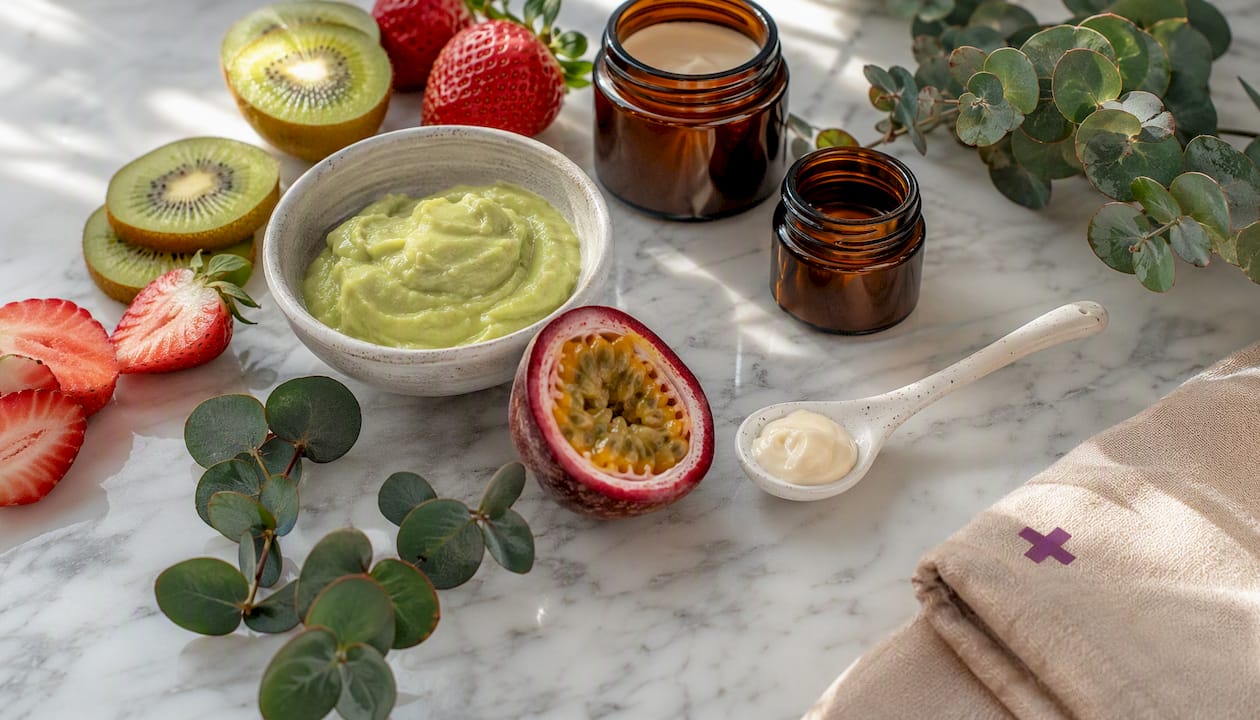
Papain, bromelain, and pumpkin enzymes are the three most common in at-home formulations. Mango enzymes also appear in some products. Each targets the same keratin proteins but comes from a different fruit source.
| Enzyme | Source | Primary Action |
|---|---|---|
| Papain | Papaya | Breaks down keratin proteins in dead skin cells |
| Bromelain | Pineapple | Gentle proteolytic exfoliation; often combined with papain |
| Pumpkin enzyme | Pumpkin | Mild resurfacing; rich in antioxidants |
| Mango enzyme | Mango | Gentle surface exfoliation; suits sensitive skin |
Beyond the enzyme itself, the supporting ingredients determine what the mask actually does for your skin. Hyaluronic acid adds hydration during exfoliation. Kaolin or bentonite clay absorbs excess oil and suits congested skin. Vitamin C brightens and adds antioxidant protection. Aloe vera and niacinamide calm post-exfoliation redness.
Format matters too. Gel masks are cooling and lighter, a good fit for oily or acne-prone skin. Creamy masks add emollient support and work better for dry or mature skin. Powder-to-paste systems are more concentrated and better suited to experienced users who can control mixing ratios precisely.
Label checklist:
- Enzyme listed in the first half of the ingredients (indicates meaningful concentration).
- Humectant present (hyaluronic acid, glycerin) for hydration support.
- Clay listed if pore-clearing or oil control is the goal.
- Fragrance-free or essential-oil-free if skin is sensitive or reactive.
- Airless pump or opaque packaging to protect enzyme stability.
- Clear expiration date and storage instructions on the label.
- Avoid: denatured alcohol high on the list, synthetic fragrance, and undisclosed "parfum" if you have reactive skin.
For congested or oily skin, a detox charcoal mask that pairs clay with active ingredients offers a complementary approach when enzyme exfoliation alone is not enough.
Who benefits most from enzyme peel mask use?
Enzyme masks improve product absorption by clearing the dead-cell barrier that blocks serums and moisturizers from reaching the skin. Most people notice an immediate glow and smoother texture after the first use, with no recovery time needed.
Sensitive and rosacea-prone skin types tend to respond well because there is no physical friction and no deep acid penetration. Beginners benefit from the low risk of over-exfoliation at standard home-use frequencies. Mature skin sees texture improvement and better serum absorption without the downtime of a professional peel.
Enzymes work at the surface. They are not the right tool for deep sun damage, significant post-acne scarring, or severe textural concerns that require professional-grade resurfacing. For those goals, a dermatologist or licensed esthetician can recommend a stronger treatment.
After any enzyme mask, apply a hydrating moisturizer immediately and follow with broad-spectrum SPF 30 or higher if going outdoors. Freshly exfoliated skin is more vulnerable to UV damage. For a complete guide to natural exfoliants and how they compare, Yuka+Face's resource covers eco-friendly options across skin types.
How to use an enzyme mask: step-by-step
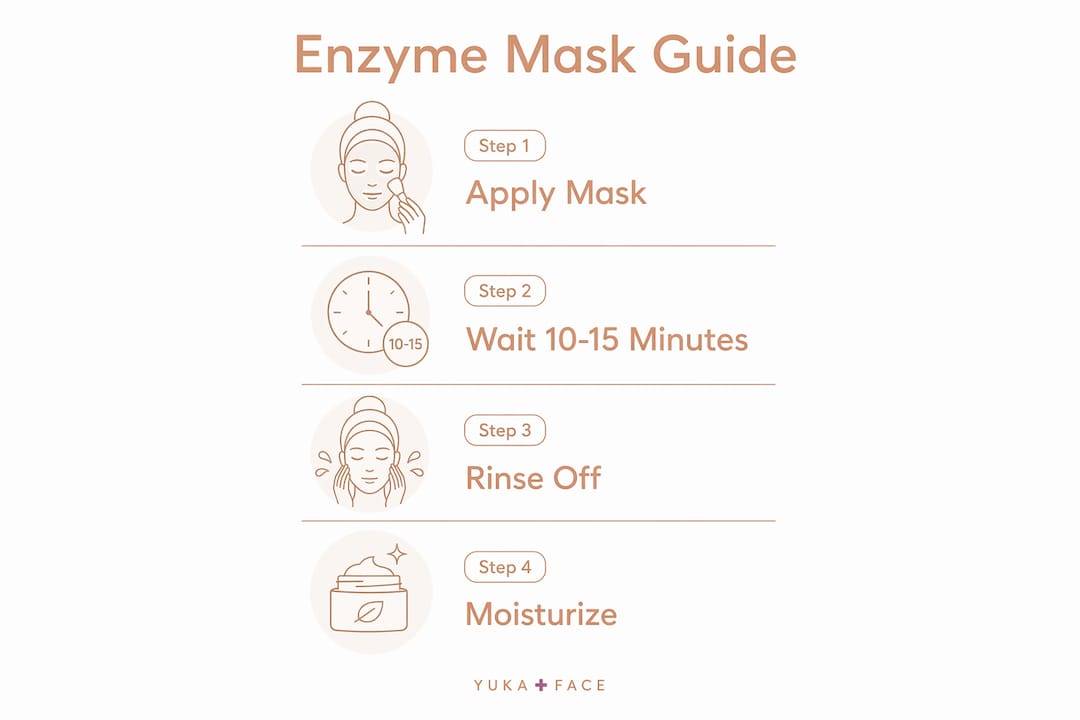
Basic sequence: Cleanse → patch-test (first use) → apply thin layer → time it → rinse → hydrate → SPF.
- Cleanse. Start with a clean, dry face. Remove all makeup and sunscreen first.
- Patch-test (first use only). Apply a small amount to the inner forearm or behind the ear. Wait 24 hours. If no redness, itching, or swelling appears, proceed to full-face use.
- Apply a thin, even layer. Avoid the eye area and any open lesions or active breakouts.
- Time it conservatively. For a first use, 5–10 minutes is enough. Most products have a 5–30 minute range. Start at the low end and increase only after your skin has tolerated several uses.
- Rinse thoroughly. Use lukewarm water and a soft cloth. Do not rub.
- Apply a hydrating moisturizer immediately. The Hydrating Power Moisturizer from Yuka+Face works well here: it supports the skin barrier right after exfoliation.
- Apply SPF. Broad-spectrum SPF 30 or higher if you are heading outdoors.
Some enzyme masks are formulated for overnight use as a thin leave-on layer. This approach suits dry or mature skin that benefits from extended hydration alongside gentle exfoliation. People with oily, acne-prone, or reactive skin should avoid overnight use and stick to short rinse-off applications.
Pro Tip: Start once per week. After two to three weeks with no irritation, increase to twice weekly. Build to three times weekly only if your skin tolerates it well and shows no dryness, tightness, or redness between uses.

How often can you use enzyme masks, and what actives can you combine them with?
Start at 1–3 times per week, calibrated to your skin type. Sensitive skin: once weekly to start. Normal to oily skin: twice weekly is a reasonable baseline. Increase frequency only after confirming tolerance over several weeks.
Vitamin C serums are generally compatible with enzyme masks when applied after rinsing, not simultaneously. Niacinamide is a calming complement and can follow enzyme use without issue. Retinoids and strong acids (glycolic, salicylic) should be scheduled on separate nights.
If skin feels tight, dry, or stings between sessions, pause enzyme use and focus on hydration and barrier repair before reintroducing. A compromised barrier amplifies irritation from any active, including gentle enzymes.
Consult a dermatologist before using enzyme masks if you have: active severe acne with open lesions, very thin or steroid-thinned skin, a diagnosed skin condition (eczema, psoriasis, perioral dermatitis), or if you are using prescription-strength topical retinoids.
How do you choose the best enzyme mask for your skin?
The right product starts with your skin goal and skin type. Brightening goals point toward papain- or bromelain-forward formulas with vitamin C. Pore-clearing and oil control call for clay-based formulas. Hydration and texture improvement for dry or mature skin need a creamy base with humectants.
Buyer checklist:
- Skin goal first. Brightening, pore-clearing, or hydration? Match the supporting ingredients to that goal.
- Enzyme type. Papain and bromelain are the most studied. Pumpkin enzyme suits sensitive skin well.
- Format. Gel for oily/acne-prone. Cream for dry/mature. Powder-to-paste for experienced users only.
- Contact time. Look for a product with a clear recommended range. Avoid any product with no timing guidance.
- Fragrance. Skip added fragrance and essential oils if your skin is sensitive or reactive.
- Packaging. Airless pumps or opaque tubes protect enzyme stability better than open jars.
- Size. Travel or sample sizes let you test tolerance before committing to a full-size purchase.
- Expiration. Enzymes degrade over time. Check the period-after-opening symbol and store away from heat and direct light.
For a broader look at mask types by skin concern, Yuka+Face's guide covers the full range of formulation options. Storage note: keep enzyme masks below 77°F (25°C), away from humidity and sunlight. Heat accelerates enzyme degradation and shortens effective shelf life.
What do dermatologists and estheticians say about enzyme masks?
Skincare professionals consistently describe enzyme masks as the ideal maintenance exfoliant for most skin types. The mechanism respects the skin barrier because it targets only dead cells at the stratum corneum, not living tissue. That makes them a lower-risk choice for regular home use compared to stronger chemical peels.
Patch-testing and gradual frequency increases are the standard clinical recommendation when introducing any new exfoliant, particularly when combining with other actives. Estheticians also note that a mild tingle is normal during enzyme activity; persistent stinging or burning is not, and warrants immediate rinsing.
Enzyme masks are also relevant for the large share of the population with sensitive or reactive skin. The American Academy of Dermatology notes that sensitive skin is among the most commonly reported skin concerns in the U.S., making lower-irritation exfoliation options like enzyme masks a practical fit for a wide range of people. For complex conditions, including active inflammatory acne, eczema, or prescription-treated skin, consult a board-certified dermatologist before adding any exfoliant to your routine.
Key Takeaways
Enzyme face masks offer gentle, fruit-derived surface exfoliation that suits most skin types, with a safe starting frequency of once per week and a clear rule: patch-test first, then titrate up.
| Point | Details |
|---|---|
| How they work | Fruit enzymes dissolve keratin in dead skin cells at the stratum corneum without abrasion or deep acid penetration. |
| Safe frequency | Start with cautious use and increase frequency only after confirming skin tolerance. |
| Format matters | Gel suits oily/acne-prone skin; cream suits dry/mature skin; powder-to-paste is for experienced users only. |
| Combine with care | Avoid same-night use with strong AHAs, BHAs, or retinoids; follow every mask with a hydrating moisturizer and SPF. |
| Yuka+Face | Offers natural, vegan, cruelty-free masks and hydrating post-mask products with full ingredient transparency and clear usage guidance. |
A mindful approach to exfoliation
Gentle exfoliation is not about stripping the skin. It is about clearing what has already shed so the skin beneath can function better. Enzyme masks fit that philosophy precisely: they work with the skin's natural renewal cycle rather than forcing a deeper change.
At Yuka+Face, the approach to formulation starts with that same principle. Natural, plant-derived ingredients. Full ingredient transparency. Clear contact-time guidance on every product. Format options that match different skin types rather than a one-size approach. And travel sizes so you can test before committing.
The buyer checklist in this article reflects what Yuka+Face builds into its products: hydration-forward formulations, clean preservative systems, and packaging that protects active ingredients. Mindful exfoliation is part of a mindfulness-based skincare routine that treats the skin as something to support, not to push.
Yuka+Face: natural masks and post-mask care
Freshly exfoliated skin absorbs what comes next more effectively. That is the moment to give it the best.
Yuka+Face offers natural, vegan, cruelty-free masks and hydrating products formulated for all skin types. Ingredient lists are published in full. Usage guidance is clear. Products are available in sizes that let you test before buying a full-size version.
For post-mask recovery, the hydration and restoration guide covers barrier-support products and routines. For readers new to vegan skincare formulations, the vegan skincare guide explains what to look for and why it matters. Ready to start? Browse Yuka+Face's full mask and moisturizer range at yukaface.com and find the right fit for your skin type and goals.
Useful sources
- 5 Benefits of an Enzyme Mask — Hedox Clinic: Covers enzyme mask benefits, frequency guidance, and papain/bromelain sourcing.
- What Is an Enzyme Peel? — Health & Medspa: Explains the mechanism, sensation guidance (tingling vs. burning), and suitability for sensitive skin.
- Enzyme Peels: Benefits, Ingredients & How They Work — Clinikally: Detailed breakdown of enzyme types, supporting ingredients, and format selection by skin type.
- What Is an Enzyme Peel? — The Beauty Foodie: Covers product absorption benefits and post-mask glow outcomes.
- Best Enzyme Exfoliators — Elle: Expert commentary on titration strategy and patch-testing when introducing enzyme exfoliants.
- American Academy of Dermatology: Primary reference for skin sensitivity prevalence and general dermatologist guidance on exfoliation.
- How to Get Rid of Tan Lines — Doll House Bikinis: Covers surface exfoliation techniques relevant to evening skin tone after sun exposure.
FAQ
What does an enzyme face mask do?
An enzyme face mask dissolves the protein bonds holding dead skin cells on the surface, clearing them without physical scrubbing or deep acid penetration. The result is smoother texture, a visible glow, and better absorption of serums and moisturizers applied afterward.
Are enzymes good for your face?
Yes, for most skin types. Fruit enzymes like papain and bromelain act only on the stratum corneum and are considered gentler than mechanical scrubs or strong chemical exfoliants, making them a practical option for sensitive, reactive, and first-time exfoliant users.
How often can you use an enzyme mask?
Start at once per week and increase to 2–3 times weekly only after confirming your skin tolerates it well. Sensitive skin should stay at once weekly; normal to oily skin can typically work up to twice or three times weekly.
What is the best enzyme mask for your face?
The best fit depends on your skin goal and type. Gel formulas suit oily or acne-prone skin; creamy formulas work better for dry or mature skin. Look for clear enzyme sourcing, supporting ingredients matched to your goal (clay for pore-clearing, hyaluronic acid for hydration), and full ingredient transparency. Yuka+Face offers natural, vegan options formulated with those criteria in mind.
Can you use an enzyme mask with retinoids or AHAs?
Avoid using an enzyme mask on the same night as retinoids or strong AHAs and BHAs. Layering multiple exfoliating actives in one session raises the risk of barrier disruption. Alternate nights and follow every exfoliation session with a hydrating moisturizer and SPF the following morning.