TL;DR:
- Crepey skin results from the loss of elasticity and collagen, mainly affecting thin areas like the neck and hands. Sun exposure, aging, smoking, and dehydration accelerate this condition, which can be improved with treatments that support collagen production. Consistent use of sun protection, retinoids, moisturizers, and professional procedures help prevent and reduce crepey skin.
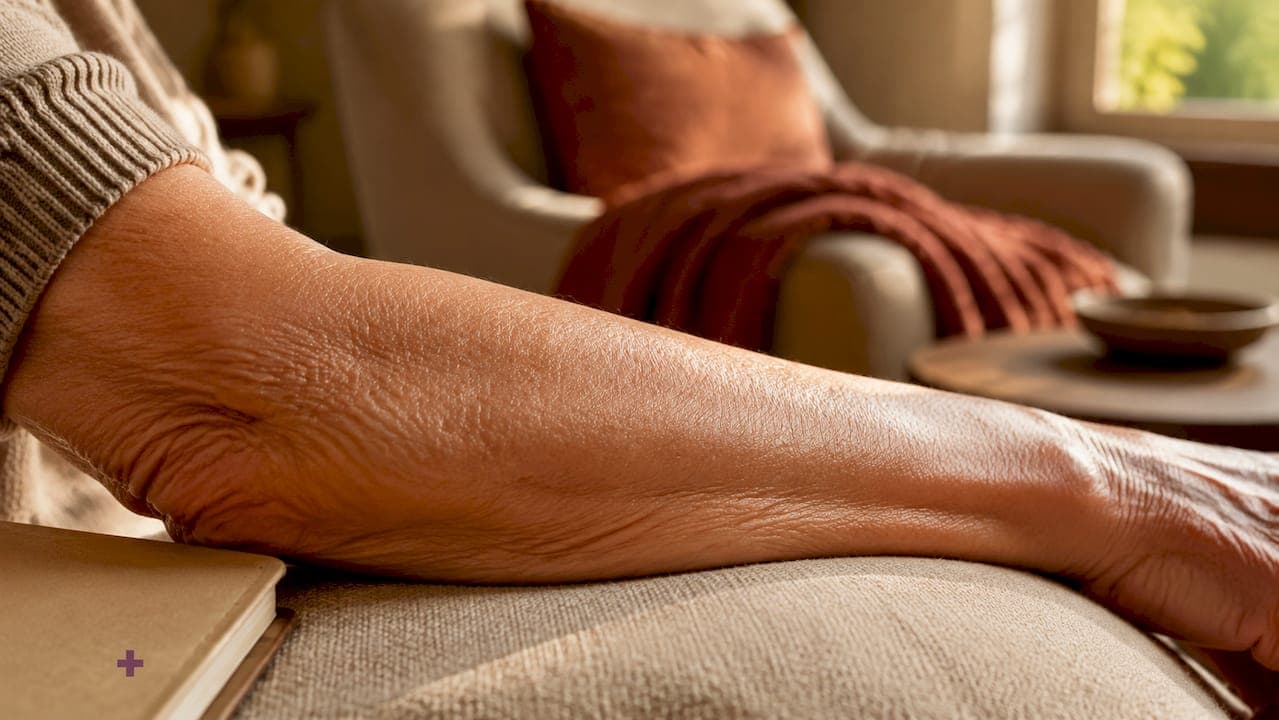
Crepey skin is defined as skin that has lost elasticity and density, producing a thin, finely wrinkled texture that resembles crinkled tissue paper. The medical term for this condition is cutaneous laxity, though "crepey skin" describes the visual result most people recognize. It appears most often on the neck, under the eyes, the décolletage, and the backs of the hands. Collagen levels decline by 1% annually starting in the mid-20s, making this a gradual but inevitable process for most people. The good news is that both prevention and treatment are well within reach.
What are the main causes of crepey skin?
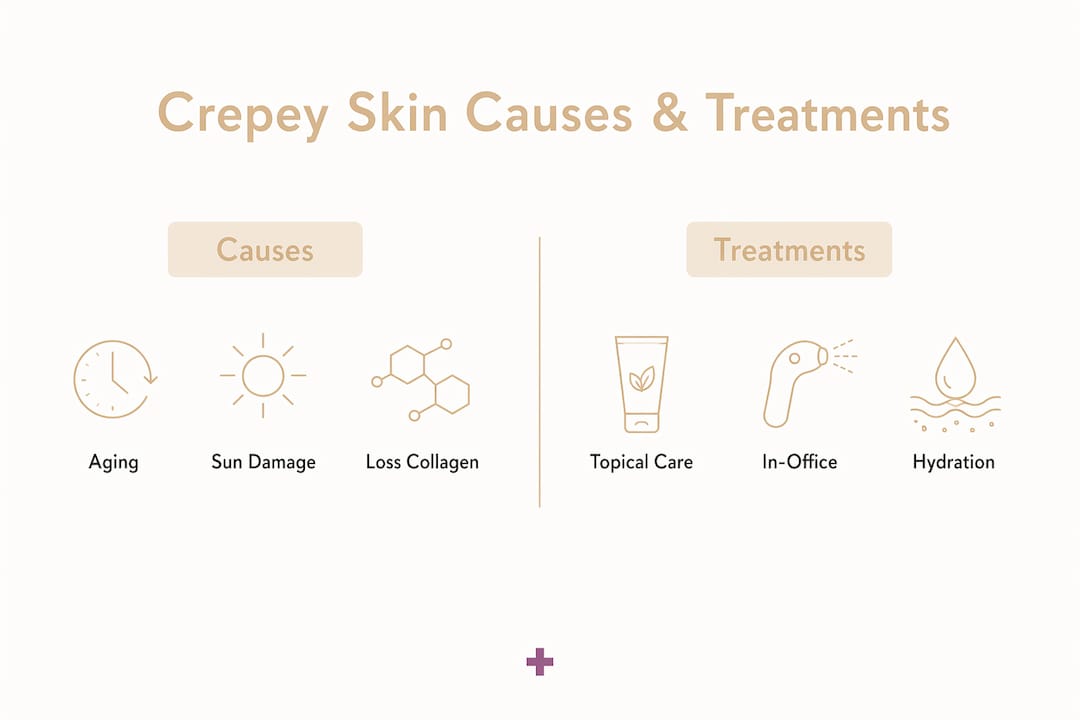
Crepey skin develops when the skin's structural proteins, collagen and elastin, break down faster than the body can replace them. This process accelerates with age, but several external factors speed it up considerably. Understanding the cause is the first step toward choosing the right response.
Areas with thinner dermis and fewer sebaceous glands, such as the neck, décolletage, and backs of the hands, are the most susceptible. These zones produce less natural oil, which means they lose moisture faster and show structural changes earlier than oilier areas like the forehead.
The single largest external cause of crepey skin is UV radiation. Sun exposure triggers solar elastosis, a process where UV rays degrade elastin fibers in the dermis. Over years, this leaves skin unable to spring back into shape.
The main contributing factors include:
- Biological aging. Collagen declines by 1% per year from the mid-20s onward. By the time most people notice visible changes, the loss has been accumulating for decades.
- UV exposure. Unprotected sun exposure is the leading environmental cause of premature elastin breakdown.
- Smoking. Cigarette smoke reduces blood flow to the skin and degrades collagen through oxidative stress.
- Rapid weight changes. Significant weight loss stretches and then deflates the skin, leaving it with less structural support.
- Dehydration. Chronically dry skin loses its ability to maintain the plump, cushioned appearance that masks fine texture.
- Vitamin D deficiency. Vitamin D receptors in skin cells influence collagen synthesis, and deficiency impairs the skin's repair capacity.
One common misconception is that crepey skin and cellulite are the same condition. They are not. Crepey skin is thin, wrinkled skin caused by collagen and elastin loss, while cellulite involves fat deposits beneath the skin that create a dimpled surface. The treatments for each are entirely different.
How is crepey skin treated?
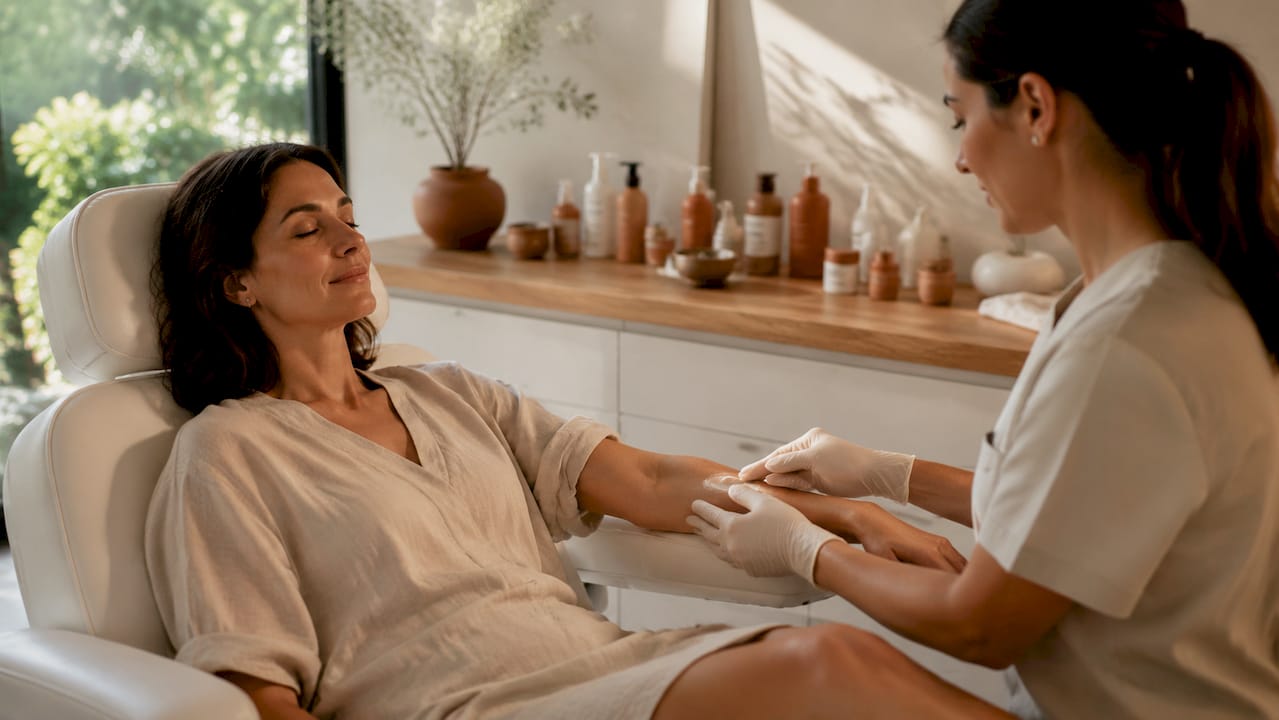
Treatment for crepe skin falls into two broad categories: topical care and in-office procedures. Each serves a different purpose, and the most effective approach combines both.
Topical treatments
Topical products work primarily by improving hydration, supporting the skin barrier, and stimulating mild collagen activity. They do not remodel the deep dermis. Moisturizers improve skin hydration and texture but function as adjuncts. Only in-office treatments remodel collagen to firm skin structurally.
The most clinically supported topical ingredients include:
- Retinoids. Vitamin A derivatives that stimulate collagen synthesis. They are the most evidence-backed topical option for anti-aging for crepey skin.
- Hyaluronic acid. Draws water into the skin, temporarily plumping fine texture.
- Peptides. Signal the skin to produce more collagen and elastin.
- Niacinamide. Strengthens the skin barrier and reduces water loss.
- Vitamin C. An antioxidant that protects against UV-induced collagen breakdown and supports new collagen formation. Learn more about key vitamins for skin and how they work at the cellular level.
Pro Tip: When choosing the best creams for crepey skin, look for formulas that combine a humectant like hyaluronic acid with an occlusive ingredient like shea butter. The humectant draws in moisture; the occlusive seals it in.
In-office procedures
Clinical treatments produce structural changes that topicals cannot. The table below outlines the most common options and their recovery timelines.
| Treatment | Mechanism | Recovery Time |
|---|---|---|
| Non-ablative fractional resurfacing | Stimulates collagen via controlled heat | 5–7 days |
| Radiofrequency microneedling | Combines heat and micro-injury to remodel collagen | 3–5 days |
| Ultrasound therapy | Delivers energy to deep tissue layers | Minimal downtime |
| Biostimulatory injectables | Calcium hydroxylapatite stimulates collagen production | Minimal downtime |
Effective crepey skin management requires a multi-modality approach combining photoprotection, hydration, topical care, and clinical treatments. No single product or procedure delivers complete results on its own.
What daily habits help prevent and manage crepey skin?
Prevention is significantly more effective than correction. The habits that protect skin elasticity are straightforward, but they require consistency over years, not weeks.
- Apply broad-spectrum SPF daily. Consistent daily SPF use prevents solar elastosis, the primary UV-driven cause of elastin degradation. This is the single most effective preventive measure available, and it costs less than any clinical procedure.
- Moisturize every morning and night. Daily moisturization supports the skin barrier and keeps surface texture smooth. For guidance on choosing the right product type, the difference between moisturizing and hydrating matters more than most people realize.
- Exfoliate gently, once or twice a week. Removing dead skin cells allows active ingredients to penetrate more effectively. Avoid harsh physical scrubs on thin skin areas like the neck.
- Introduce retinoids gradually. Retinoids promote collagen synthesis but require a slow introduction on sensitive areas. Start with a low concentration two nights per week before increasing frequency. For those with reactive skin, bakuchiol is a plant-based alternative worth considering. A detailed retinol vs. bakuchiol comparison outlines which suits different skin types.
- Stay hydrated and eat a nutrient-dense diet. Adequate water intake supports skin plumpness. Antioxidant-rich foods, including leafy greens, berries, and fatty fish, provide the raw materials for collagen production.
- Avoid smoking. Smoking accelerates collagen breakdown through oxidative damage and reduces circulation to skin tissue.
Pro Tip: Makeup applied directly to dry, crepey skin tends to settle into fine lines and emphasize texture. Hydrating before makeup application with a lightweight serum or moisturizer minimizes this effect significantly. For specific product picks, makeup for mature skin guides can help you choose formulas that work with aging skin rather than against it.
Additional habits that support skin health over time:
- Get adequate sleep. Skin repair peaks during sleep cycles.
- Manage stress. Chronic cortisol elevation accelerates collagen breakdown.
- Wear protective clothing and seek shade during peak UV hours (10 a.m. to 4 p.m.).
How do you recognize crepey skin versus other skin issues?
Crepey skin has a specific appearance that distinguishes it from other common concerns. The texture is fine and papery, not bumpy or dimpled. It feels thin to the touch and may appear slightly translucent in areas like the backs of the hands.
Cellulite, by contrast, creates a lumpy or orange-peel surface caused by fat pushing against connective tissue beneath the skin. Crepey skin sits at the surface level of the dermis. Treating one with the methods designed for the other produces no results.
Signs that warrant a dermatologist visit include:
- Rapid or sudden changes in skin texture not explained by weight loss or sun exposure
- Skin that tears or bruises unusually easily
- Changes accompanied by itching, redness, or scaling
- Significant laxity in areas that were not previously affected
Early intervention matters because collagen remodeling becomes harder as the structural deficit grows. A dermatologist can assess whether prescription-strength retinoids, biostimulatory injectables, or energy-based devices are appropriate for your specific situation.
Common misconceptions that lead to ineffective self-treatment include the belief that thick creams alone can firm loose skin, or that aggressive exfoliation speeds up results. Neither is true. Thick creams hydrate but do not rebuild the dermis. Aggressive exfoliation on already-thin skin removes the protective barrier and worsens sensitivity. For a broader look at how skin changes with age, the guide on skin aging causes and signs provides useful context.
Key Takeaways
Preventing and treating crepey skin requires consistent sun protection, targeted topical ingredients, and clinical treatments for structural improvement.
| Point | Details |
|---|---|
| Daily SPF is non-negotiable | Broad-spectrum sunscreen prevents solar elastosis, the leading cause of elastin breakdown. |
| Topicals hydrate, clinics firm | Creams and serums improve texture; only in-office procedures remodel collagen structurally. |
| Collagen loss starts early | Skin loses 1% of its collagen annually from the mid-20s, making early prevention critical. |
| Sensitive areas need gentle care | The neck and décolletage require lower retinoid concentrations to avoid barrier damage. |
| Multi-modality wins | Combining SPF, hydration, retinoids, and professional treatments delivers the best outcomes. |
What I've learned from years of watching people treat crepey skin
The most common mistake I see is impatience. People apply a retinoid for three weeks, see no dramatic change, and abandon it. Retinoids work on a timeline of three to six months. The skin is rebuilding its collagen architecture slowly, and that process does not produce overnight results.
The second mistake is overloading sensitive areas. The neck and décolletage are not the face. Neck skin is significantly more sensitive than facial skin, and applying the same concentration of actives causes barrier damage rather than improvement. I have seen this set people back months. Start with the lowest available concentration, apply it once a week, and build from there.
The third pattern I notice is the belief that one treatment fixes everything. Clinical procedures produce real results, but they work best when the skin is already well-maintained. Someone who moisturizes daily, wears SPF, and uses a retinoid consistently will get far more from a radiofrequency microneedling session than someone who walks in with a compromised barrier and no routine.
Aging skin is not damaged skin. It is skin with different needs. Respect those needs, be consistent, and the results follow.
— Kelly
Yuka+Face and aging skin care
Yuka+Face formulates every product with aging skin in mind. The full range is vegan, natural, and free from harsh synthetics that compromise a delicate skin barrier.

For those building or refining a daily routine, the morning skincare routine guide from Yuka+Face outlines the exact steps and product types that support hydration and elasticity over time. The hydration and restoration guide goes deeper into barrier repair, covering the ingredients and layering techniques that keep skin plump and resilient. Both resources align directly with the prevention and maintenance strategies covered here. Yuka+Face products are formulated for all skin types and ages, with a focus on ingredients that support the skin's natural repair processes without irritation.
FAQ
What does crepey skin look like?
Crepey skin appears thin, finely wrinkled, and papery in texture. It is most visible on the neck, under the eyes, the décolletage, and the backs of the hands.
Can crepey skin be reversed?
Topical treatments improve hydration and surface texture, but structural firming requires in-office procedures such as radiofrequency microneedling or ultrasound therapy. Early intervention produces the best outcomes.
What is the best ingredient for crepey skin?
Retinoids are the most evidence-backed topical ingredient for stimulating collagen synthesis. They should be introduced gradually, especially on sensitive areas like the neck, to avoid barrier damage.
Is crepey skin the same as cellulite?
No. Crepey skin is thin, wrinkled skin caused by collagen and elastin loss. Cellulite involves fat deposits beneath the skin that create a dimpled surface. The two conditions require different treatments.
Does vitamin D affect crepey skin?
Yes. Vitamin D receptors in skin cells influence collagen synthesis, and deficiency impairs the skin's ability to repair itself. Adequate vitamin D levels support overall skin health and collagen production.